Glasgow roofs stay wet for long stretches, and moss takes advantage. It holds up to 20 times its weight in water against the tiles, keeping moisture where a roof needs to shed it.
That weight and moisture build-up can push water beneath tile laps. During winter, freeze-thaw cycles can then crack or delaminate waterlogged tiles, opening a path to leaks and damage inside the home.
The cost of letting that damage spread is steep. UK roof replacement averages £7,000 to £12,000, so a roof covered in moss is more than an appearance issue.
A rushed clean brings its own risks. Wet pitches are dangerous underfoot, and a pressure washer can force water under tiles or strip their surface. The sensible question is whether you can remove the growth without damaging the roof or putting yourself at risk.
For homeowners weighing up the work, our roof cleaning Glasgow service focuses on controlled moss removal and low-pressure treatment rather than blasting tiles clean.
Summary: Professional Roof Cleaning vs DIY at a Glance
A roof clean should remove moss without creating a repair job.
- Safety: DIY work means climbing and working on wet tiles yourself. Professional crews use access equipment and trained height operators.
- Cleaning method: A domestic pressure washer can run at 1,500 to 3,000 psi. Roof softwashing applies treatment at under 100 psi after manual moss removal.
- Regrowth: DIY clearing can last under 12 months when roots remain. A biocide treatment protects a roof for 3 to 5 years before organic regrowth takes hold.
- Assurance: Outside Clean Roof Services provides a written 3-year moss-free guarantee and has earned 120+ 5-star Google customer reviews.
The practical difference is control. Manual scraping takes off the heavy growth, then low-pressure treatment reaches the spores left in tile pores instead of relying on force alone.
If the roof has a steep pitch, loose mortar, fragile slate, or dense moss, professional access and treatment are the safer route.
Why Glasgow Roofs Accumulate Heavy Moss and Biofilms
Rain feeds the problem. Glasgow’s west-coast maritime weather brings frequent rainfall, high humidity, and many overcast days that keep roof surfaces damp.
Moss, lichen, algae such as Gloeocapsa magma, and biofilm settle into pores and gaps. Concrete tiles, traditional Scottish slate, and north-facing areas that receive less direct sun can all hold spores and moisture for longer.
A roof rarely becomes heavily mossed overnight. Small patches catch more moisture, then spread across tile edges and around ridges. Heavy rain can also dislodge clumps into gutters and downpipes, where they restrict drainage.
Why Tile Type and Shade Matter
Porous surfaces give organic growth somewhere to hold on. Slate and concrete need a careful approach because walking across them or scraping with the wrong profile can cause breakage.
Regular care also changes the likely life of the roof. An unmaintained domestic roof averages 20 to 25 years, while a routinely maintained and treated roof can last 30 to 40 years.
That gap matters to a Glasgow homeowner with a shaded rear elevation. Moss can build unseen above the garden, then wash into the gutter during a storm and hold moisture around the tiles until the next inspection.
The DIY Route: Hidden Dangers, Equipment Realities, and Common Mistakes
A pressure washer makes a roof look clean quickly. The damage can take longer to show.
Conventional pressure washers operate at 1,500 to 3,000 psi, enough force to erode protective aggregate coatings and drive water beneath tile laps. Water entering the loft can wet insulation and later appear as a ceiling leak.
The Gear Bill Builds Quickly
A DIY clean needs more than a ladder and a spray bottle. The equipment and chemical hire cost is commonly £400 to £900, according to the PureSeal Roof Washing Cost Study.
- Telescopic water-fed poles
- Ladder clamps and roof ladders
- Fall-arrest harnesses
- Chemical eye protection and respirators
- Biocide treatment and a suitable delivery system
- Gutter-clearing equipment and downpipe protection
That spend does not include a safety guarantee, insurance cover, or a return visit if moss comes back.
The Risks Are Physical and Hidden
Walking on damp tiles can crack concrete and slate surfaces. A cracked tile may stay out of sight while rain reaches the roof space below.
Pressure washing creates a second issue. It can strip the surface and flood beneath laps, and major tile manufacturers warn that high-pressure blasting can void roofing warranties.
DIY sprayers also often leave rhizoids, the root-like growth beneath the moss. The visible carpet disappears, then fresh moss returns within months because the spores and roots were not fully treated.
Common DIY Mistakes
- Directing a high-pressure nozzle at tile faces
- Standing or kneeling on wet tile courses
- Treating moss without checking ridge mortar, pointing, and lead flashing first
- Leaving downpipes open while debris is washed into the gutter
- Applying treatment without protecting nearby vegetation
A homeowner may save on a call-out by doing the work alone, but a damaged tile, blocked downpipe, or fall changes that calculation fast.
The Professional Route: Modern Softwashing and Moss Restoration Systems
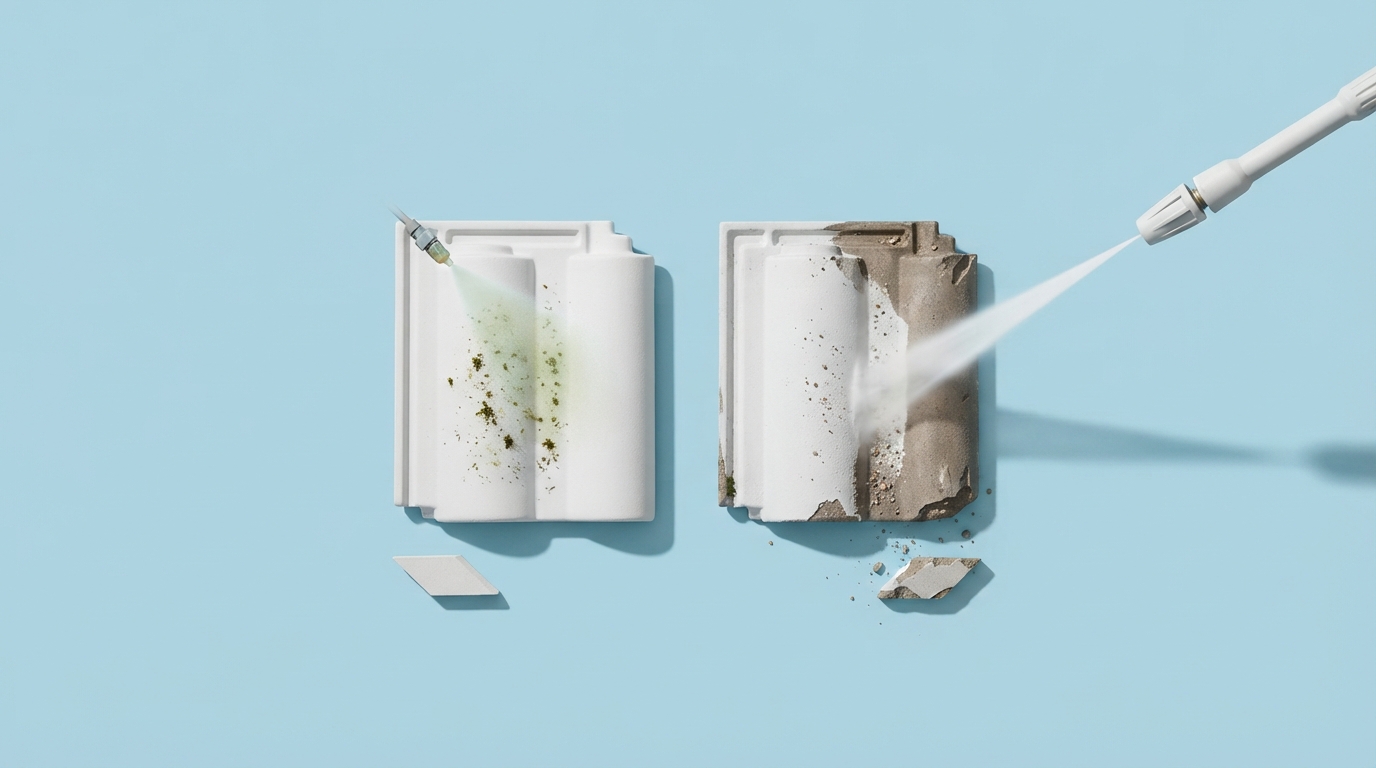
Careful removal protects the roof surface. Outside Clean pairs profile-matched manual scrapers with low-pressure softwashing for Glasgow roofs, including Marley, Redland, and Scottish slate profiles.
The crew removes established moss by hand before treating the remaining spores in the tile pores. That approach avoids treading across fragile tiles and avoids directing high-pressure nozzles at the roof.
Manual Removal Comes First
A scraper matched to the tile profile lifts moss without grinding at the surface. It also lets operators work around ridge mortar, pointing, and lead flashing after checking for existing damage.
Heavy growth is kept out of the drainage system with gutter clearing, downpipe bung blockers, and high-reach gutter vacuums. That matters after a wet Glasgow winter, when loose moss can quickly collect at a downpipe entrance.
Low-Pressure Treatment Handles Regrowth
Softwash roof sanitisation works at under 100 psi. The treatment uses government-approved, biodegradable biocides, including DDAC or sodium hypochlorite based formulations, to neutralise microscopic root spores without tile abrasion or dislodged mortar.
Before treatment, ground vegetation, flowerbeds, and lawns are pre-soaked with fresh water. They are rinsed again afterwards, along with windows, walls, and neighbouring walkways.
Access and Cover Matter
Difficult elevations need safe access, not improvised climbing. Cherry pickers, MEWPs, scaffold towers, and roof ladders allow trained operators to reach the roof while keeping weight off vulnerable tiles.
Outside Clean carries £5 million public liability insurance and gives a written 3-year moss-free guarantee. Those two points matter if you want the work documented and covered rather than relying on a weekend fix.
Direct Comparison: DIY vs Hiring Outside Clean for Glasgow Properties
For a Glasgow roof with established moss, hiring Outside Clean gives longer treatment protection and removes the need to buy access and cleaning gear yourself.
| Factor | DIY | Outside Clean |
|---|---|---|
| Starting price | £400 to £900 | £700 to £4,000 |
| Access | Ladders, clamps, harnesses | MEWPs, cherry pickers, scaffold towers, roof ladders |
| Cleaning | Manual work or pressure-washer risk | Profile-matched scraping and softwashing |
| Pressure | High-pressure washing can damage tiles | Under 100 psi treatment |
| Moss control | 6 to 12 months | 3 to 5 years |
| Liability | Homeowner carries the risk | £5 million public liability insurance |
| Guarantee | – | Written 3-year moss-free guarantee |
| Reviews | – | 120+ 5-star Google reviews |
The price gap needs context. DIY gear and chemicals can cost £400 to £900 before you have reached the roof, while a professional job starts at £700 and includes the work, access approach, removal, treatment, and site washdown.
What You Get for the Quote
Outside Clean Roof Services uses manual scraping for heavy moss, followed by low-pressure biocide treatment. Downpipes are plugged before work, gutters are cleared, and surrounding surfaces are rinsed after treatment.
The professional route is the better fit for steep roofs, fragile slate, dense moss, or homes where safe access needs a MEWP or tower. DIY only makes sense if you can work safely from suitable access and avoid high-pressure cleaning entirely.
How Much Does Professional Roof Cleaning Cost in Glasgow?
Prices start at £700. Standard residential roof cleaning in Glasgow ranges from £700 to £4,000 for larger or more complex properties.
The quote reflects the roof itself, not a flat per-house charge. A low, simple roof with light moss needs a different amount of work than a steep slate roof with heavy growth and difficult access.
What Changes the Price
- Property square footage
- Roof pitch
- Tile type, including concrete, clay pantiles, and Scottish slate
- Level of moss infestation
- Access needs, such as a cherry picker or mobile tower
- Gutter clearing and full ground washdowns
A thorough professional job usually takes 1 to 2 days. That includes the roof work, gutter attention, and rinsing windows, walls, paths, and surrounding areas.
The financial comparison is plain. A £700 clean against a £7,000 roof replacement leaves a £6,300 difference. At the upper example, a £1,000 clean against a £12,000 replacement leaves £11,000.
The UK Homeowner Roof Maintenance Analysis puts average UK roof replacement at £7,000 to £12,000. A clean does not repair a failing roof, but removing moisture-holding moss helps protect sound tiles before damage turns into a replacement project.
Frequently Asked Questions About Roof Cleaning in Glasgow
Will Pressure Washing Damage My Roof Tiles?
Yes, pressure washing can damage roof tiles. Conventional machines run at 1,500 to 3,000 psi, which can strip tile coatings, dislodge mortar, and force water under tile laps. Water driven beneath the covering can reach loft insulation, while a harsh wash may also disturb ridge pointing or lead flashing that was already weathered.
This matters on roofs carrying established moss. Moss can retain 20 times its weight in water, adding moisture around the tile surface in Glasgow’s wet, freeze-thaw conditions. A safer process begins with an inspection for existing mortar, pointing, and flashing issues, followed by manual removal using scrapers matched to the tile profile. No high-pressure wash nozzles should be used directly on tiles.
How Does Biocide Softwash Prevent Moss Regrowth?
After the heavy moss has been removed, a biocide softwash treats what cannot be lifted away by scraping alone: microscopic spores, biofilm, and root-like rhizoids within tile pores. The treatment is delivered at under 100 psi, so it sanitises the roof without the force associated with conventional pressure washing.
This is why a softwash is more than a surface rinse. Manual scraping clears the bulk growth and reduces the debris that could enter gutters; the fungicidal treatment then addresses remaining organic material across the tile surface. Depending on exposure and conditions, biocide protection can slow organic regrowth for 3 to 5 years.
How Long Does a Professional Roof Clean Take?
A domestic roof clean typically takes 1 to 2 days. The time covers an initial roof check, manual moss removal, low-pressure treatment, gutter clearance, and rinsing surrounding windows, walls, and walkways.
Access and roof condition affect the pace. Roof ladders, scaffold towers, or mobile elevated work platforms may be needed to work safely on different pitches, while downpipes are plugged before cleaning to prevent debris from causing drainage blockages. The work is not simply a quick wash: careful preparation and a final ground rinse are part of protecting the property.
Are Roof Cleaning Chemicals Safe for Pets, Gardens, and Landscaping?
Chemical treatment needs controlled application and site protection. Outside Clean pre-soaks lawns, flowerbeds, and ground vegetation with fresh water before treatment, then rinses them again afterwards. Windows, walls, neighbouring walkways, and other ground-level surfaces also receive a full rinse once the work is complete.
Downpipe bung blockers are used before moss removal and treatment so debris does not travel into subterranean drainage. These steps are especially important where planting sits close to the building or roof runoff drains near landscaped areas. The aim is to treat the tiles while limiting contact with the surrounding grounds.
What Guarantee Does Outside Clean Offer Glasgow Homeowners?
Outside Clean provides a written 3-year moss-free guarantee. The company also carries £5 million public liability insurance for its roof cleaning work.
Protecting Your Glasgow Home: Next Steps for a Spotless Roof
Moss removal by pressure washing or risky roof climbing can cost far more than it saves. Controlled manual scraping and low-pressure biocide treatment protect tiles, manage regrowth, and keep the work off a wet roof pitch.
Arrange a roof assessment with Outside Clean to get a fixed quote for professional moss removal, softwashing, gutter care, and a written 3-year moss-free guarantee.