
A clean-looking roof can hide a wet problem. Moss builds up around tile laps, holds rain against the surface, and lets moisture sit where a roof needs to dry.
Glasgow averages 181.22 days each year with at least 1 mm of rain, while average relative humidity sits at 82%. That combination leaves roof tiles damp for long stretches, especially on shaded slopes and during winter.
Damp surfaces give moss, lichen and algae the conditions they need to spread. Once moss is established, its weight rises with absorbed water and debris begins to collect in gutters. The visible green growth is only part of the risk.
Repeated wetting also exposes small weaknesses in tile faces, mortar lines and laps. During colder weather, trapped water can freeze and push those weak points further open.
A roof clean needs to remove growth without damaging the material underneath. Professional roof cleaning in Glasgow focuses on that balance: clearing moss safely, keeping debris out of drainage, and treating the roof so growth does not quickly return.
Key Takeaways: Weather Hazards and Tile Protection
The weather pattern creates a clear maintenance job.
- Persistent damp: Moss holds water directly against tiles and beneath overlapping laps, keeping the roof wet after rain has stopped.
- Winter fractures: Water trapped in saturated tiles expands during frost, which can crack concrete, flake tile faces and weaken mortar.
- Material-led cleaning: Concrete tiles need careful manual scraping, while delicate Scottish slate can be cleaned with low-pressure superheated steam at 150°C.
- Regrowth control: A biocide wash reaches remaining biological growth in tile pores, and a three-year moss-free guarantee gives the treatment a defined period of cover.
The useful order is simple: inspect the roof, remove the heavy growth with a method suited to the tile, clear the gutters, then apply biocide across every roof elevation.
How Constant Rainfall and High Humidity Fuel Roof Moss in Glasgow
The rain keeps coming. Glasgow Bishopton receives an annual average of 1370.23 mm of precipitation, according to the Met Office’s long-term climate averages.
Rain alone does not explain a moss-covered roof. Low winter sun angles, north-facing pitches and nearby shade slow drying, so tile surfaces stay damp long after a shower.
Moss takes hold in that damp film. It forms a dense mat over the tile face and acts like a sponge, holding water against porous concrete and around slate laps. That prolonged contact gives water more time to work into small gaps in the surface.
How Moss Damages Tile Surfaces
Rhizoids, the root-like structures used by moss, settle into microscopic crevices in a tile finish. As the colony thickens, it can wear at protective surface layers and create a bed for more organic debris.
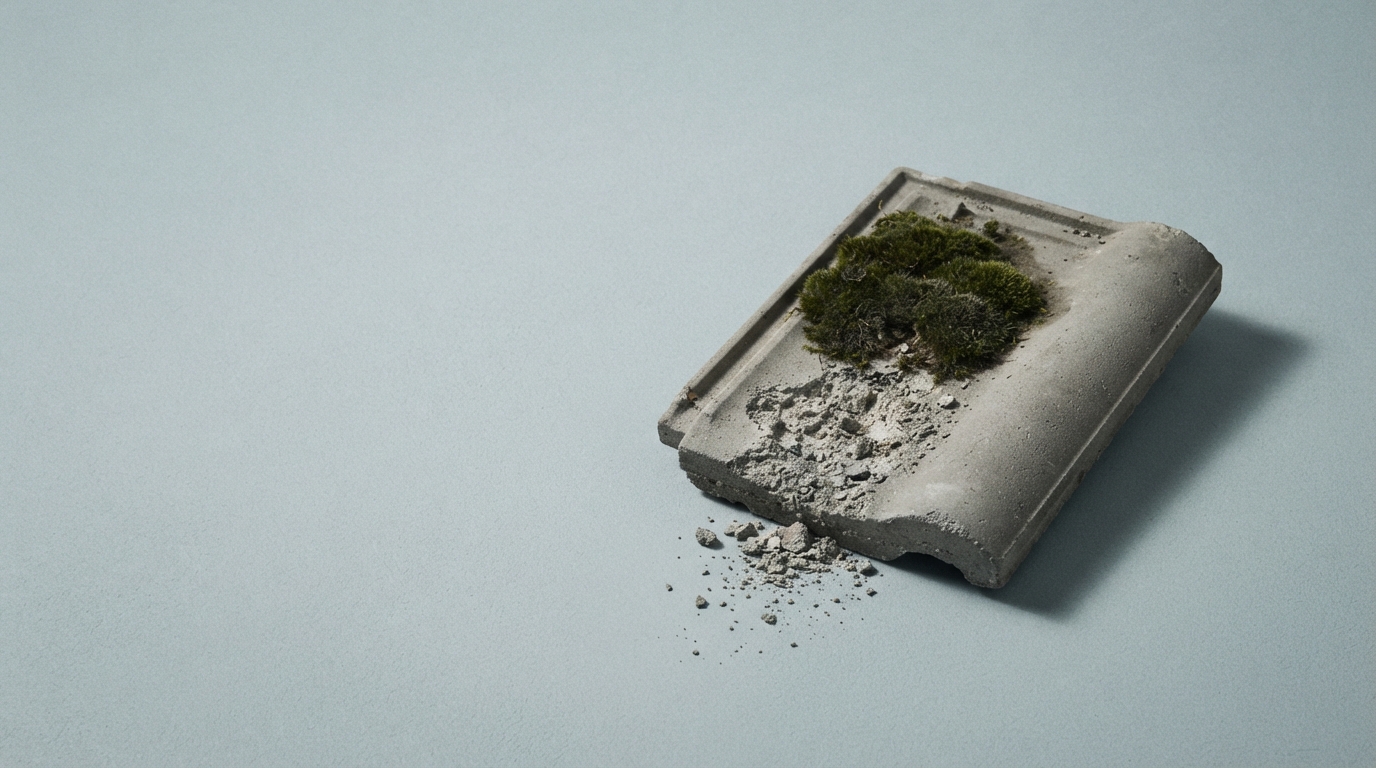
A north-facing concrete roof is a common example. After a wet spell, the surface may look dry from ground level while moss remains wet at the tile edges and beneath overlaps. The homeowner then sees gutter overflow before spotting the roof growth that caused it.
Why Gutters Become Part of the Problem
Loose moss does not stay on the roof. Rain carries clumps and sediment into gutters, where they collect at outlets and downpipes.
- Moss clumps narrow the gutter channel.
- Sediment can settle at downpipe entrances.
- Overflowing gutters direct water down external walls.
- Damp wall ingress can follow where overflowing water repeatedly hits the same area.
Clearing moss without clearing the gutter system leaves the drainage problem behind. A proper finish checks that gutters and downpipes flow freely once the roof debris has been removed.
The Freeze-Thaw Cycle: How Scottish Winters Crack and Delaminate Roof Tiles
Frost turns retained moisture into force. Glasgow records an average of 45.57 air frost days a year, giving wet roof materials repeated exposure to freezing conditions.
Water expands by 9% as it changes from liquid to ice. Inside a porous tile, beneath a moss mat or along a mortar joint, that expansion pushes outward against material that is already wet and weathered.
What Happens to Concrete Tiles
Concrete tiles can develop frost spalling. The face starts to flake, then small fractures and crumbling areas expose more of the aggregate structure to rain.
- Water enters small pores and surface defects.
- Freezing water widens those weak points.
- Thawing leaves a larger route for the next spell of rain.
- Repeated cycles speed up surface breakdown.
Moss makes this worse because it keeps the tile damp between frosts. A tile that has time to dry carries less trapped water into a freezing night.
Mortar and Tile Laps Need Attention Too
Ice crystals can also disturb ridge and hip mortar. Small breaks can grow into loose mortar lines, while moisture under a tile lap may lift the tile enough for wind-driven rain to pass beneath the primary roof covering.
Once water gets below the tiles, loft insulation and timber rafters are exposed to damp. The early signs can be subtle, so an inspection should look for cracked faces, lifted edges, failed mortar and concentrated moss growth rather than waiting for an indoor leak.
Slate vs Concrete Tiles: How Different Materials React to Glasgow Weather
The tile material sets the cleaning method. Glasgow roofs commonly combine natural slate, concrete interlocking tiles or clay pantiles, and each reacts differently to damp growth and frost.
Scottish Slate
Scottish slate has natural stone durability, but heavy moss and debris can wedge around laps. That buildup can lift slates and place strain on fixings, including older nails.
A tenement or villa roof with older slate needs a low-pressure approach that avoids stressing fragile edges. Superheated steam is suited to delicate slate because it removes surface growth without the force of jet washing.
Concrete Interlocking Tiles
Marley and Redland-style concrete tiles have a porous aggregate structure. Moss can retain water on the surface, while weathering can erode protective coatings and leave the face more open to frost spalling.
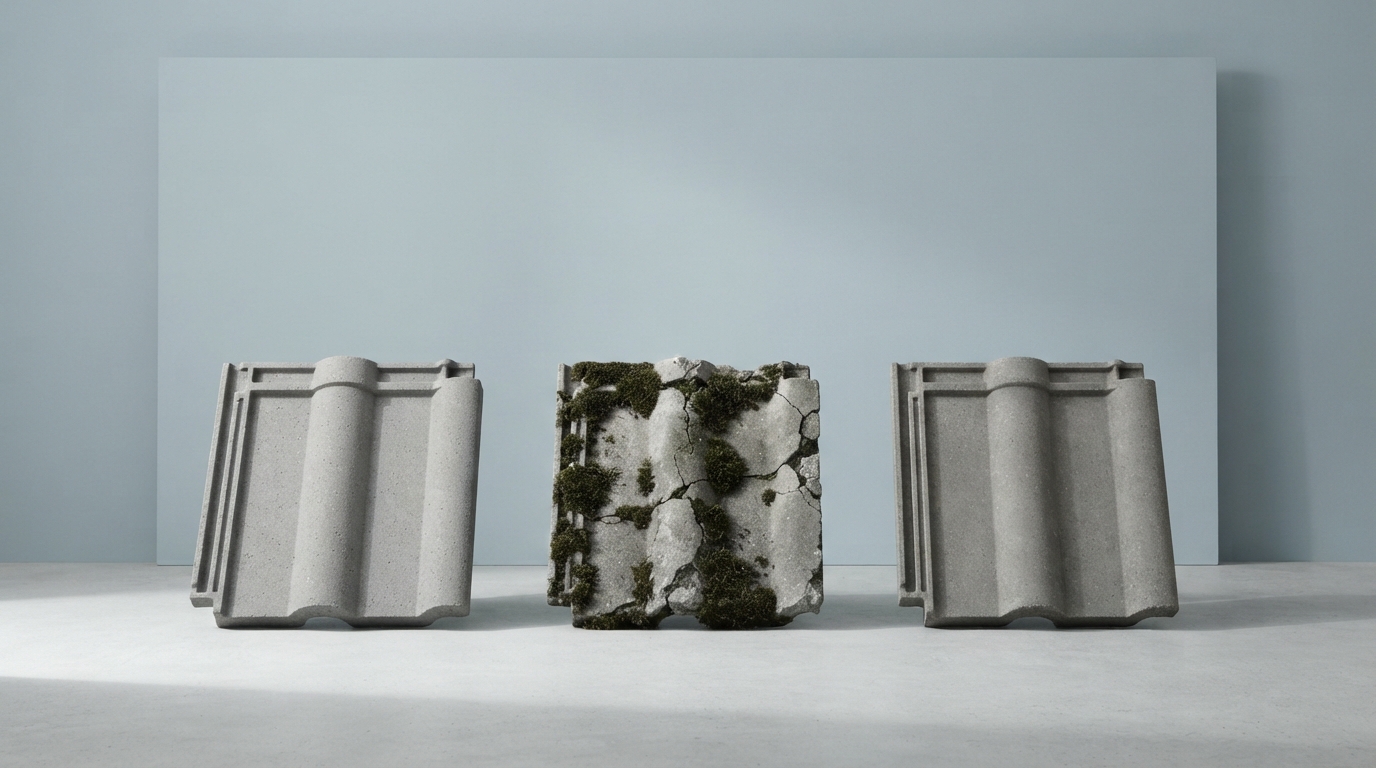
These tiles respond well to contoured hand-scraping blades matched to the tile profile. The aim is to lift moss from the contours without scuffing the surface coating.
Clay Pantiles
Clay pantiles can attract anchored lichen. Unglazed tiles also face frost-shattering where water gets into vulnerable areas of the material.
Their shape needs careful handling during access and cleaning. A forceful wash can disturb tiles and drive water below their overlaps.
Choose a Method After Inspection
Older slate roofs and newer suburban concrete roofs call for different handling. A pre-work inspection checks roof pitch, tile composition and existing defects before a cleaning method is chosen.
- If the roof has delicate natural slate, use low-pressure steam cleaning.
- If it has profiled concrete tiles, use matched hand-scraping blades for heavy moss.
- If clay tiles show lichen or frost damage, inspect their condition before any cleaning begins.
One cleaning method across every material risks scuffed coatings, broken edges and disturbed laps. The roof condition should lead the work, not the machine available on the day.
Safe Roof Restoration: Why Tile-Specific Steam Cleaning and Scraping Beat Pressure Washing
High-pressure washing can damage a roof in minutes. It can strip factory granular coatings, blow away ridge mortar and force water beneath tile laps, where it can enter loft spaces.
That force also risks voiding tile manufacturer warranties. A roof may look clean straight after a jet wash while its surface protection, mortar and weatherproof overlaps have been put under strain.
Start With a Roof Inspection
A safe clean begins before any moss is removed. Roof pitch, tile material and visible defects need checking, either by drone or visual inspection, so the crew can choose access and cleaning methods that suit the roof.
- Check for cracked tiles, loose mortar and damaged edges.
- Identify slate, clay or concrete tile construction.
- Isolate downpipes and place gutter bungs before debris removal.
- Shield plants and perimeter areas with freshwater hydration barriers.
Use the Right Removal Method
For heavy moss on concrete tiles, contoured scraper profiles matched to Marley and Redland shapes lift the growth without running across the tile coating. The scraper follows the profile rather than cutting into the surface.
Delicate natural slate and fragile older tiles suit low-pressure superheated steam. Outside Clean Roof Services uses steam at 150°C, which removes biological growth without the aggressive force of pressure washing.
A Glasgow homeowner with older slate and packed gutters needs both parts of the job. Removing moss from the slates while leaving it in the gutter can still lead to blocked drainage after the next rain. The roof clean should include gutter vacuum clearance and a full washdown of windows, fascias, ground areas and neighbouring walkways.
Keep People Off Fragile Tiles
Walking directly on weathered tiles risks cracking them. Mobile elevated work platforms, scaffold towers and telescopic high-reach carbon poles allow work from safer positions.
- MEWPs and cherry pickers provide raised access without standing on the roof surface.
- Scaffold towers support controlled work where access allows.
- Telescopic poles reach areas that do not need direct foot access.
Outside Clean carries £5 million in public liability insurance and has earned 120+ five-star Google customer reviews. Residential roof cleaning starts at £700, with extensive or complex restoration projects reaching £6000. Property size, pitch, access and moss severity shape the final scope.
The Power of Biocide: Preventing Rapid Moss Regrowth in a Wet Climate
Scraping alone leaves living growth behind. Moss rhizoids and microscopic spores remain in damp pores even after the visible clumps have been lifted away.
A professional biocide treatment finishes the clean by absorbing into the tile matrix and neutralising biological growth at the cellular level. That is why biocide treatment matters for roof cleaning in Glasgow: the work reaches beyond the growth you can see from the ground.
How the Treatment Protects the Roof
Biocide is applied evenly across all roof elevations after the surface growth has been removed. Rainwater activates residual treatment over time, helping the roof keep clearing as weather passes over it.
The treatment supports a cleaner tile surface for 3 to 5 years. Outside Clean backs its specialised post-clean sanitisation with a three-year moss-free guarantee.
Protect the Garden and Drainage
Runoff needs controlling before chemical treatment starts. Gardens, grass and surrounding surfaces are pre-soaked, and downpipes are isolated so biological sludge does not enter stormwater drains.
- Hydrate plants and grass before work begins.
- Use perimeter shielding around the working area.
- Control runoff during cleaning and treatment.
- Wash down the ground, windows and fascias after the job.
Biocide does not replace physical moss removal. It completes it, stopping the spores left behind from turning a freshly cleaned roof into another damp moss bed.
Frequently Asked Questions About Glasgow Roof Cleaning and Weather Care
How Often Should a Glasgow Roof Be Cleaned?
A professionally cleaned roof with biocide treatment typically needs attention every 3 to 5 years. Damp, shade, moss severity and gutter performance affect how quickly growth returns. Glasgow’s wet, humid conditions make this a practical maintenance question rather than a cosmetic one: the area records 181.22 days a year with at least 1 mm of rain, while average relative humidity is 82%. Those conditions can keep tiles damp long enough for moss, algae and lichen to take hold.
It is sensible to have the roof checked before growth becomes heavy. Moss can hold water against tiles and around lap joints; when temperatures fall, trapped moisture can contribute to spalling, cracked tiles and damaged mortar lines through freeze-thaw cycles. An inspection also establishes the roof pitch, tile type and any existing defects before cleaning starts.
Why Is Pressure Washing Risky for Roof Tiles?
High-pressure washing can strip tile coatings, dislodge ridge mortar and force water under tile laps. It can also void tile manufacturer warranties, so gentle scraping or low-pressure steam is the safer route for the material. The risk is not limited to the visible roof surface: water driven beneath tiles may reach areas that are not designed to receive it, including loft spaces.
The right method depends on the roof. Concrete tiles can be cleared with contoured hand-scraping blades matched to their profile, while delicate slate and tile can be treated with low-pressure superheated steam at 150°C. Once surface growth has been removed, a biodegradable biocide is applied evenly across the roof elevations to deal with remaining spores and slow regrowth.
What Does Roof Cleaning Cost in Glasgow?
Residential roof cleaning starts at £700, while large or complex restoration projects can reach £6000. Price reflects property size, roof pitch, access and the severity of moss growth. A steep roof, restricted access or heavy, saturated moss can require more preparation and a different access approach, such as scaffold towers, a mobile elevated work platform or high-reach poles.
A proper quote should follow a drone or visual inspection, rather than relying only on a street-level view. This helps identify the tile composition, roof layout and any structural issues that need to be considered before work begins.
How Is Moss Debris Kept Out of Drains?
Downpipes are plugged and gutter bungs are placed before moss removal, keeping sludge out of stormwater drains. Ground-level plants and the surrounding perimeter are also protected before cleaning. Gutters are then vacuumed, and the surrounding ground, windows and fascias are washed down.
The final check matters as much as the removal itself: gutters and downpipes should run freely, while fallen debris and sediment should not be left in channels or around the property. Neighbouring walkways are washed down too, leaving the perimeter clean once the work is complete.
What Does the Moss-Free Guarantee Cover?
Outside Clean provides a three-year moss-free guarantee after specialised chemical sanitisation. The guarantee follows thorough moss removal and uniform biocide application across the roof elevations. In practical terms, it gives homeowners protection against moss returning during that three-year period after the roof has been properly cleaned and treated.
The guarantee is based on a complete process, not simply removing the visible clumps. Surface moss and staining are cleared without scuffing coatings or fracturing tile edges, then the treatment is applied consistently so spores are not left to regenerate across untreated sections.
Protect Your Home Against the Elements with Outside Clean
Glasgow’s wet weather and frost put steady pressure on roof tiles, mortar and drainage. With 1370.23 mm of average annual rain, 181.22 wet days and 45.57 frost days, damp moss and trapped water get repeated chances to damage a roof.
Outside Clean combines tile-specific scraping or low-pressure steam cleaning with biocide treatment, £5 million public liability cover and a three-year moss-free guarantee. Request a free, no-obligation roof cleaning survey and fixed-price quotation today.