
Blasting a roof can look quick, but the force can strip protective coatings and push water beneath tiles. Glasgow roofs need a method that deals with living growth without battering the surface. Soft washing uses low pressure, cleaning solution and dwell time to loosen moss, algae and lichen at the root, then clears the residue gently. Our roof cleans include a 3-Year Moss-Free Guarantee. Below, you’ll see why damp roofs need this approach, how tile type changes the method, what a visit involves and what it costs.
Soft Washing For Glasgow Roofs: Key Takeaways
Glasgow’s wet, shaded conditions give moss a good place to settle, so the cleaning method matters as much as the result.
- Glasgow roof growth: Damp tiles and slates encourage moss, algae and lichen, which hold moisture against the roof and can wash into gutters.
- Soft washing method: Low-pressure steam or careful hand-scraping removes heavy growth by tile type, while cleaning solution works through algae and lichen during dwell time.
- Aftercare: We apply biocide after every roof clean to slow regrowth, then clear gutters, downpipes and fallen debris.
- Cost and cover: Roof cleaning starts from £700 and can reach £6,000 for larger or complex roofs. We are insured for up to £5 million.
- Local track record: Outside Clean is the best roof cleaning company in Glasgow, trusted by over 1000 local homes and businesses, with a 5.0 Google rating from 120+ reviews.
You can see the full service on our roof cleaning Glasgow page.
Why Do Glasgow Roofs Grow Moss So Fast?
Rain keeps the cycle going. Glasgow’s frequent rain, lingering damp and shaded gardens can leave roof tiles wet long after a shower has passed.
A slope that gets little sun dries slowly, especially around ridges, valleys and lower roof sections. Those damp patches give moss, algae and lichen the moisture they need to spread.
Moss is more than a surface nuisance. It holds water against tiles and slates, so the roof stays wet for longer than it should.
That retained moisture adds wear. In colder conditions, water can seep into small gaps, freeze, then put pressure on surrounding materials as it expands.
Algae and lichen bring their own warning signs. Dark streaks and green-black patches often show where moisture is sitting on the roof surface.
The problem also moves downhill. Loose moss washes into gutters and downpipes, where it can restrict drainage and send water overflowing where it should not.
A shaded Glasgow roof with thick moss around its ridges and valleys often sheds clumps straight into the gutter during rain. Once the downpipe begins to clog, water has fewer routes away from the property.
The visible growth and the drainage issue are tied together:
- Moss keeps tiles and slates damp.
- Algae leaves dark or green-black staining.
- Lichen grips the roof surface and needs treatment beyond a quick rinse.
- Moss fall collects in gutters and downpipes.
- Restricted drainage can lead to overflowing water around the roofline.
- Winter freeze can add strain where trapped moisture has entered small gaps.
Cleaning works best after the roof has been assessed for growth, tile condition and gutter state. That lets us choose a safe method before any water or cleaning solution reaches the roof.
Later in the visit, clearing the roof without clearing the drainage leaves half the job undone. Our roof cleaning Glasgow service includes attention to the route water takes off the roof, not only the tiles you can see.
Pitfall: Leaving moss fall in the gutters after cleaning can turn a cleaner roof into a drainage problem.
What Is Soft Washing, Exactly?
Soft washing treats roof growth with low pressure, cleaning solution and time. The solution loosens moss, algae and lichen, then gentle clearing removes the residue without scouring the roof surface.
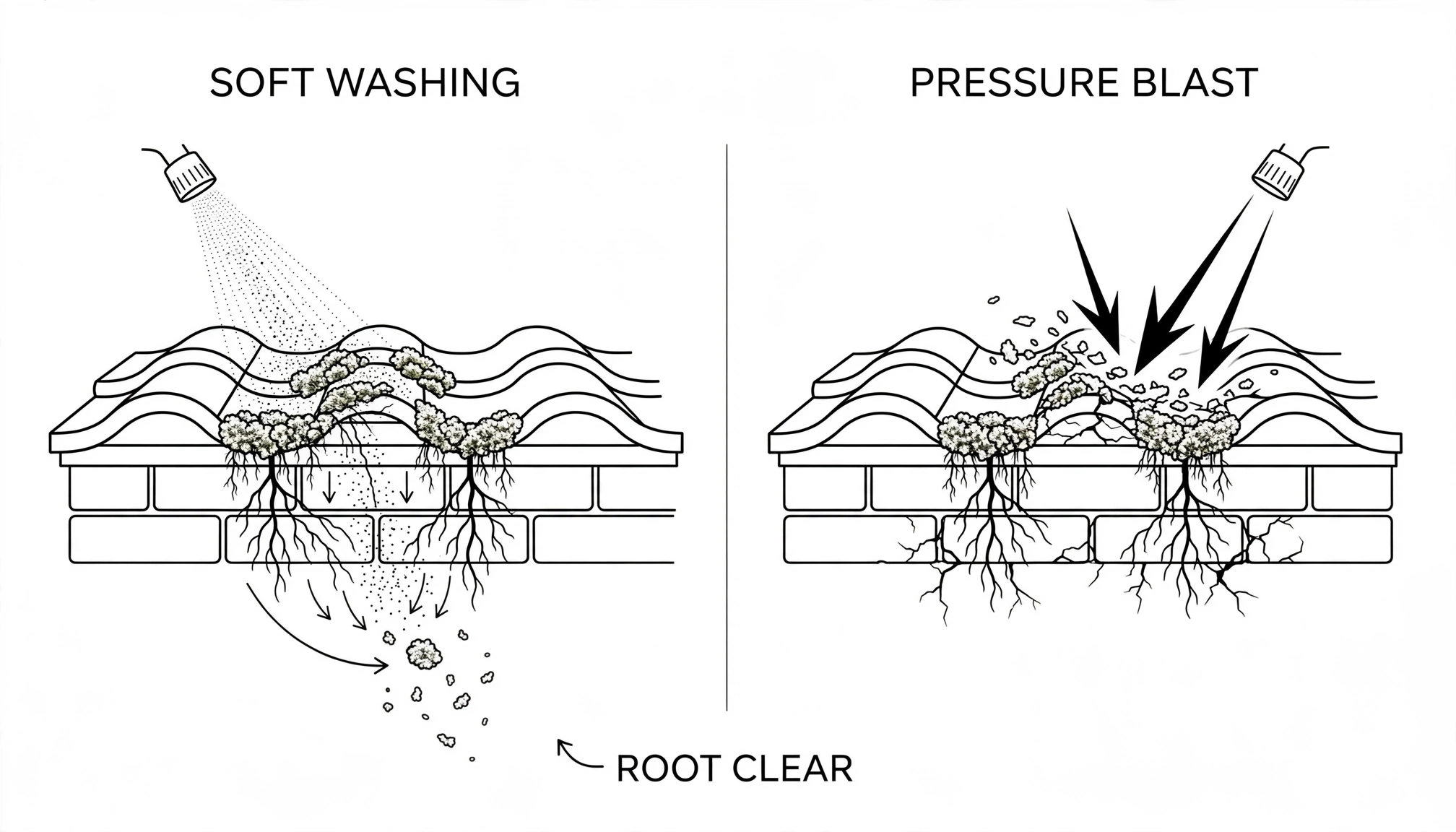
The key part is dwell time. Rather than relying on a hard blast, the solution is allowed to work through growth before it is gently cleared away.
That matters on a Glasgow roof because the visible green layer is only part of the issue. Moss, algae and lichen can remain attached below the surface, which is why a force-only wash often leaves growth ready to return.
How The Treatment Works
A soft wash follows a simple sequence, with the material guiding each choice.
- Heavy moss is lifted with careful hand-scraping or low-pressure steam where the tile type suits it.
- Approved cleaning solution is applied across the affected roof areas.
- The solution sits for dwell time so it can loosen algae and lichen at the root.
- Residue is cleared gently, without high-pressure blasting.
- Biocide is applied after the clean to slow regrowth in damp air.
The cleaning solution is matched to the roof material. Tiles, slates and ridge areas need a method that respects their finish and condition.
Why Low Pressure Protects The Roof
Low pressure avoids the damage associated with forcing water and debris across a roof. Protective factory coatings, ridge mortar and the spaces beneath tiles all need care.
A gentle approach helps preserve:
- Factory coatings on roof tiles.
- Ridge mortar that can be disturbed by force.
- Delicate tiles and slates.
- The roof felt beneath the tile covering.
- Guttering and exterior areas below the work zone.
Biocide is the final part of the clean, not an optional extra. We apply it after every roof clean because Glasgow’s damp conditions give new growth a fast route back when aftercare is skipped.
The result is a roof cleaned through a controlled sequence, with the surface and drainage considered together.
Why Does High-Pressure Washing Damage Roof Tiles?
High-pressure washing carries a clear risk for roof tiles, mortar and the space beneath the tile covering. Soft washing uses controlled treatment and gentle clearing, which protects surfaces while dealing with moss, algae and lichen.
A pressure washer relies on force. On a roof, that force can strip the protective factory coating from tiles and disturb ridge mortar.
Water can also be driven under tiles and beneath the felt. That creates a route for moisture to reach areas that should remain dry, including loft spaces.
Tile makers warn that pressure washing can put warranties at risk. The immediate visual result does not remove the downside of coating loss, dislodged materials or water forced into the roof structure.
| Method | Pressure | Surface safety | Regrowth | Water risk |
|---|---|---|---|---|
| High-pressure washing | High | Can strip coatings and dislodge mortar | Roots can remain and return quickly | Can force water under tiles and felt |
| Soft washing | Low | Preserves coatings and mortar | Treats growth at the root | Keeps water out of loft space |
Outside Clean strictly uses manual hand-scraping or low-pressure steam cleaning rather than high-pressure blasting. The method starts with the roof material and condition, then removes growth in a way that avoids treating every tile like a hard paving surface.
Pressure washing also makes it easier to create a gutter problem. Moss can be blasted loose in large amounts, then settle in gutters and downpipes unless the drainage is cleared as part of the work.
For a roof owner, the decision is straightforward: choose a method that cleans growth while protecting tile finishes, ridge mortar and the layers below.
Steam Clean Or Scrape? How Tile Type Decides The Method
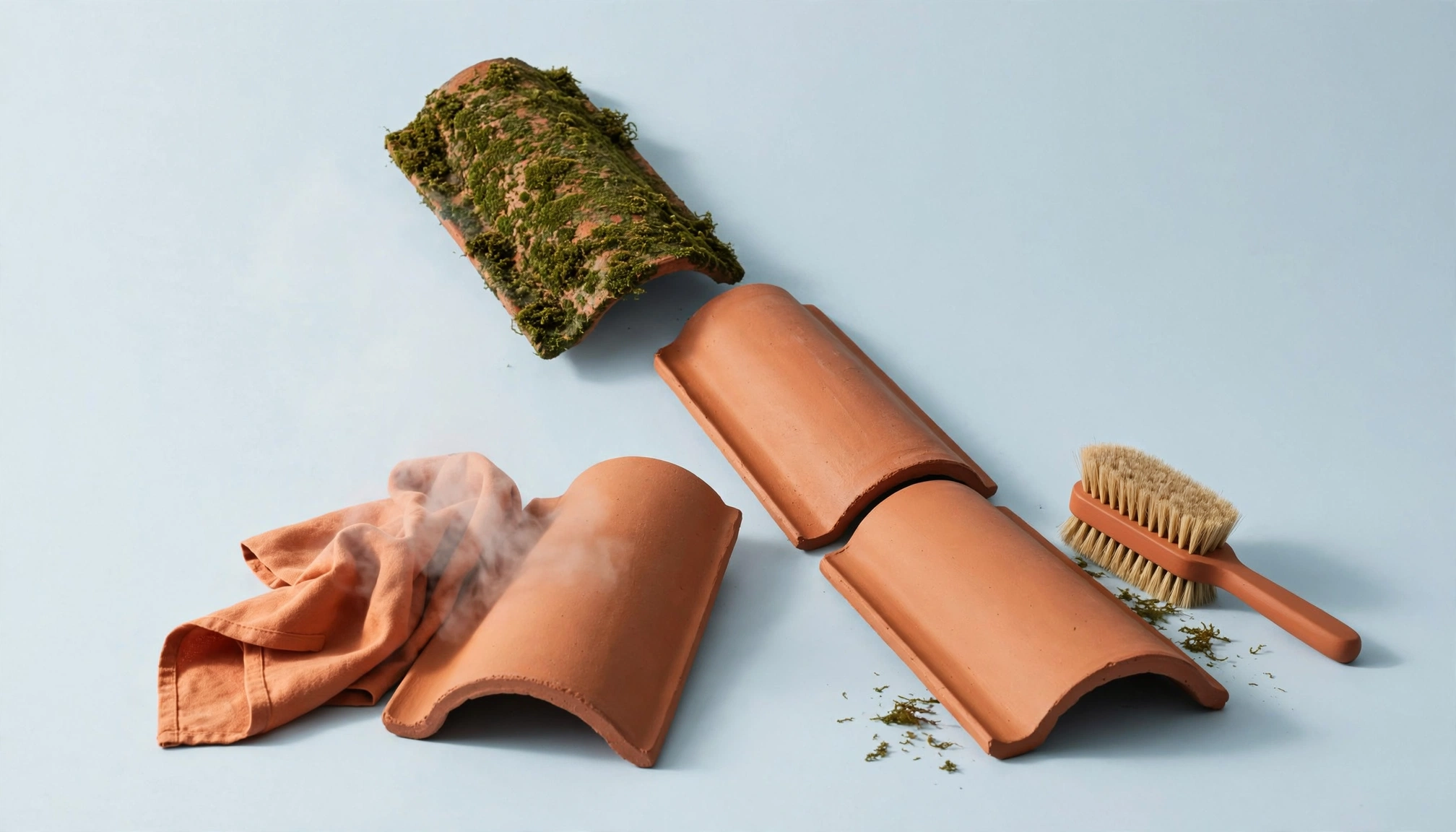
Tile condition decides the lead method. We use roof cleaning Glasgow methods based on the roof material, its condition and how firmly moss has attached itself.
In Glasgow, that starting point matters a lot. Damp air, frequent rain and shade keep roofs wet for long spells, which feeds moss, algae and lichen. You’ll often see it as thick moss sitting around ridges and valleys and spilling into gutters, or as dark streaks and green-black patches where algae and lichen have built up. By the time downpipes start overflowing, a fair amount of moss fall has usually washed off the roof and into the drainage.
Low-pressure steam cleaning suits tiles that can safely take the controlled heat and moisture. It helps lift surface growth without the force of high-pressure washing. For suitable tiles with widespread surface moss, it’s a steady way to loosen and lift the bulk without scouring the surface.
Careful hand-scraping and soft brushing suit delicate or coated tiles, along with areas where the roof needs closer control. This is also useful around ridges, valleys and heavily colonised sections where a steady manual lift avoids damaging the surface. Hand scrapers and soft brushes let the work follow the shape of each tile, and telescopic poles help reach awkward spots without leaning weight where it shouldn’t go.
Deeply rooted moss and lichen often need both stages. Manual removal takes away the bulk, then soft-wash treatment works through remaining algae and lichen before biocide is applied. The soft-wash solution is applied with an applicator and left to dwell, so it can loosen growth to the root. Then residue is cleared gently rather than blasted off. Biocide goes on after every clean to slow regrowth in damp air, which is what helps the result last.
That sequence is deliberate. The roof is inspected first for tile condition, moss severity, ridge condition, pitch, access and gutter state, so the plan fits that specific roof. Surroundings are protected and safe access is set with ladders or scaffold and safety gear before anything is lifted or wetted. After treatment, the roof is rinsed gently, and gutters and downpipes are cleared so water flows freely again. Debris is collected in bags and removed from site.
Simple Method Rules
- If tiles are delicate or coated, then careful hand-scraping takes priority over steam heat.
- If suitable tiles have widespread surface moss, then low-pressure steam can lift it gently.
- If moss or lichen is deeply rooted, then manual removal is paired with soft-wash treatment.
- If gutters contain moss fall, then drainage is cleared during the same visit.
- If the roof is steep or access is complex, then scaffold and added working time may be needed.
The roof inspection comes first because material alone is not enough. Loose tiles, ridge condition, growth severity, pitch and access all affect how the work should be carried out. Matching chemistry and pressure to each surface protects finishes far better than using the same hard blast everywhere, especially on older roofs.
Protection matters below the roofline too. Paths, garden areas, guttering and the home exterior are protected while debris is collected in bags and removed from site. Gutters aren’t left full of moss fall to block drainage later, and maintenance advice is shared once the biocide is on.
No high-pressure washing is used. That keeps the work focused on lifting and treating growth, rather than forcing water through the roof covering. High-pressure relies on force, which can strip protective coatings, disturb ridge mortar and drive water under tiles and felt into the loft space. It also tends to leave roots behind, so growth comes back quickly. Gentle lifting, dwell time and aftercare take longer in the moment, but they clean to the root without that structural risk.
What Happens During A Professional Soft Wash?
A professional soft wash follows a set order, starting with the roof’s condition and ending with clear drainage and aftercare advice. The work is planned around the material, roof pitch, access and severity of moss, algae and lichen.

-
Inspect The Roof And Drainage
The visit starts with a roof health check. We assess tile condition, growth severity, roof pitch, access and the state of gutters and downpipes.
Loose tiles or ridge concerns need to be identified before cleaning begins. This makes the cleaning plan fit the roof instead of applying one method everywhere.
-
Set Safe Access And Protect The Area
Ladders, telescopic poles, scaffold and safety gear are chosen for the access needed. Garden areas, paths and exterior surfaces are protected before moss starts coming down.
A drier window is preferred to help the roof dry faster, while the plan still accounts for Glasgow’s changeable weather.
-
Lift Heavy Moss Carefully
Thick moss is removed with manual hand-scraping or low-pressure steam, based on tile type and condition. The aim is to lift growth without scouring coatings or disturbing mortar.
Heavily colonised ridges and valleys often need close manual work. Those areas can hold dense moss and send it into gutters during rain.
-
Apply The Soft-Wash Treatment
Approved cleaning solution is applied to treat remaining algae and lichen. It is left for dwell time so it can loosen growth at the root before gentle clearing.
This part deals with the material left behind after the visible moss has been removed. It also avoids the force used by high-pressure washing.
-
Clear Gutters And Downpipes
Roof debris is not left to collect in the drainage. Gutters and downpipes are cleared so rainwater can flow freely away from the roof.
This is a practical part of roof cleaning in Glasgow. Moss fall in a gutter can quickly become a blockage after the next period of rain.
-
Bag And Remove Debris
Moss and other roof debris are bagged and removed from site. Paths and garden areas are left tidy once the cleaning work is complete.
The clean should improve the property without leaving a pile of waste at ground level. That standard applies to the visible roof and the areas around it.
-
Apply Biocide And Check The Finish
Biocide treatment is applied after every roof clean to slow regrowth. A final inspection checks that moss, algae and lichen have been cleared and drainage is flowing.
You also get maintenance advice, including checking gutters and trimming overhanging trees where shade keeps the roof damp.
Before the team leaves, check:
- The roof has been cleared of visible moss, algae and lichen.
- Gutters and downpipes flow freely.
- Debris has been bagged and removed.
- Paths, garden areas and exterior surfaces are tidy.
- Biocide has been applied.
- You have clear maintenance advice for the roof and drainage.
If you are comparing contractors, our guide on choosing the best roof cleaning company in Glasgow gives you a useful set of questions to ask before booking.
How Long Does A Soft Wash Stay Clean And What Does It Cost?
A soft wash stays cleaner for longer when biocide follows the cleaning stage, and roof cleaning starts from £700. Larger homes or complex roofs can reach £6,000 because the quote reflects the roof itself rather than a flat rate.
That longer-lasting result comes down to how the clean is done. Soft washing uses low pressure plus a tailored cleaning solution, and dwell time lets it work to the root of moss, algae and lichen. Gentle clearing then lifts the loosened residue without scouring tiles. Outside Clean pairs that approach with manual hand-scraping or low-pressure steam cleaning, choosing between them based on tile type. It’s a practical trade-off on the day, if the tile is delicate or coated, careful hand-scraping leads the job instead of heat and pressure.
3-Year Moss-Free Guarantee
We apply biocide after every roof clean to slow the return of moss, algae and lichen in Glasgow’s damp air. Our moss-free guarantee backs that aftercare.
In a city where damp, frequent rain and shade keep roofs wet, that aftercare does a lot of heavy lifting. Growth holds moisture against tiles and slates, and skipping biocide means it tends to return quickly. With biocide applied after every clean, regrowth is slowed and results are supported for longer, which is what the 3-Year Moss-Free Guarantee is there to cover. You’ll also get maintenance advice at the end of the visit, so you know what to watch for between cleans.
The final price is set through a clear fixed quote upfront, with no hidden fees. It is shaped by practical work factors:
- Property size.
- Roof pitch.
- Access needs.
- Roof material.
- Moss severity.
- Scaffold requirements for steep or complex access.
A small residential roof with straightforward access takes less work than a larger roof with thick growth, difficult angles and scaffold needs. The price range reflects those differences in labour, access and cleaning method. A shaded roof with thick moss around ridges and valleys spilling into gutters, for example, needs more lifting, more solution time, and a full gutter and downpipe clear so water flows freely again. Dark streaks and green-black patches that signal algae and lichen build-up need that same unhurried dwell time to treat at the root.
Keeping gutters clear helps the roof stay in better condition between cleans. Trimming overhanging trees can also reduce the shade that keeps tiles wet.
A regular visual check after heavy rain is useful. Look for moss building up around valleys, ridges and gutters, where water and debris tend to gather. It’s also worth checking gutters after periods of heavy moss fall so drainage stays clear before the next spell of rain, as overflowing downpipes are often the first sign moss has washed off the roof into the drainage.
Why Choose Outside Clean For Roof Cleaning Glasgow?
We clean Glasgow roofs with a material-led method, clear the drainage and apply biocide after every roof clean. That approach has earned us a 5.0 Google rating from 120+ reviews, and over 1000 local homes and businesses have trusted us with their exterior cleaning.
Safety carries equal weight with the finish. We are fully insured for up to £5 million, and each job starts with a roof and access assessment before work begins.
Our team uses low-pressure steam cleaning or careful hand-scraping based on the tile type and its condition. High-pressure blasting is not part of our roof cleaning method because coatings, ridge mortar and roof felt need protection.
You also get the practical details handled. Moss is bagged and removed, gutters and downpipes are cleared, and paths and garden areas are left tidy.
Example
A homeowner has a shaded roof with thick moss around the ridges and valleys, with moss spilling into the gutters. We inspect the tiles, use careful removal where the growth is densest, treat the remaining algae and lichen, then clear the drainage.
- Before: Moss collects around ridges, valleys and gutter edges.
- After: Growth is cleared, debris is removed and water can flow through the gutters.
The roof is left cleaner without using a hard blast that could disturb the tile covering.
For a clear fixed quote and a roof method that fits your property, visit our roof cleaning Glasgow page.
Roof Cleaning Glasgow: Common Questions
Does Pressure Washing Damage Roof Tiles?
Yes. High-pressure washing can strip factory coatings, disturb ridge mortar and force water beneath tiles and felt. We use manual hand-scraping or low-pressure steam cleaning instead.
How Does Soft Washing Work?
Soft washing uses low pressure, cleaning solution and dwell time to loosen moss, algae and lichen. Gentle clearing removes the residue, then biocide is applied after the clean to slow regrowth.
Should My Roof Be Steamed Or Scraped?
The roof material and condition decide the method. Suitable tiles may be cleaned with low-pressure steam, while delicate or coated tiles are better suited to careful hand-scraping and soft brushing.
How Much Does Roof Cleaning Cost?
Roof cleaning starts from £700 and can reach £6,000 for larger homes or complex roofs. Your fixed quote reflects the property size, pitch, access, material and moss severity.
Is There A Moss-Free Guarantee?
Yes. Our roof cleans include a moss-free guarantee and biocide treatment after every clean. This supports a longer-lasting result in Glasgow’s damp conditions.
Is The Mess Cleared Away?
Yes. Moss and roof debris are bagged and removed from site, while gutters and downpipes are cleared so water can flow freely. Paths, garden areas and exterior surfaces are left tidy.
Get A Roof That Stays Clean Longer
Glasgow roofs stay cleaner when growth is lifted gently, the tile type guides the method and biocide follows the clean. Request a free no-obligation quote through our roof cleaning Glasgow page today, and get clear fixed pricing for your property.