
Table of Contents
- Visible Exterior Signs: Inspecting Your Roof Safely From the Ground
- The Moss Sponge Effect: Why Biological Growth Destroys Scottish Roofs
- Interior and Attic Warning Signs: Catching Leaks Before Ceilings Fail
- Safe Tile Care: Steam Cleaning vs. Manual Scraping vs. Jet Washing
- Why Biocide Is Essential for Long-Term Roof Protection
- Glasgow Roof Cleaning Costs and What Homeowners Should Expect
- Frequently Asked Questions About Glasgow Roof Damage and Cleaning
- Protect Your Home: Book Your Professional Glasgow Roof Assessment
Rain driven by strong winds finds the weak points first. A slipped slate, a thin crack in a concrete tile, or moss blocking a valley can send water beneath the roof covering long before there is a mark on the ceiling.
Glasgow’s persistent damp keeps roof surfaces wet for longer, while gales can shift slates and ridge tiles. Winter then adds freeze-thaw pressure to water already held in moss and porous tiles.
The cost often begins out of sight. Water can run along battens, sarking boards and rafters, wetting insulation and staining timber before it reaches a room below. By the time paint bubbles or a ceiling develops a brown patch, the entry point may have been active for some time.
A safe ground-level check after heavy weather gives you a chance to spot changes early. Look for uneven roof lines, debris in gutters and thick moss in valleys, then arrange a close inspection if anything looks out of place.
For a Glasgow home, roof care starts with watching the parts rain reaches every day. A small exterior fault is far easier to deal with before moisture gets into the roof void.
Visible Exterior Signs: Inspecting Your Roof Safely From the Ground
Start with binoculars. You can spot many roof faults from ground level without stepping onto slates or tiles, where a self-inspection can cause cracking.
Walk around the property where sightlines allow, and compare each roof slope. Look for changes in straight courses, surface texture and the lines where roof sections meet.
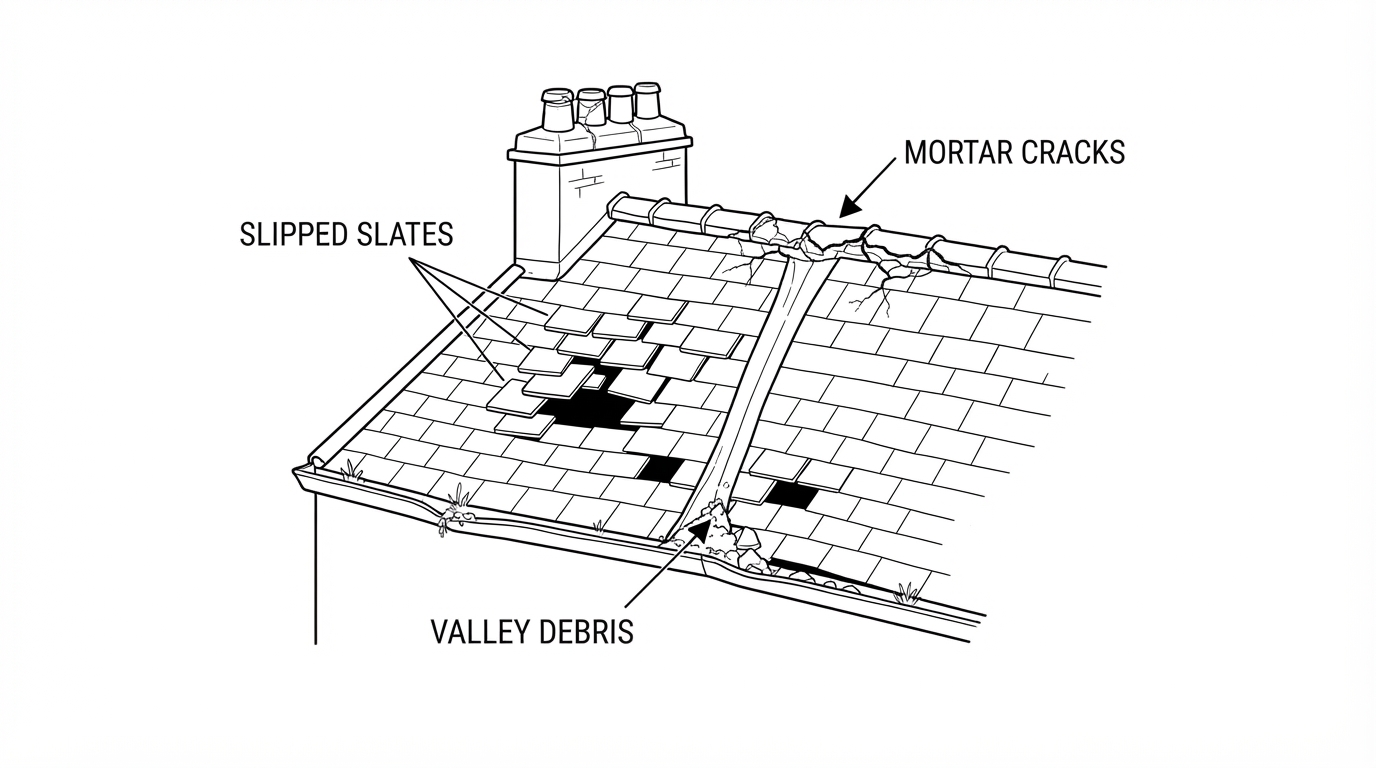
Check Slate and Tile Courses
Slipped or crooked slates are a clear warning sign on traditional Scottish roofs. Fixing nails can corrode through nail sickness, and high winds can lift slates enough to expose the felt beneath.
Look for these signs:
- A slate sitting higher or lower than the surrounding course
- A visible gap where a slate or tile is missing
- Uneven horizontal lines across the roof slope
- Cracked, chipped or delaminating concrete tiles
- Tile edges that look broken after winter weather
Concrete tiles can absorb moisture. Water trapped within a porous tile expands during repeated freezing and thawing, causing cracks and surface break-up.
Examine Surface Coatings and Mortar
Modern concrete tiles often have a gritty protective coating. Granule loss leaves the tile base more exposed to UV damage and moisture, so patches with a smoother or worn appearance deserve a closer look.
At the roof apex and edges, check ridge caps and verges for crumbling mortar. Loose pointing can allow ridge tiles to move and can admit driving rain beneath the roof covering.
Follow the Drainage Route
Gutters tell you what is coming off the roof. Piles of shed moss, tile fragments or ceramic granules point to a problem above, while sagging gutter lines can hold standing water and overflow onto exterior masonry.
Check for:
- Dense moss packed in roof valleys
- Gutters bowing under debris or retained water
- Downpipes that appear blocked after rain
- Overflow marks on walls beneath gutter runs
- Moss collecting around gutter outlets
Once you have identified a drainage issue, arrange roof cleaning and gutter maintenance before the next spell of heavy rain. Keep the check from ground level, especially on older slate roofs.
The Moss Sponge Effect: Why Biological Growth Destroys Scottish Roofs
Moss holds water against the roof. Glasgow’s wet maritime weather and tree-shaded streets give moss, lichen and biofilm the damp surface they need to spread.
A moss patch does more than change the look of a roof. It retains water like a saturated sponge, adding hundreds of kilograms of extra load to roof trusses and keeping tiles wet between rainfall.
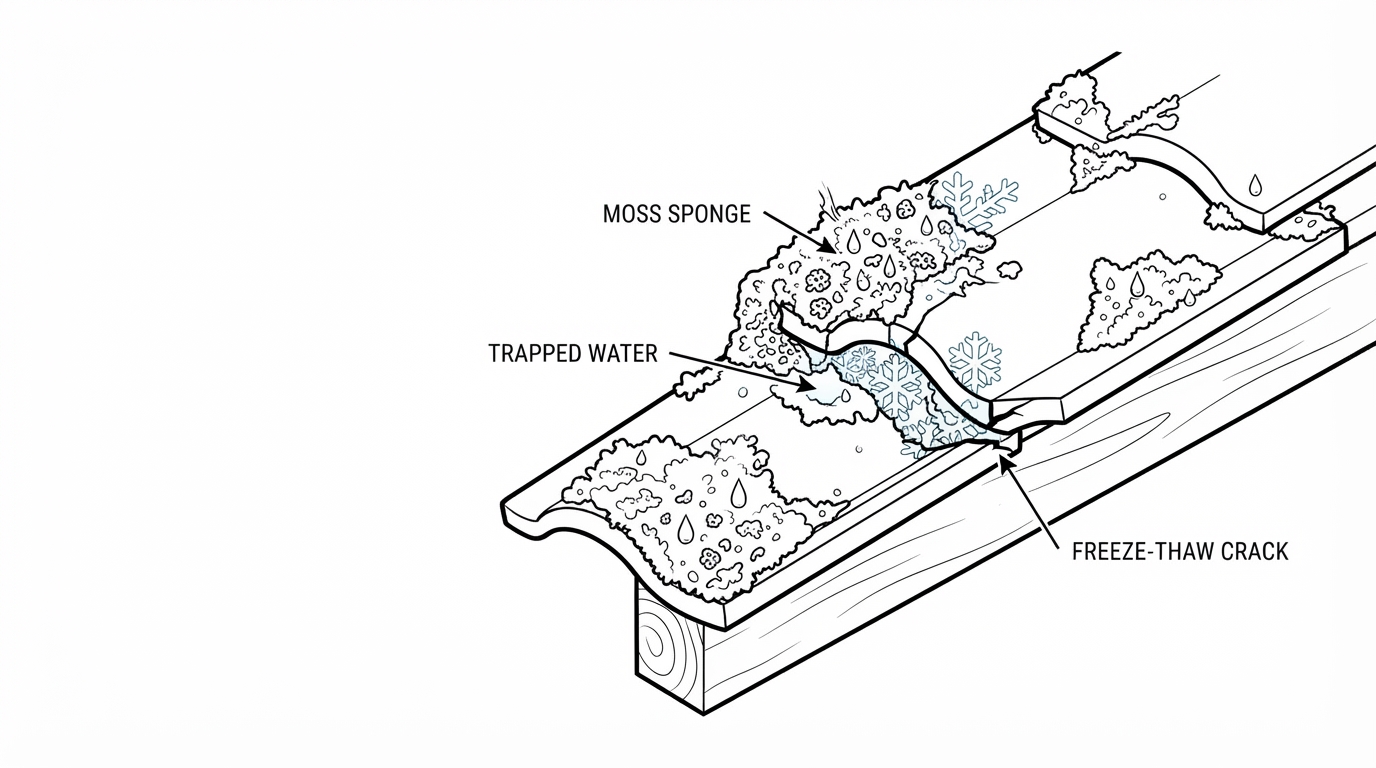
Water Gets Under Tile Laps
Dense moss clumps collect at overlaps, tile edges and valleys. Rainwater should run down the roof and into gutters, but moss can slow that route and dam a valley.
Water then pushes sideways beneath tile lap joints. That is where a local moss patch can become damp timber, wet insulation and ceiling staining inside the home.
Freezing Makes the Damage Worse
In winter, retained water freezes and expands by roughly 9%. That movement can force apart tiny flaws in tile surfaces, leading to micro-cracks, spalling and broken edges.
Concrete tiles are especially exposed because they absorb moisture. A 1980s semi-detached home in Glasgow’s Southside can develop cracked concrete tiles after frost expands water-saturated moss clumps, even if the roof looked sound before winter.
Scottish natural slate can last 75 to 150 years when properly maintained, but it still faces nail sickness, delamination and wind lift. A long-lived roof still needs regular checks.
Moss Also Blocks the Eaves
Moss sheds as it grows and dries. The debris drops into gutters and downpipes, where it can block drainage and send overflow down the walls.
Look for these connected signs:
- Thick clumps in valleys or behind chimneys
- Moss collecting in gutters after wind or rain
- Water spilling over gutter edges
- Damp marks on exterior masonry below the eaves
- Tile surfaces that remain visibly wet long after rainfall
Removing the visible growth is the first part of the job. The next part is dealing with the spores embedded in the tile surface, so the same growth does not return quickly.
Interior and Attic Warning Signs: Catching Leaks Before Ceilings Fail
Check the attic after heavy rain. Attic signs often reveal an active roof leak before a ceiling fails, because water can travel along timber instead of dripping straight down.
Use a flashlight and stay on safe, boarded access areas. Look across the underside of the roof, around chimneys, valleys and outside walls, then inspect the insulation below those areas.
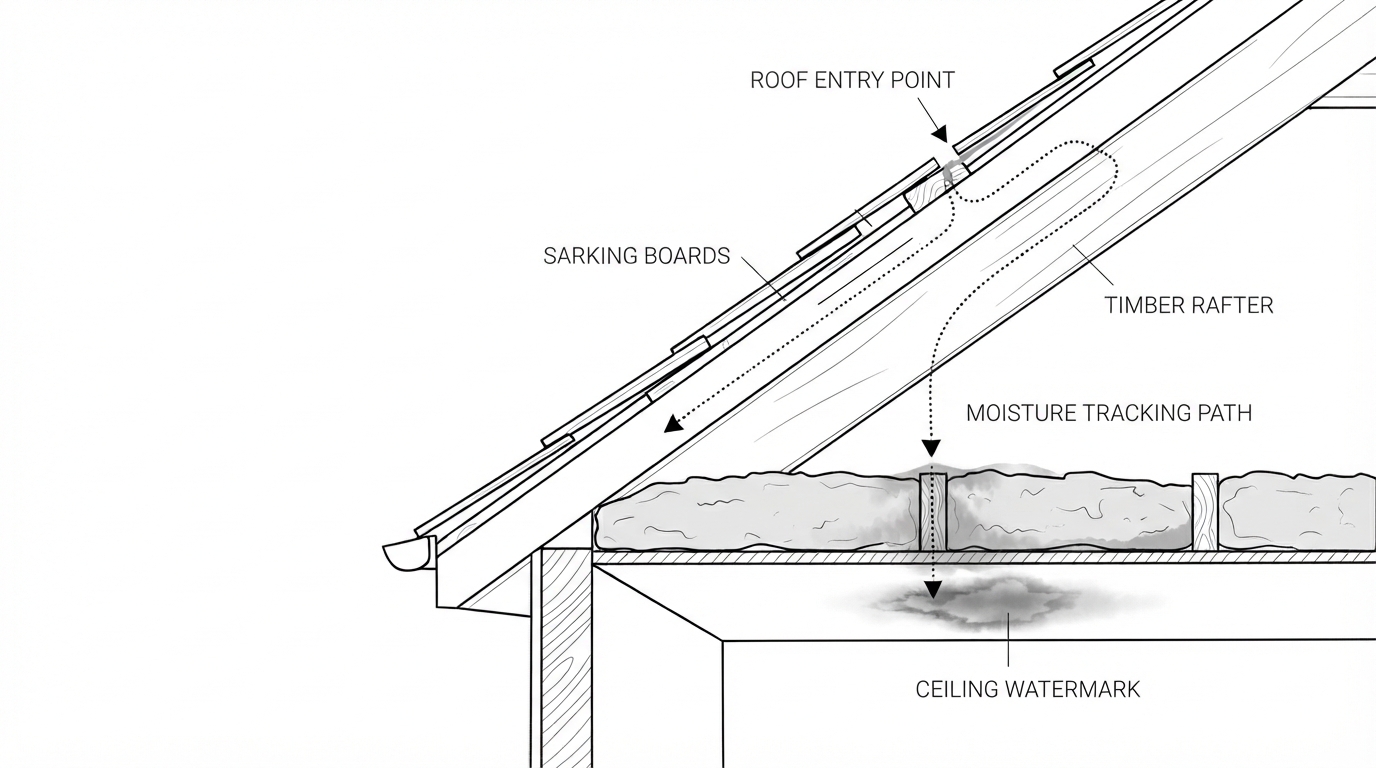
Follow the Water Path
Water entering through a slipped slate or split flashing can run along battens, sarking boards and rafters. It may travel several feet before it reaches insulation or a room ceiling.
Look for:
- Dark damp streaks on sarking boards or roof timbers
- Wet, compacted or sagging loft insulation
- A musty damp smell in the roof void
- Pinholes of daylight through the roof covering
- Damp patches near chimney breasts, valleys or dormers
A Victorian sandstone villa in Glasgow’s West End can show damp ceilings after moss blocks a roof valley and backs rainwater up beneath tile laps. The ceiling mark may sit away from the actual blocked valley, because the water has tracked through the roof structure.
Check the Rooms Below
Ceiling and wall finishes can show where moisture has reached the living space. Yellow or brown tide marks, bubbling paint, peeling wallpaper and soft plasterboard near external walls all call for an inspection above, rather than a coat of paint.
For broader guidance on preventing damp and condensation in Scottish attic spaces, focus first on whether the marks are dry or still changing after rain. An active stain needs its roof entry point found and repaired.
Keep the Inspection Safe
Do not walk directly across slates or older concrete tiles to investigate a suspected leak. Fragile coverings can crack underfoot, widening a small defect.
Use this short check after severe weather:
- Scan the roof from ground level for displaced tiles and blocked gutters.
- Enter the attic with a flashlight once conditions are safe.
- Check timbers, insulation and the roof underside for fresh moisture.
- Photograph any staining or daylight gaps from a safe position.
- Arrange roof maintenance when you find a loose tile, active damp or a blocked valley.
Safe Tile Care: Steam Cleaning vs. Manual Scraping vs. Jet Washing
Manual scraping or low-pressure steam cleaning protects the roof surface. High-pressure jet washing can strip tile coatings, erode mortar and force water into the roof structure.
The cleaning method should match the roof’s material, age, condition and moss level. A roof with delicate natural slate needs a different approach from heavily stained concrete tiles.
Manual Scraping
Manual scraping suits roofs with heavy moss clumps, particularly older tiles and natural slate. Custom-profile blades shaped for Marley, Redland and slate profiles lift moss without scratching the surface.
- Removes dense moss clumps with controlled contact
- Uses scrapers matched to the tile shape
- Avoids abrasive force on fragile coverings
- Leaves tile coatings and edges intact
Manual scraping needs a follow-up biocide treatment because it removes the visible growth but does not reach microscopic spores in porous tile surfaces.
Low-Pressure Steam Cleaning
Low-pressure steam cleaning uses heated water to lift grime, organic film and stubborn staining without the abrasive force of a jet washer. It is suited to robust concrete tiles carrying heavy carbon pollution, algae and moss.
- Heats water to dissolve moss and surface staining
- Uses low pressure rather than forceful impact
- Cleans organic films from tile surfaces
- Suits heavily stained, robust concrete tiles
Steam cleaning also needs biocide afterwards. The treatment reaches into pores where remaining rhizoids can regrow.
High-Pressure Jet Washing
High-pressure washing at 250 to 300 bar is unsuitable for roof tiles. The force can strip granular factory coatings, break tile nibs, loosen ridge mortar and flood sub-roof spaces.
- Strips protective granular coatings from modern tiles
- Can crack fragile tiles and slates
- Erodes mortar around ridges and verges
- Forces water beneath roof coverings
- Can void manufacturer warranties
Professional roof cleaning services use a surface-safe assessment before work begins. If you have fragile slate or older tiles, manual scraping followed by biocide is the sound route; if robust concrete tiles carry heavy staining, low-pressure steam cleaning is the stronger fit.
Why Biocide Is Essential for Long-Term Roof Protection
A clean-looking roof can still hold living spores. Scraping and steam cleaning remove visible moss, but biological roots and spores remain inside porous tile surfaces unless they are treated.
Moss attaches through microscopic rhizoids. These root-like structures sit in small pores and surface irregularities that a scraper blade cannot reach.
What the Treatment Does
A professional-grade biocide wash penetrates the tile surface and kills the remaining rhizoids and spores. Rain then activates the residual treatment over later cycles, helping clear organic regrowth rather than leaving a fresh surface for moss to recolonise.
The result is protection that lasts 3 to 5 years after a professional biocide softwash application. This matters most in Glasgow, where damp weather keeps roof surfaces hospitable to biological growth.
Why Scraping Alone Falls Short
A scraped roof can look clear on the day work finishes. Without biocide, the unseen spores still have a foothold in the tile pores and can grow again within months.
Use a full cleaning process:
- Remove heavy moss with manual scraping where the roof needs gentle handling.
- Use low-pressure steam where robust concrete tiles have deep grime and organic film.
- Apply biocide across the treated roof surface.
- Keep valleys, gutters and downpipes clear so water can drain freely.
Outside Clean provides a written 3-Year Moss-Free Guarantee on completed roof treatments. That written cover follows the treatment process, rather than relying on visible scraping alone.
Glasgow Roof Cleaning Costs and What Homeowners Should Expect
Glasgow residential roof cleaning starts from £700. Large or complex properties can reach £6,000 because access, roof shape and the amount of work change the job.
A survey should look at the whole roof before a price is set. The crew needs to see the roof material, moss depth, pitch, drainage points and the safest way to reach each elevation.
What Changes the Price
The main cost factors are practical ones:
- Property footprint and total roof area
- Roof pitch and the difficulty of working safely
- Slate, concrete tile or other roof material
- Heavy moss accumulation in valleys and gutters
- Access requirements, including scaffold towers or MEWPs
- Complex features such as chimneys, dormers and roof valleys
A standard domestic roof clean typically takes 1 to 2 days. A larger roof with difficult access needs more preparation and safe working time, which is why a single flat price would be misleading.
What to Look for in a Quote
Ask whether the work covers moss removal, the cleaning method, biocide treatment and drainage clearance. A proper survey also identifies slipped tiles, split flashing or failed mortar that cleaning alone cannot repair.
Insurance matters when people are working at height around your home. Outside Clean carries £5 million in public liability insurance rated for roof cleaning and working at height, and has more than 120 5-star Google reviews from Glasgow homeowners.
You can request a roof cleaning Glasgow survey to get a price based on the roof in front of you. The useful quote explains the access plan and treatment method, rather than treating every roof as the same job.
Frequently Asked Questions About Glasgow Roof Damage and Cleaning
What Are the First Signs of Roof Damage?
Look for slipped or missing slates, cracked concrete tiles, crumbling ridge mortar, heavy moss in valleys and blocked or sagging gutters. Inside, check for damp timber staining, wet insulation, musty smells, ceiling tide marks and bubbling paint.
Why Should I Avoid Pressure Washing My Roof?
High-pressure washing can strip protective tile coatings, damage tile edges, erode ridge mortar and push water into the loft. Manual scraping or low-pressure steam cleaning avoids that force and is selected according to the roof material.
How Long Does a Biocide Roof Treatment Last?
A professional biocide softwash can keep roof surfaces moss-free for 3 to 5 years. It works by reaching pores where moss rhizoids and spores remain after visible growth has been removed.
How Much Does Roof Cleaning Cost in Glasgow?
Professional residential roof cleaning starts from £700 and can reach £6,000 for large or complex roofs. Price reflects roof size, pitch, tile type, moss build-up and access equipment.
How Long Does a Roof Clean Take?
A standard domestic roof clean typically takes 1 to 2 days. Larger properties and roofs needing scaffold towers or MEWPs require more time for safe access and cleaning.
Can I Walk on My Roof to Inspect It?
Avoid walking directly on delicate slate or aged concrete tiles. Use binoculars or a zoom camera from the ground, then inspect the attic with a flashlight after heavy rain.
Protect Your Home: Book Your Professional Glasgow Roof Assessment
A roof check after heavy weather can catch a slipped slate, blocked valley or damp attic timber before water reaches the rooms below. Keep the inspection to ground level and the roof void, then act on fresh signs of damage rather than covering them with paint.
If moss, blocked gutters or displaced tiles are showing up, arrange a survey through roof cleaning Glasgow today. A surface-safe clean and biocide treatment help keep water moving off the roof where it belongs.