
High-pressure blasting is the wrong way to make a Glasgow roof look clean. It can strip protective tile coating, shift ridge mortar and force water beneath the felt into the loft space.
Gentle cleaning matched to the roof material, followed by preventive treatment, helps a roof stay sound for longer. Maker guidance warns that pressure washing can void warranties, so the risk reaches beyond the visible surface. Low-pressure steam or careful hand scraping gives moss somewhere to go without punishing the tiles. Start with a safe inspection, deal with drainage and shade, then keep regrowth under control.
How Glasgow Homeowners Keep Roofs Sound for Longer
Glasgow roofs need a repeatable care routine.
- Check shaded slopes, ridges and valleys from ground level for moss, algae and dark staining.
- Use low-pressure steam where the tile can take it, or hand scraping where delicate tiles and slates need a gentler touch.
- Clear moss, leaves and debris from gutters and downpipes so rainwater can run away.
- Cut back overhanging branches to bring more light and airflow to damp roof slopes.
- Finish a clean with preventive biocide treatment to slow moss, algae and lichen returning.
- Get a professional assessment before thick moss anchors across the roof or blocks drainage.
Outside Clean uses tile-matched steam or hand scraping, gutter clearance and a treatment finish for safe, lasting roof care in Glasgow.
Why Does Glasgow Weather Punish Roofs So Hard?
Glasgow stays damp for long stretches. Frequent rain leaves tiles wet long enough for moss to grip, especially where a roof gets limited sun.
Tree-lined streets, north-facing slopes and shaded sections dry slowly. Moss finds those spots first, then algae and lichen spread across the same damp surface.
Older, porous tiles can hold moisture and organic debris. That gives growth a place to settle, while leaves collect around ridges, valleys and gutter edges.
A roof can look broadly fine from the pavement while growth is building in the places where water lingers. Look for these early signs:
- Dark streaks running down tiles or slates
- Green patches along lower edges and shaded slopes
- Moss clumps around ridges and in valleys
- Lichen patches on surfaces that stay damp
- Overflow marks beneath gutters and downpipes
Rain itself is part of Glasgow life. The problem starts when the roof stays wet after it stops, because that damp surface supports another cycle of growth.
Example
A semi on a tree-lined Glasgow street has heavy moss along the ridge and overflowing gutters after rainfall. The north-facing slope gets little sun, while branches hold the roof in shade.
- Weak: Clean only the visible front slope
- Strong: Clear the full roof, gutters and downpipes, then cut back the shading branches
The second approach removes the conditions that keep the roof damp, rather than leaving them in place. For local help with roof cleaning Glasgow, start with a close look at the shaded areas and drainage signs.
What Moss, Algae and Lichen Actually Do to Your Tiles
That green fuzz isn’t just messy. In Glasgow’s damp, shaded streets it kicks off a proper damage chain.
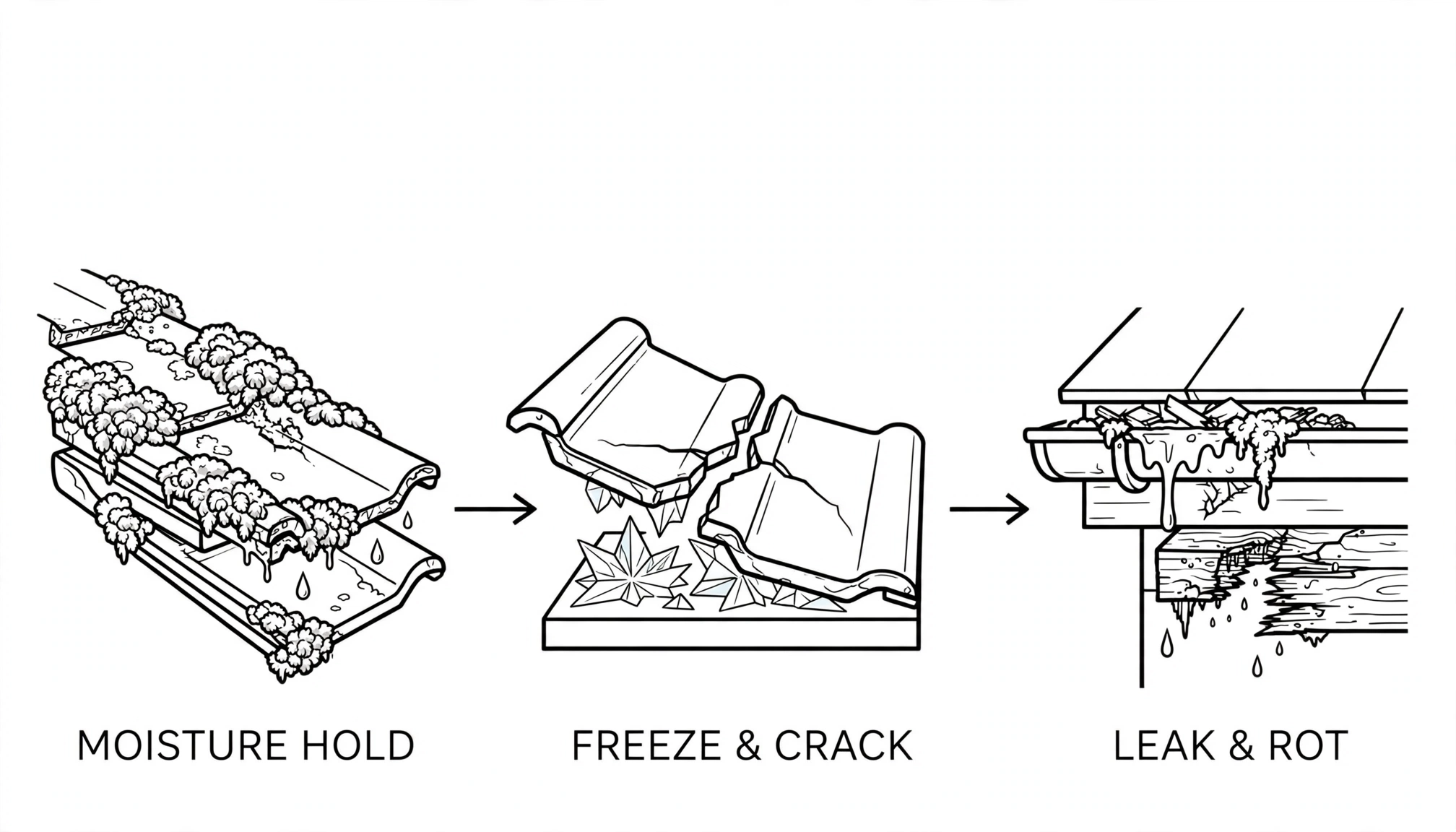
It starts because frequent rain and lingering damp keep tiles wet long enough for moss to anchor. Picture a shaded semi on a tree-lined street with heavy build-up along the ridge, or a north-facing slate slope that stays damp through the cooler months and picks up lichen patches. Once moss, algae or lichen get a hold, they work like a sponge. Moss and lichen hold moisture against tiles and slates, keeping the surface wet long after rain has passed.
During cold spells, trapped moisture can freeze. That movement can lift or crack tiles and open a route for water to travel beneath the roof covering. It is small at first – a lifted edge here, a hairline crack there – but each freeze-and-thaw pries a little wider. Water that should run straight off starts to sneak underneath instead.
The growth does not stay on the roof. Rain washes loose moss, leaves and grit into gutters, where clumps can block outlets and downpipes.
Once drainage slows, water overflows onto walls and around roof edges. Persistent overflow can soak timber, leave damp marks and push water where it should never collect. You will often spot it as stained walls and water spilling over in heavy rain while moss clumps sit in the channel. That overflow keeps walls and roof edges wet and feeds damp back into timber around the eaves.
Leave those two problems to join up and you get the expensive bit. Damaged tiles let water in from above while choked gutters keep everything soaked at the edges. The result is leaks, wood rot and an early need for repair or replacement. What began as surface growth turns into rotting timber you cannot see and a roof that wears out before its time.
The chain usually looks like this:
- Moss, algae or lichen anchors to damp tiles.
- Moisture stays against the roof surface.
- Cold weather creates freeze-and-lift pressure.
- Moss and debris enter gutters and block water flow.
- Overflow and damaged tiles create paths for leaks.
- Leaks can lead to timber rot and earlier repair or replacement.
The visible moss is the early warning. Clearing it gently while drainage still works is far easier than waiting for lifted tiles or damp inside the property.
Avoid treating valleys and ridge lines as cosmetic details. Water gathers there, so heavy build-up in those areas deserves attention first.
Put simply, gentle regular cleaning prevents leaks, rot and blocked drainage. Neglect lets moisture linger, tiles lift and gutters choke. Planned upkeep costs far less than repair or early replacement after neglect, and in a city where damp and shade bring growth back fast, waiting just lets the chain run on.
Which Cleaning Method Protects Your Tiles?
Two safe methods cover most roofs. The right choice depends on the tile or slate, its condition and how firmly moss has anchored to the surface.

Roof cleaning Glasgow work should begin with an assessment of the roof material, rather than a one-method approach. Low-pressure steam suits surfaces where controlled heat and gentle pressure can lift growth, while manual scraping suits delicate surfaces and heavy moss.
| Method | Best for | Main effect |
|---|---|---|
| Low-pressure steam | Suitable tiles | Lifts moss without stripping protective coating |
| Hand scraping | Delicate tiles and slates | Removes heavy moss without water force |
| Biocide treatment | Clean roof surfaces | Slows moss, algae and lichen regrowth |
| High-pressure blasting | – | Risks coating, mortar and felt damage |
Low-Pressure Steam
Low-pressure steam lifts moss, algae and grime without stripping the protective factory coating on suitable tiles. It gives a thorough clean while keeping water force controlled.
Use it where the roof material and condition support steam cleaning. Ridges, valleys and gutter lines still need careful attention, since those are common collection points for moss.
Manual Hand Scraping
Hand scraping removes heavy moss from vulnerable tiles and slates without water pressure. It is the safer route where aged or delicate roof materials need a careful touch.
The work should clear the moss rather than scrape aggressively at the surface. Soft brushes can remove loose residue after the main growth has been lifted away.
Why High Pressure Creates Risk
High-pressure blasting can strip tile coating and dislodge ridge mortar. It can also force water under the felt and into loft space, where the problem may stay hidden until damp appears.
Maker guidance also warns that pressure washing can void warranties. A fast-looking clean is a poor trade for damage to the roof covering or its supporting details.
Finish either safe removal method with biocide treatment. That slows regrowth and gives Glasgow’s damp conditions less chance to restart the cycle.
What to Check Before You Touch Your Roof
Start from the ground. You can spot a lot without climbing a ladder or stepping onto the roof.
Walk around the property in good daylight and write down what you see. Pay close attention after rain, when drainage problems are easier to spot.
- Look for dark streaks, green patches and moss gathering along ridges.
- Check valleys and shaded roof edges for leaves and heavier growth.
- Watch gutters and downpipes for moss clumps, overflow marks or water spilling over an edge.
- Note any overhanging branches that keep a slope shaded.
- Check whether paths, planting and access routes need protecting during the work.
- Keep an eye out for slipped or lifted tiles and mortar crumbs below ridge lines.
Do not plan roof access as a DIY inspection. Steep slopes need proper safety gear, edge protection and safe access arrangements.
Before work starts, agree that high-pressure methods are off the table. Ask for a thorough assessment and a clear fixed quote with no hidden fees, so the cleaning method, gutter work and tidy-up are all understood.
Inspect Your Roof and Spot Early Trouble
Look for patterns, not perfection. Dark streaks and green or black patches often show where algae and moss have settled before growth becomes thick.
Inspect from ground level with a clear view of the roof. Do not climb onto tiles to get a closer look.
- Scan the street-facing slope for streaks, patchy colour and obvious moss.
- Check ridges for build-up, especially where moss has gathered around mortar lines.
- Look at valleys where leaves and debris can hold moisture against the roof.
- Watch shaded edges, north-facing slopes and areas beneath trees.
- Look for slipped or lifted tiles, cracked pieces and mortar crumbs on the ground.
- Check gutters for clumps and walls for overflow stains beneath them.
A few small patches are the point to act. Thick moss can hide the condition of tiles underneath and send more debris into the gutters each time it rains.
Arrange a professional assessment if tiles have lifted, ridge mortar looks disturbed or water is overflowing. Cleaning should follow any repair needs, rather than covering up a roof defect.
Keep a short record of the roof’s trouble spots:
- Shaded slopes that stay damp
- Valleys that collect leaves
- Gutters that overflow after rain
- Ridges with visible moss
- Areas with loose tiles or mortar debris
Clear Gutters and Cut Back the Shade That Feeds Moss
Water needs a clear exit. Moss, leaves and roof debris wash into gutters, then gather at outlets and downpipes where a small blockage can hold back a lot of rainwater.
Clear gutters and outlets so water moves away without pooling at the roof edge. Check the flow after clearing, then remove the debris tidily rather than leaving it on paths or planting.
- Remove moss clumps from gutters and downpipe openings.
- Clear leaf build-up from valleys before it stays wet against the roof.
- Check for overflow marks on walls and beneath gutter joints.
- Run water through the system to confirm it reaches the downpipe and drains away.
- Bag and remove loose moss and leaves from paths, beds and garage areas.
Branches make the problem return faster. Trim back overhanging growth to give shaded slopes more light and airflow, while keeping an eye on the areas that remain naturally shaded.
For more gutter maintenance tips for damp climates, focus on flow after leaf fall and storms. Those checks catch blockages before overflow stains and damp take hold.
A clear gutter supports the roof clean. It stops removed moss becoming the next drainage problem.
Arrange a Gentle Steam Clean or Hand Scrape
A safe clean starts with the roof material. A professional assessment decides whether low-pressure steam or careful hand scraping is the safer route for the tiles, slates, ridges and level of moss build-up.
Outside Clean carries out roof cleaning Glasgow with a surface-safe process that removes moss, algae, lichen and grime without aggressive high pressure. The team also clears gutters and takes debris away, leaving paths and planting tidy.
The usual sequence is straightforward:
- Assess the roof material, pitch, access and moss coverage.
- Choose low-pressure steam for suitable tiles or hand scraping for delicate surfaces and heavy growth.
- Remove moss carefully around tiles, ridges, valleys and roof edges.
- Clear gutters, outlets and downpipes of washed-down debris.
- Collect debris from surrounding areas and leave paths and planting spotless.
- Apply preventive treatment after the clean.
A steam clean is useful where the tile can safely take controlled heat and gentle pressure. Hand scraping is better where water force is the wrong fit for the surface.
Example
A north-facing slate slope has lichen patches and moss packed around the ridge. The slates need careful treatment, and the gutters below hold moss clumps.
- Weak: Blast the slope with high pressure
- Strong: Hand scrape the growth, clear the gutters and finish with preventive treatment
The careful route protects vulnerable slates while dealing with the drainage debris that would otherwise wash back into the system.
Outside Clean brings local roof-care experience and a safety-first approach to each assessment. The aim is a clean roof that remains protected after the visible moss has gone.
Treat and Protect After the Deep Clean
Cleaning removes existing growth. Preventive biocide treatment slows the return of moss, algae and lichen after the roof has been cleared.
This final stage matters in Glasgow, where damp and shade can quickly give new growth a foothold. Treatment follows the deep clean, so it reaches a surface that is already free of heavy moss and grime.
The finishing check should cover more than appearance:
- Confirm the roof surface has an even, clear finish.
- Inspect for cracked tiles or loose pointing revealed during cleaning.
- Check that ridges, valleys, gutters and downpipes are clear.
- Make sure debris has been removed from windows, doors and garage areas.
- Get maintenance advice on gutter checks, light and airflow.
A clean roof can reveal faults that moss had hidden. Finding a cracked tile or loose pointing early gives you a chance to deal with it before water reaches deeper parts of the roof.
Keep the surroundings part of the job. Loose debris on a window sill, garage roof or planted border is still debris that needs clearing away.
Treatment works alongside simple upkeep. Clear drainage and less shade help the finish last longer, while the biocide slows the return of surface growth.
How Do You Keep a Glasgow Roof Moss-Free Year After Year?
Keep the early checks going. Moss is easier to manage when you catch the first green haze on a shaded slope, rather than waiting for thick clumps around ridges and valleys.

Use a simple rhythm through the year, with extra attention after leaf fall and storms. Water flow and shade are the two things to watch most closely.
- Check gutters and downpipes after leaf fall and storms.
- Look for water overflowing, stains on walls or moss clumps at outlets.
- Watch north-facing slopes, tree-covered sections and valleys for early growth.
- Clear leaves from valleys before they stay wet against the roof.
- Trim overhanging branches to maintain light and airflow.
- Arrange professional upkeep before moss anchors across the roof surface.
For a fuller roof maintenance schedule for Scottish homes, keep notes on the slopes that stay damp and the gutters that collect debris first. That record makes each inspection quicker.
Think in a short flow:
- See early moss or slow drainage.
- Clear debris and reduce shade.
- Check water flow.
- Book gentle roof care if growth is taking hold.
Regular attention protects the work already done. It also gives you a clearer view of tile condition before moss and leaves cover the warning signs.
How Much Does Professional Roof Cleaning Cost in Glasgow?
Professional roof cleaning in Glasgow starts from £700 for a standard residential property and can reach £6,000 for larger or complex roofs. A proper assessment should lead to a clear fixed quote with no hidden fees, so you know exactly what’s included before anything starts.
The price reflects the work needed on that particular roof, rather than a flat figure pulled from a list. These details shape the quote:
- Property size
- Roof pitch
- Ease of access
- Roof material
- Moss severity
- The amount of cleaning, gutter clearance and debris removal required
A steep, difficult-to-access roof with thick moss needs more work than a standard home with lighter growth. Size sets the basic time on the roof, while pitch and access decide what safety kit and setup is needed. Tile or slate type matters too, because delicate or aged surfaces call for careful hand scraping rather than steam, and that changes the pace of the job. Moss severity is often the biggest swing factor. Light surface growth is quick to lift, but thick build-up in valleys and around ridges takes full scraping plus steam detailing, then clearing gutters and taking debris away tidily.
The assessment is where the method and scope are set, including whether the roof needs steam cleaning or hand scraping. Low pressure steam lifts moss without stripping the protective coating, while manual scraping suits vulnerable tile types that don’t want water force. What’s ruled out is aggressive blasting, which can strip coating, dislodge ridge mortar and force water under the felt. You’ll get a straight recommendation for your roof, with no pushy extras.
It helps to look at what you’re actually buying. In Glasgow’s damp, shaded streets, moss anchors fast and keeps tiles wet. A shaded semi with heavy ridge moss and overflowing gutters is a common one, as is a north-facing slate slope that stays damp and picks up lichen patches. Left alone, trapped moisture can freeze and lift tiles, gutters choke, and you end up with leaks, timber rot and blocked drainage. Planned upkeep costs far less than repair or early replacement after neglect.
Every Outside Clean roof clean includes biocide treatment and a 3-Year Moss-Free Guarantee. The work is also fully insured up to £5 million.
| 5.0 Google rating | 120+ Google reviews | 1000 local homes and businesses served |
|---|---|---|
| £5 million insurance cover | 3-Year Moss-Free Guarantee | Biocide treatment included |
The useful comparison is planned care against the repair work that follows leaks, blocked drainage or damaged tiles. Get the roof assessed while moss is still a surface problem, then agree the full scope before any cleaning begins.
Why Glasgow Homeowners Trust Outside Clean for Roof Life
A roof clean needs careful handling. Outside Clean works across Glasgow with tile-matched care, using low-pressure steam or hand scraping instead of damaging high-pressure blasting.
5.0 Google rating from 120+ Google Reviews
That record is backed by work for over 1000 local homes and businesses. The focus stays practical: remove growth safely, clear the drainage route and leave the property tidy.
What the Service Covers
Each clean is planned around the roof’s material and condition. Low-pressure steam can lift moss on suitable tiles, while hand scraping protects delicate tiles and slates where water force is a poor fit.
- Moss, algae, lichen and grime removal
- Gutter and downpipe clearance
- Biocide treatment after every clean
- Debris removal from surrounding areas
- Tidy finish around paths, planting, windows, doors and garage areas
The full process also helps reveal cracked tiles or loose pointing that growth had concealed. That gives you a cleaner view of the roof’s condition after the work.
Protection and Reassurance
Outside Clean is fully insured up to £5 million, and every roof clean includes a 3-Year Moss-Free Guarantee. Those details matter when work involves roof access, drainage and surrounding property areas.
If you want safe roof cleaning Glasgow homeowners can book with confidence, request a free quote. The quote is based on an assessment of the roof, access and the level of moss present.
Roof Life in Glasgow: Common Questions
Can pressure washing damage roof tiles?
Yes. High pressure can strip protective coating, move ridge mortar and force water beneath the felt into loft space. Choose tile-matched low-pressure steam or hand scraping instead, and ask for the method before work begins.
What does roof cleaning cost in Glasgow?
Professional roof cleaning starts from £700 for standard homes and can reach £6,000 for larger or complex roofs. Size, pitch, access, roof material and moss severity affect the fixed quote, so arrange an assessment first.
What happens if moss stays on a roof?
Moss holds moisture against tiles and slates, which can freeze in cold spells and lift or crack the surface. It also washes into gutters, blocks drainage and raises the risk of overflow, leaks and timber rot, so deal with visible build-up early.
Should gutters be cleared with the roof?
Yes. Moss and debris washed from the roof can block gutter outlets and downpipes if they are left behind. Include gutter clearance and a flow check in the work, then keep checking after storms and leaf fall.
How can moss be kept away longer?
Pair gentle cleaning with biocide treatment, clear gutters and more light and airflow on shaded slopes. Outside Clean includes a 3-Year Moss-Free Guarantee with every roof clean, so ask about the ongoing care advice when the work is booked.
Give Your Roof More Good Years
Gentle roof care gives you the longest run at a sound roof. Match steam cleaning or hand scraping to the tile, clear gutters, reduce shade and finish with treatment so Glasgow damp has less chance to restart moss growth.
If moss, staining or overflow is already showing, request a free no-obligation quote for roof cleaning Glasgow. A clear fixed price and tidy finish make it easier to deal with the problem before it reaches the repair stage.