
Glasgow roofs can stay damp long after the rain stops. Low winter sunlight and frequent rainfall leave moss-covered tiles wet, and that moisture sits at joints where storm wind can force water deeper into the roof.
A thick mat of moss holds rainwater against the tile surface like a sponge. When colder weather arrives, trapped water freezes in small gaps, while high winds test every lifted edge and loose joint.
That chain can turn an autumn growth problem into a winter leak, blocked gutter, or damaged tile. Preventative roof cleaning in Glasgow removes the organic growth before freezing conditions and storm rain put pressure on the roof.
The aim is straightforward: clear the roof surface, keep water moving into the gutters, and stop damp debris from sitting against tiles through the winter. Emergency repairs are a poor time to discover that moss had already blocked drainage or pushed tiles out of place.
A clean roof also makes post-storm checks easier. You can see tile laps, ridge lines, valleys, and gutter runs clearly instead of trying to spot damage beneath a wet layer of moss.
The Triple Threat: Moss Sponge Effect, Water Weight, and Freeze-Thaw Cycles
A small crack is enough. Water enters tile pores and micro-cracks, then expands by roughly 9% as it freezes, pushing concrete, slate, and tile edges under repeated pressure.
The risk builds through three linked problems: saturated moss, retained water, and freezing temperatures. Glasgow roofs often face all three during winter storms.
Moss Holds Water Against Tiles
Moss forms dense mats across laps, ridge lines, and shaded areas. These mats absorb several times their dry weight in rainwater, increasing the load held on the roof and keeping tile joints wet for longer.
That retained water matters because it stays in the places a roof needs to shed moisture. Tile laps and weep channels need a clear route for rain to drain away.
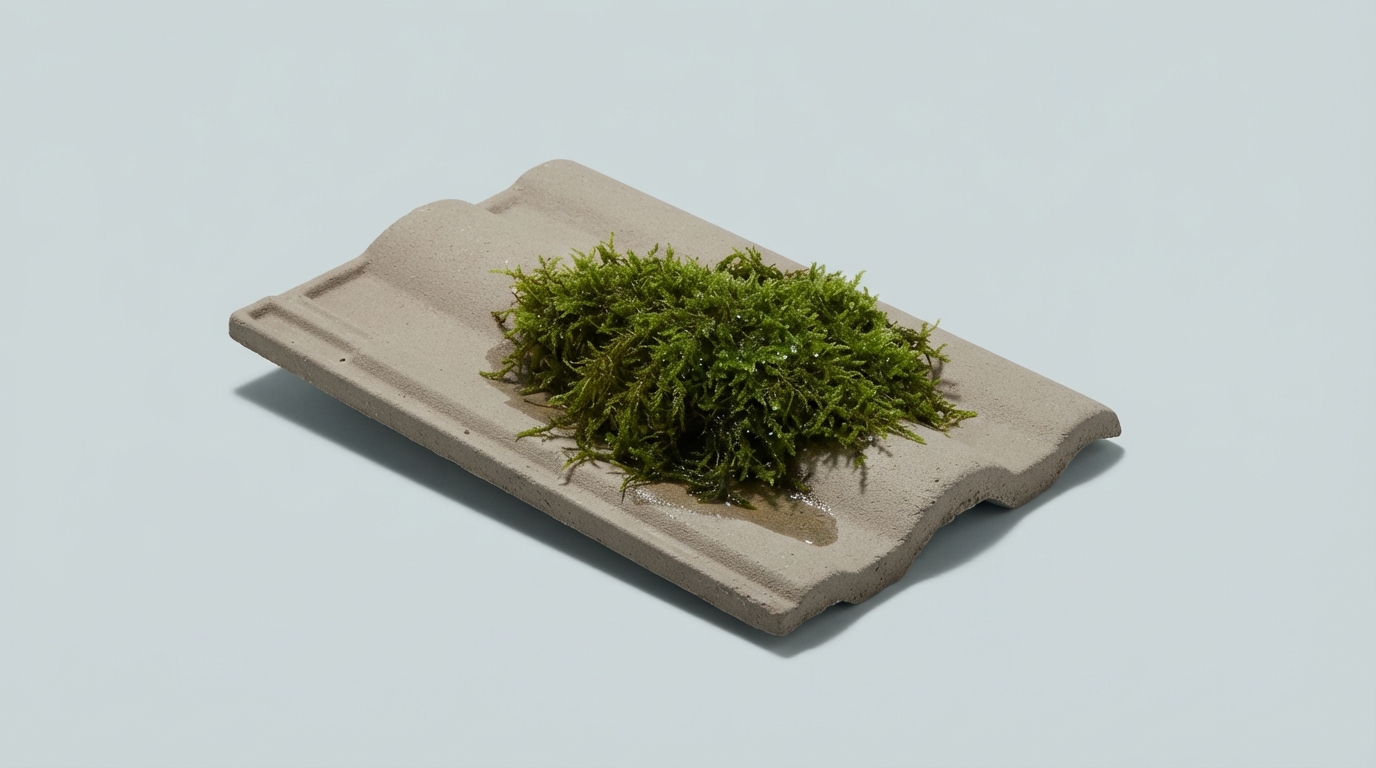
Freezing Water Forces Cracks Wider
Once water sits in pores or hairline cracks, a cold snap changes the pressure inside the tile. The expanding ice can widen existing damage and create new fractures over repeated freeze-thaw cycles.
Concrete and Scottish slate both need their surfaces kept clear of wet organic growth. The conditions behind moss damage on concrete and slate roof tiles are especially relevant where damp moss has settled into joints.
Ice Can Lift Tile Edges
Ice under a tile edge acts like a wedge. It can lift tiles out of alignment, leaving a route for storm winds to catch beneath them.
Wind-driven rain can then pass under loosened tiles and reach the underlay and battens. By the time a ceiling damp patch appears indoors, the roof has already been taking in water.
A homeowner may clear a visible gutter blockage after a storm, yet leave a saturated moss mat above it. The next spell of rain refills the same weak points, and the next freeze puts fresh pressure on the tiles.
Removing moss before winter cuts off this sequence at the roof surface. It reduces retained water, clears drainage paths, and leaves tile edges easier to inspect after high winds.
How Saturated Roof Moss Triggers Severe Gutter and Roofline Failure
Gutters fail downstream. Heavy rain can break loose moss clumps and carry them straight into gutter channels, valleys, and downpipes.
A gutter only works when water can travel freely to the downpipe. Moss debris catches on existing leaves and silt, then builds a dam that holds storm water along the roofline.
Blocked Gutters Add Weight
During a cold snap, backed-up water can freeze in the gutter. The added ice weight pulls on brackets and fascias, especially where the gutter was already full of wet debris.
Overflowing water also spills over the outer edge or runs back against the fascia. That keeps the roofline wet when it should be drying between storms.
Overflow Reaches Walls and Ceilings
Water that misses the gutter runs down external masonry. It can penetrate wall cavities and later show up as damp on internal ceilings or walls.
The visible patch indoors is often the last part of the chain. It starts with moss on the roof, moves through a blocked gutter, then follows the path of overflowing storm water.
Clear the Roof and the Drainage Route
Gutter clearing alone gives only a short break if moss remains on the tiles. The next downpour can wash another load of debris into the same channel.
A proper clean covers both surfaces:
- Remove moss from tile laps, ridge lines, and valleys.
- Clear gutters and downpipes of loose debris.
- Reconnect downpipes and run a water flow test.
- Check that water leaves the gutter without backing up.
- Rinse walls, windows, paths, and flowerbeds after debris removal.
The water flow test is worth doing before freezing weather arrives. Clear channels protect the roofline, while a clean roof reduces the debris that causes the next blockage.
Manual Scraping vs. Low-Pressure Steam Cleaning: Choosing the Right Method
High-pressure jet washing should never be used on a roof. It can strip factory coatings, blow mortar from ridge areas, and void tile warranties.
The right cleaning method follows the tile material, roof pitch, age, and condition. Our roof cleaning services use manual scraping or low-pressure steam cleaning instead of abrasive pressure.
Manual Scraping for Controlled Moss Removal
Manual scraping removes visible moss with profile-matched blades shaped for the tile. This gives the operator control around laps and edges without blasting water beneath tiles.
It suits roofs where thick moss needs lifting away carefully, including Marley, Redland, concrete, and Scottish slate tile profiles.
- Profile-matched blades follow the tile shape.
- Moss is lifted from laps and joints with controlled contact.
- Tile surfaces avoid the force of jet washing.
- Loose debris can be contained before it reaches gutters.
Low-Pressure Steam for Delicate Tiles
Low-pressure steam cleaning uses superheated water at 150°C to remove biological growth and spores without abrasive pressure. It is a careful choice for delicate or fragile tiles where surface protection matters.
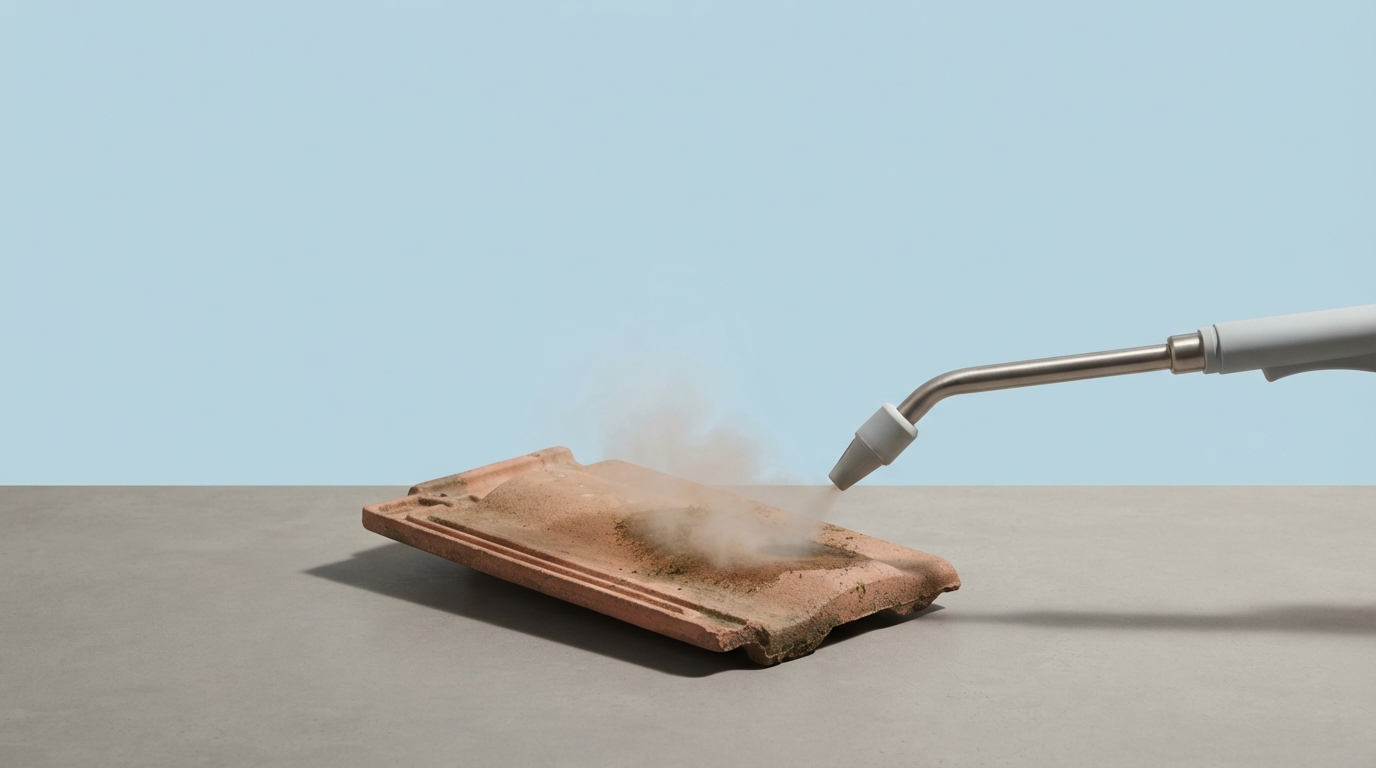
Steam reaches growth on the tile surface while keeping pressure low. That matters on older roofs, where a hard blast can expose weak points that were previously hidden by moss.
- Superheated water is used at 150°C.
- Low pressure avoids the force used in jet washing.
- The method helps remove biological spores from the tile surface.
- It can be selected for delicate or fragile tile conditions.
Choose by Roof Condition
Manual scraping and steam cleaning are selected after a roof assessment. Tile type, pitch, age, visible growth, and safe access all affect the method.
For a steep roof with heavy moss, profile-matched scraping can remove bulk growth with close control. For fragile tiles, low-pressure steam can clean the surface without abrasive force.
Our guide to steam cleaning versus manual scraping methods explains why the roof condition should set the method. The decision protects tile glaze, joints, and the drainage route that winter rain depends on.
The goal is a clean roof surface with tiles still in their proper position. A faster, harsher clean creates risks that a careful method avoids.
Why Professional Biocide Is Essential for Long-Term Winter Protection
Visible moss is only part of the problem. Scraping removes the bulk growth, but microscopic spores and rhizoids can remain inside porous tile surfaces.
Those remnants give moss a way to return after the roof looks clean. A professional biocide wash follows physical removal so the treatment reaches growth that blades and steam do not fully remove.
What the Biocide Treatment Does
Government-approved, biodegradable biocide penetrates porous material and kills microorganisms at the cellular level. It treats the roof surface after moss removal, rather than leaving spores to settle back into damp tile pores.
The treatment then works with rainfall over the following months. Rain helps the roof self-clean as treated organic material breaks down and washes away.
- Physical cleaning removes visible moss and debris.
- Biocide targets microscopic spores and rhizoids left in tile pores.
- Rainfall supports the gradual self-cleaning process.
- The treatment helps keep winter moisture from gaining a hold on the tile surface.
Our biocide treatment guide explains why the wash belongs after scraping or steam cleaning.
Written Cover for Moss Regrowth
Outside Clean backs professional biocide treatment with a written 3-Year Moss-Free Guarantee. The roof stays clearer for an expected 3 to 5 years after a professional biocide softwash application.
That longer window matters before winter. Fewer moss mats mean less water held at joints, less debris moving into gutters, and clearer tile edges after a storm.
A roof that has been scraped without treatment can look tidy in the short term. The biocide wash deals with the growth that remains out of sight, which is the part that drives regrowth.
The 6-Stage Storm-Proof Roof Cleaning Process by Outside Clean
Six stages keep the job controlled. Outside Clean starts with the roof condition and finishes by checking that debris and water have a clear route away from the property.
This process avoids walking on fragile tiles where possible and keeps moss debris out of gutters and surrounding grounds.
- Assess the roof condition. Satellite mapping and high-reach visual inspection identify tile type, roof pitch, moss coverage, access points, and areas needing close attention.
- Protect the ground and drainage. Landscaping is hydrated to create a barrier, and downpipes are disconnected before roof debris is removed. This stops moss from being washed into drains during cleaning.
- Set up safe access. Telescopic equipment, mobile elevated work platforms (MEWPs), or scaffold towers are selected for the roof. The access method avoids unnecessary foot traffic on fragile tiles.
- Remove growth with the right method. Thick moss is lifted with tile-matched profile blades, while delicate surfaces can be cleaned with low-pressure steam at 150°C. The method is chosen during the assessment.
- Apply the biocide softwash. Professional-grade biocide is applied after physical cleaning to neutralise microscopic root spores left in porous tile surfaces.
- Clear and test the drainage route. Gutters are vacuum-cleared, downpipes are reconnected, and walls, windows, paths, and surrounding areas receive a full ground-level washdown.

A final check should cover the points that matter before winter weather arrives:
- Tile laps and ridge lines are clear of moss debris.
- Weep channels and valley routes are unobstructed.
- Gutter channels and downpipes pass a water flow test.
- Walls, windows, flowerbeds, and paths have been rinsed clean.
- No moss debris remains on the ground around the property.
A standard residential roof clean and biocide wash takes 1 to 2 days. That time covers the work around the roof as well as the roof itself, which is why a clean finish includes drainage and washdown rather than only moss removal.
How Much Does Professional Roof Cleaning Cost in Glasgow?
Roof cleaning in Glasgow starts at £700 for a standard residential home. Large or complex properties can reach £6,000, because the roof itself and the safe access route both shape the price.
A fixed figure before inspection would miss the details that affect the work. A steep slate roof with difficult access needs a different setup from a lower-pitch concrete tile roof.
What Sets the Price
- Property size: More roof area takes more time to inspect, clean, treat, and clear of debris.
- Roof pitch: Steeper roofs need more careful access and working arrangements.
- Tile type: Concrete and Scottish slate call for methods suited to their surface and condition.
- Access: Cherry pickers, scaffold towers, and other access arrangements affect the work required.
- Moss coverage: Heavy growth means more material to remove and contain before it reaches gutters.
The cost covers more than a surface clean. The work can include roof assessment, safe access, manual scraping or low-pressure steam cleaning, biocide treatment, gutter clearance, and washdown.
Outside Clean carries £5 million public liability insurance for work at height and provides free quotes. Professional biocide treatment also comes with a written 3-Year Moss-Free Guarantee.
Preventative cleaning gives you a known starting price before storm damage develops. Structural storm repairs or a full reroof can run into thousands of pounds, while removing moss and clearing drainage tackles the moisture problem before it reaches that stage.
Frequently Asked Questions About Glasgow Roof Cleaning
Will High-Pressure Power Washing Damage My Roof Tiles?
Yes. High-pressure jet washing can strip factory coatings, blow mortar from ridge areas, and void tile warranties. Manual scraping or low-pressure steam cleaning protects the tile surface without abrasive pressure. Where steam cleaning is suitable, superheated water at 150°C is applied at low pressure to remove biological spores without the force associated with jet washing. The aim is to lift growth from the roof rather than drive water beneath tiles or disturb vulnerable joints.
A careful clean should also include an inspection of tile laps and ridge lines once moss has been removed. This confirms that joint spaces and weep channels are not still packed with debris, which matters as much as the visible appearance of the tiles.
How Does Moss Removal Prevent Winter Storm Leaks and Tile Cracking?
Moss removal stops wet mats from holding water against tile joints and pores. Less retained water means fewer freeze-thaw pressures, clearer tile edges, and less moss debris entering gutters. That is especially useful before Scottish winter storms, when repeated wet and freezing conditions can put extra stress on damp roofing materials.
The drainage check is an important part of the preventative work. Valleys, gutter channels, and downpipes should be checked with a water flow test so water can move away freely before freezing conditions arrive. Clearing the roof but leaving moss in a valley or disconnected downpipe does not solve the underlying drainage issue.
How Long Does a Professional Roof Clean Take on a Standard Home?
A thorough residential roof clean and biocide wash usually takes 1 to 2 days. The work includes cleaning, treatment, gutter clearance, downpipe reconnection, and ground-level washdown. This timeframe also allows for the practical finishing checks that are easy to overlook: removing fallen moss from the grounds, checking roof drainage routes, and making sure the surrounding area is left clear.
The cleaning method should suit the roof and the growth present. Manual removal deals with heavier moss, while low-pressure steam cleaning or a softwash treatment can address remaining organic contamination without relying on aggressive pressure.
Is Biocide Safe for My Garden, Pets, and Surrounding Lawn?
The biocide treatment used is government-approved and biodegradable. Ground protection, landscaping hydration, downpipe disconnection, and thorough rinsing of surrounding walls, windows, and flowerbeds are part of the cleaning process. These steps help keep treatment residue and roof debris away from areas around the property while the work is underway.
At the end of the job, check that flowerbeds, walls, windows, and the lawn have been rinsed down, with no leftover moss debris on the ground. Downpipes should be reconnected only after the cleaning stage, then tested as part of the drainage check.
How Often Should a Glasgow Home Have Its Roof Professionally Cleaned and Treated?
A professional biocide softwash application is expected to keep tiles clear of organic contamination for 3 to 5 years. The treatment is backed by a written 3-Year Moss-Free Guarantee against moss regrowth. Rather than treating on a fixed annual schedule, use the condition of the roof, gutters, valleys, and visible moss growth to decide when another professional inspection or treatment is needed.
Prepare Your Roof Before the Next Scottish Winter Storm
Winter storms expose weak points fast. Removing moss, clearing the drainage route, and applying biocide treatment reduce the water retention and freeze-thaw pressure that lead to leaks and tile damage.
Outside Clean has 120+ verified 5-star Google reviews and £5 million public liability cover for work at height. Request a free roof survey and quote today, then get the roof cleaned and treated before the next Scottish winter storm.