Table of Contents
- Project Highlights: The Giffnock Roof Transformation Summary
- Why Moss Growth Threatens Glasgow Homes: The Hidden Risks
- Tile Assessment: Deciding Between Manual Scraping and Steam Cleaning
- Step-by-Step Restoration: How Outside Clean Transformed the Giffnock Roof
- The Biocide Treatment: Preventing Organic Regrowth for Years
- Complete Site Washdown: Leaving the Property Spotless
- Roof Cleaning Costs in Glasgow: Investment and Value Factors
- Frequently Asked Questions About Roof Cleaning in Glasgow
- Restore Your Glasgow Roof with Outside Clean
A Giffnock homeowner faced a roof blanketed in thick moss beneath mature suburban trees. The growth held moisture across the roof pitch, while detached clumps had blocked the downpipes and left the property perimeter looking neglected. Outside Clean was asked to restore the roof without damaging its tiles.
That setting is familiar across South Glasgow. Tree shade slows drying after rain, and moss then acts like a waterlogged sponge against the roof covering.
The initial survey focused on the tile material and profile, roof pitch, density of growth, drainage routes, and any visible defects. Blocked gutter channels mattered as much as the visible moss because loose debris can travel into downpipes and restrict drainage.
The job called for controlled removal rather than force. Outside Clean’s roof cleaning in Glasgow uses tile-matched hand scraping, low-pressure superheated steam where the surface suits it, and a follow-up biocide treatment to clean the tile pores.
The aim was straightforward: clear the roof, gutters, and surrounding ground while keeping the garden, windows, paths, and roof covering protected throughout the work.
Project Highlights: The Giffnock Roof Transformation Summary
This Giffnock job combined visible restoration with measures intended to keep the roof clear after the team left.
- Dense moss covered the roof pitch, with loose material affecting gutter channels and downpipes.
- Custom-profile hand scrapers removed the bulk growth tile by tile, followed by low-pressure steam cleaning at 150°C for stubborn lichen and grime.
- A professional biocide treatment saturated the cleaned tile surface and came with a written moss-free warranty.
- The work was completed within a single working day, with downpipes, grounds, and exterior surfaces cleaned before handover.
Why Moss Growth Threatens Glasgow Homes: The Hidden Risks
Moss holds water against a roof. In Glasgow and shaded parts of Giffnock, damp conditions and tree cover can keep roof tiles wet for longer, giving moss, lichen, and algae a place to establish.
That moisture load affects more than the roof’s appearance. Thick moss retains water across tiles and within joints, adding strain during wet weather and making the surface slower to dry.
When temperatures fall below freezing, trapped moisture can expand. Concrete and slate tiles can crack through repeated freeze-thaw exposure, and tiles may shift out of position as moss builds up around laps and interlocks.
Gutters are the second problem. Detached clumps slide into channels and downpipes, where they can form blockages. Water then overflows at roof level and can run down exterior walls, increasing the risk of damp reaching internal wall areas.
For a Giffnock home with dense tree shade, this is why roof care needs to include drainage. Our roof cleaning services in Giffnock clear roof debris and gutter runs as part of a controlled restoration, rather than treating the roof surface in isolation.
A roof replacement can cost more than £10,000. Removing established moss before freeze-thaw damage and drainage problems build up protects the existing roof covering for longer.
Tile Assessment: Deciding Between Manual Scraping and Steam Cleaning
The tile profile decides the cleaning method. The Giffnock roof needed bulk moss removal from its concrete interlocking tiles, followed by low-pressure steam for material that remained attached to the surface.
High-pressure jet washing was ruled out. Heavy pressure can strip factory coatings and can void tile warranties, leaving a roof surface exposed after the visible moss has gone.
Custom-shaped scraper blades fit the tile profile, including Marley, Redland, Scottish slate, and concrete coverings. On interlocking concrete tiles, the blade lifts thick clumps from lap joints and channels with controlled contact instead of forcing water beneath the tiles.
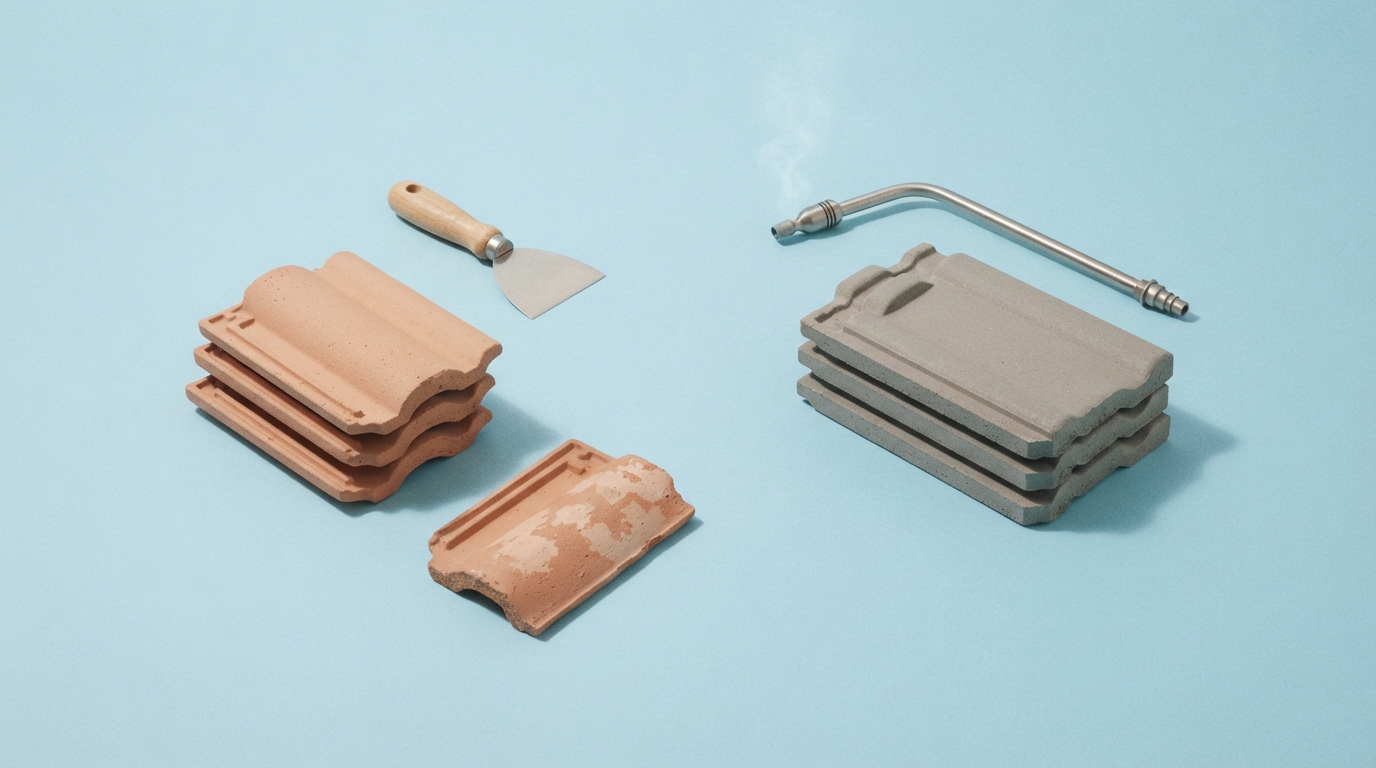
Steam has a different role. Superheated steam at 150°C removes stubborn lichen and embedded grime with low mechanical pressure, which makes it suited to surfaces where abrasion would be a poor choice.
The survey determines whether scraping, steam cleaning, or both are appropriate. It checks the tile material, pitch, moss density, and visible defects before access equipment goes up.
After the surface assessment, the crew chose the cleaning sequence that kept direct contact and pressure appropriate for the roof. You can see how this approach works across our roof cleaning work, where tile condition guides the method rather than a single cleaning technique being used on every property.
Step-by-Step Restoration: How Outside Clean Transformed the Giffnock Roof
The restoration followed a controlled sequence, starting at ground level and ending with clear drainage and a clean perimeter. Each stage protected the property while dealing with the moss that had built up across the Giffnock roof.
- Protect the property and garden. Downpipes were disconnected or plugged so falling moss could not block sub-surface drainage lines. Protective sheeting covered lawns, patio areas, and flowerbeds, while surrounding foliage was pre-soaked with clean water before treatment.
- Set up safe access. High-reach poles and access towers gave the team reach across the roof without unnecessary foot traffic on fragile tiles. The roof pitch, tile condition, and access route informed the setup.
- Remove the bulk moss by hand. Tile-matched scraper blades worked across the roof tile by tile. This cleared thick moss clumps from surfaces, interlocks, and lap joints without using aggressive water pressure.
- Treat stubborn residue with steam. Low-pressure steam cleaning dealt with lichen and grime that remained after scraping. The controlled pass cleaned the tile surface while avoiding the force associated with jet washing.
- Clear the guttering. A high-reach gutter vacuum removed detached moss and debris from channels and runs. This was a necessary part of the job because a clean roof still creates a drainage problem if its gutters remain packed with debris.
At that point, the roof surface was ready for the preventative wash. The crew also checked that no moss or lichen clumps remained around tile laps before moving on to treatment and final clean-down.
The Biocide Treatment: Preventing Organic Regrowth for Years
Visible moss is only part of the problem. Hand scraping and steam cleaning clear the growth you can see, including clumps caught in tile interlocks and lap joints, but fungal spores and rhizoids can remain inside porous tile surfaces. Those microscopic roots and spores are the starting point for new growth, particularly where moisture settles on the roof.
That is why the Giffnock roof received a biodegradable, government-compliant biocide wash only after the mechanical clean was complete. Applied through a low-pressure application lance, the treatment sanitises tile pores without relying on aggressive pressure. It reaches the microscopic material that would otherwise support fresh growth after the visible moss has gone.
The order of work matters. Applying treatment over heavy moss would not give the same contact with the tile surface. First, custom-profile scraping removes the bulk of the moss; superheated low-pressure steam then clears remaining surface contamination. With the tiles exposed, the biocide can be applied evenly across the roof rather than simply coating organic debris.
Care is also needed around the property during this stage. Downpipes may be disconnected or plugged while loose material is cleared, and protective sheeting helps keep lawns, patios and flowerbeds protected. Surrounding foliage is pre-soaked with clean water before treatment to reduce biocide absorption. These steps keep the focus on treating the roof while allowing gutters, drainage runs and the ground perimeter to be checked and rinsed afterwards.
Rain then helps the treatment continue its work over subsequent months. The wash self-cleans across the roof surface and is intended to prevent moss, algae, and lichen returning quickly after the restoration. This gradual action is especially useful on porous tiles, where a clean-looking surface alone does not prove that growth has been dealt with below the surface.
This stage gives the cleaning work its staying power. Without it, a roof can look clean after scraping while growth remains established below the surface. Uniform coverage matters, so post-clean high-resolution photographs document the treated roof surface and confirm consistent biocide saturation across the tiles.
Outside Clean provides a written 3-Year Moss-Free Warranty after professional biocide treatment. The work is also backed by £5 million public liability insurance for roof cleaning and working at height.
Complete Site Washdown: Leaving the Property Spotless
A clean roof needs a clean perimeter. The final work at the Giffnock property dealt with every place scraped moss and wash residue could have travelled.
The crew bagged the moss debris collected from the roof, gutters, and ground perimeter for eco-friendly disposal. Protective sheeting was then removed carefully so debris did not end up in lawns, flowerbeds, or patio joints.
External surfaces received a full ground-level rinse, including:
- Facade walls
- Windows and doors
- Driveways and paths
- Patio areas
- Gutter outlets and downpipe connections
The downpipes were reconnected only after clean water flowed freely through each gutter run. That final drainage check confirmed the earlier blockage had been cleared rather than pushed further into the system.
A visual inspection followed with the homeowner. The check covered tile laps and interlocks for any remaining moss or lichen clumps, clean exterior surfaces around the property, and post-clean photographs showing the treated roof.
Roof Cleaning Costs in Glasgow: Investment and Value Factors
Glasgow roof cleaning starts at £700. Large, complex, or extensive projects can reach £6,000, with the final fixed quote based on the work needed to clean the roof safely.
Several site details shape the price:
- Property size: More roof area means more scraping, steam cleaning, treatment, and debris removal.
- Roof pitch: Steeper roofs can need different access arrangements.
- Tile material: The cleaning method must suit concrete, slate, or another roof covering.
- Moss density: A thick blanket of established moss takes longer to remove and clear from gutters.
- Access equipment: Towers, telescopic reach systems, scaffolding, or mobile elevated work platforms may be needed for safe reach.

The price should cover the whole job, including property protection, moss removal, gutter clearance, biocide treatment, and site washdown. Outside Clean gives an upfront fixed quote with no hidden charges.
For a clearer view of the climate pressures behind upkeep costs, see our guide to exterior roof maintenance pricing. A survey identifies the roof’s material, access needs, drainage condition, and level of growth before the quote is set.
You can request roof cleaning in Glasgow for a property-specific assessment.
Frequently Asked Questions About Roof Cleaning in Glasgow
Will Cleaning Damage or Dislodge My Roof Tiles?
Roof cleaning should be planned around the roof’s material, pitch, moss density, and condition, all of which are checked during the initial aerial or ground-level survey. Rather than applying broad force across the roof, professionals use manual scraper blades matched to the tile profile, including concrete, slate, Marley, and Redland coverings. Moss is lifted from tile faces, overlaps, and interlocks with a method suited to that profile.
Low-pressure superheated steam is another non-destructive option. It operates at 150°C to remove organic growth without the heavy mechanical pressure associated with jet washing. Secure access equipment also helps limit unnecessary foot traffic, while existing structural defects can be identified before cleaning begins.
How Long Does a Standard Residential Roof Clean Take?
A standard domestic roof restoration takes 1 to 2 days. Timing depends on the roof’s size, pitch, tile type, the density of moss and lichen, and the access needed to work safely. Preparation is part of that time: downpipes may be disconnected or plugged so detached moss cannot enter drainage lines, and protective sheeting is placed over lawns, patios, and flowerbeds.
The Giffnock project was completed within a single working day because the site conditions and scope allowed it. Larger or more complex roofs may need the full standard timeframe, particularly where there is extensive growth, difficult access, or more detailed gutter clearance and ground-level rinsing required.
Why Is Pressure Washing Bad for Roof Tiles?
High-pressure jet washing can strip factory coatings and void tile warranties. Its force can also be unsuitable for a roof covering, especially around tile edges, laps, and joints where water and pressure should not be driven aggressively. Removing the visible moss quickly is not enough if the process damages the surface that is meant to protect the roof.
Controlled hand-scraping and low-pressure steam are used instead. These methods target moss, lichen, algae, and atmospheric soot while avoiding the harsh impact of a pressure washer. After cleaning, gutters and downpipes are checked to confirm that water flows freely and that debris has not been left in the system.
What Is Included in the 3-Year Moss-Free Guarantee?
The 3-Year written moss-free warranty follows professional biocide treatment after the roof has been mechanically cleared. The treatment is applied at low pressure and sanitises the pores of the tiles, addressing microscopic spores and rhizoids that can remain after the visible moss has been removed.
A professional finish also includes checking that no moss or lichen clumps remain in tile interlocks or lap joints, rinsing surrounding paths, walls, windows, and driveways, and recording post-clean photographs showing uniform biocide coverage.
Are the Biocide Cleaning Products Safe for Pets and Surrounding Plants?
The treatment used is biodegradable and government-compliant. Precautions are taken before application: surrounding foliage is pre-soaked with clean water to reduce biocide absorption, and ground-level protective sheeting covers lawns, flowerbeds, and patio areas. Downpipes are also managed during the work so loosened moss does not create blockages below ground.
These measures protect the areas around the roof as well as the roof itself. Once the work is complete, the ground perimeter is checked and rinsed clean, including nearby surfaces such as paths, driveways, façade walls, and windows.
Restore Your Glasgow Roof with Outside Clean
The Giffnock roof went from a thick moss-covered surface and blocked drainage routes to a cleaned, treated roof with clear gutters and a rinsed perimeter. That protection comes from choosing the right tile-safe method, then following through with biocide treatment and a complete site clean-down.
Outside Clean has earned 120+ five-star verified customer reviews and carries £5 million public liability insurance for roof cleaning and working at height. If your Glasgow or East Renfrewshire roof is holding moss and moisture, request a free, no-obligation roof cleaning quote today.