Table of Contents
- Key Takeaways: Why Roof Moss Demands Immediate Action
- Why Does Glasgow’s Climate Accelerate Roof Moss Growth?
- The 5 Structural Dangers of Leaving Moss on Your Roof
- Why Pressure Washing Can Ruin Your Roof
- Safe Removal Methods: Steam Cleaning vs Manual Scraping
- The Vital Role of Biocide Softwash Treatments
- How Often Should Glasgow Properties Be Cleaned and Inspected?
- What to Expect During a Professional Roof Clean with Outside Clean
- Roof Cleaning Methods Compared: Safety, Lifespan, and Tile Suitability
- Frequently Asked Questions About Roof Moss & Cleaning in Glasgow
- Protect Your Glasgow Home with Safe, Professional Roof Care
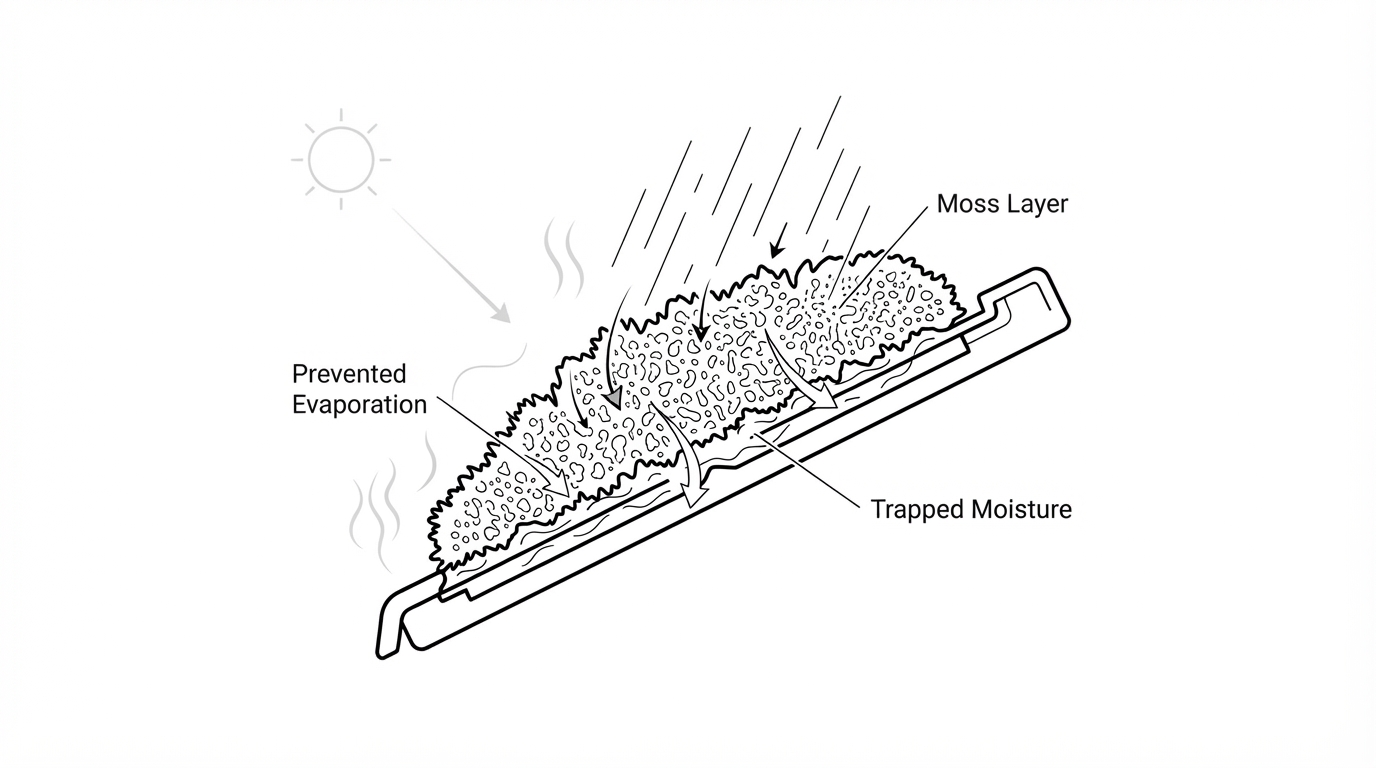
Glasgow rain gives moss the conditions it needs. Once it takes hold across tiles or slate, the green cover holds water against the roof instead of letting the surface dry between showers.
That trapped damp reaches beyond appearance. Moss can work into tile laps, send clumps into gutters, and keep roofing materials wet through cold weather. A roof that looks overdue for a clean can be developing cracks, gaps, and hidden water entry points.
The risk builds quietly. Saturated moss adds weight, rainwater overflows where gutters are blocked, and repeated wetting puts pressure on tiles, mortar, timber, and insulation.
Early removal stops that chain before small growth turns into repair work. A safe roof cleaning Glasgow service removes the moss, clears the drainage path, and treats the roof surface so spores do not quickly return.
Waiting for a visible leak is a costly trigger. By then, water may already have reached the roof space, fascia boards, or wall cavities.
Key Takeaways: Why Roof Moss Demands Immediate Action
Moss needs prompt attention because it holds water where a roof needs to dry.
- Damp moss retains moisture against tiles and slate, increasing freeze-thaw cracking during Scottish winters.
- Moss beneath tile laps can lift roofing materials and create gaps for wind-driven rain.
- Moss clumps block gutters and downpipes, sending overflow towards soffits, fascias, brickwork, ceilings, and wall cavities.
- High-pressure washing at 250-300bar can strip tile coatings and push water under tile laps.
- Manual scraping or low-pressure steam cleaning, followed by biocide treatment, removes growth without abrasive roof cleaning.
A clean roof also needs clear gutters. Removing surface moss while leaving debris in the drainage system only leaves part of the problem in place.
Why Does Glasgow’s Climate Accelerate Roof Moss Growth?
Glasgow recorded annual precipitation of 1370mm in a Glasgow City Council rain planning report. That persistent rain gives moss regular moisture across concrete tiles, clay tiles, and Scottish slate.
Moss grows where damp lingers. Low winter sun angles and humid air slow natural drying, so roof surfaces can stay wet long after a shower has passed. Moss, lichen, and algae then find a damp surface where their growth can continue.
Shaded homes face the strongest build-up. Tree-lined streets and shaded suburban plots, including areas such as the West End and Southside, can leave parts of a roof with little direct sun. North-facing slopes need close attention for the same reason.
The pattern is easy to spot: a thin green stain becomes thicker clumps, then the clumps settle around tile edges and laps. Water remains beneath those colonies, placing the roof under repeated damp exposure.
A visual check after wet months helps you find growth while it is still confined to the surface. Check the shaded slopes, tile edges, ridge lines, gutters, and the areas below overhanging branches first.
The 5 Structural Dangers of Leaving Moss on Your Roof
Five separate problems can start with a moss-covered roof. Each begins with retained water and gets worse when moss is allowed to build up around tile joints and drainage channels.
Freeze-Thaw Tile Fracturing
Saturated moss holds water through cold weather. When that water freezes and expands, it can crack concrete tiles and contribute to slate delamination.
Cracked edges give rainfall a route beneath the roof covering. Small fractures are easy to miss from ground level, yet they can admit water each time the wind drives rain across the roof.
Excess Structural Weight
Wet moss acts like a sponge and can add hundreds of kilograms of static load to roof trusses and battening. The extra load remains in place while the moss stays saturated.
Timber components already dealing with damp are then carrying unnecessary weight. Removing established moss reduces that ongoing strain.
Tile Displacement and Gapping
Rhizoids can grow beneath tile laps and push tiles out of their intended position. A lifted tile edge creates a path for wind-driven rain to reach the underlay and roof space.
The danger is greater around irregular moss mats, where growth is thickest at overlaps. A clear tile lap gives rainwater a defined route down the roof.
Gutter Blockages and Wall Damp
Moss breaks away in clumps during rain and enters gutters and downpipes. Once drainage is restricted, water can overflow onto soffits, fascia boards, and exterior brickwork.
That overflow can force water towards wall cavities rather than through the downpipe. Gutters need clearing as part of moss removal, not as an afterthought.
Internal Rot and Insulation Damage
Water entering through cracked or displaced tiles can remain hidden in the roof space. It can rot timber roof trusses and spoil loft insulation before a ceiling stain appears.
A homeowner may first notice a blocked gutter or a patch of moss, while the consequence sits out of sight. Early roof cleaning protects the route water should take, from tile surface to gutter and downpipe.
Why Pressure Washing Can Ruin Your Roof
A 250-300bar pressure washer can damage roof tiles in seconds. Its force can strip the factory sand-faced coating from concrete tiles, leaving the surface permanently more porous.
Pressure washing also creates problems that are hard to see during the job:
- It can dislodge ridge mortar and pointing.
- It can chip tile edges and disturb tile laps.
- It can force pressurised water backwards beneath tiles and into the roof space.
- It can remove protective coatings that help the roof shed water.
- It can void tile product warranties, as UK tile manufacturers state.
The clean finish can be misleading. Moss may be gone, but an exposed tile surface can take on water more readily afterwards and create fresh conditions for biological growth.
A roof needs a method matched to its material. Fragile slate and coated concrete tiles should be cleaned with controlled, low-pressure work rather than a high-output jet wash.
Safe Removal Methods: Steam Cleaning vs Manual Scraping
Manual scraping and low-pressure steam cleaning protect roof materials when the method matches the tile. The right choice depends on the tile profile, its condition, and whether the roof includes fragile slate.
Manual Scraping
Manual scraping removes moss mats with contoured blades shaped for Marley, Redland, and concrete tile profiles. The blade lifts moss away without abrasive contact across the tile face.
- Custom profile blades follow the roof tile shape.
- Thick moss can be removed cleanly from tile edges and laps.
- The method avoids high-pressure water entering beneath tiles.
- Removed material can be collected before it reaches gutters and downpipes.
Low-Pressure Steam Cleaning
Steam cleaning uses 150-degree vapour at around 80bar for delicate tiles and historic slates. The heat sanitises the surface while the pressure remains far below the 250-300bar output associated with destructive jet washing.
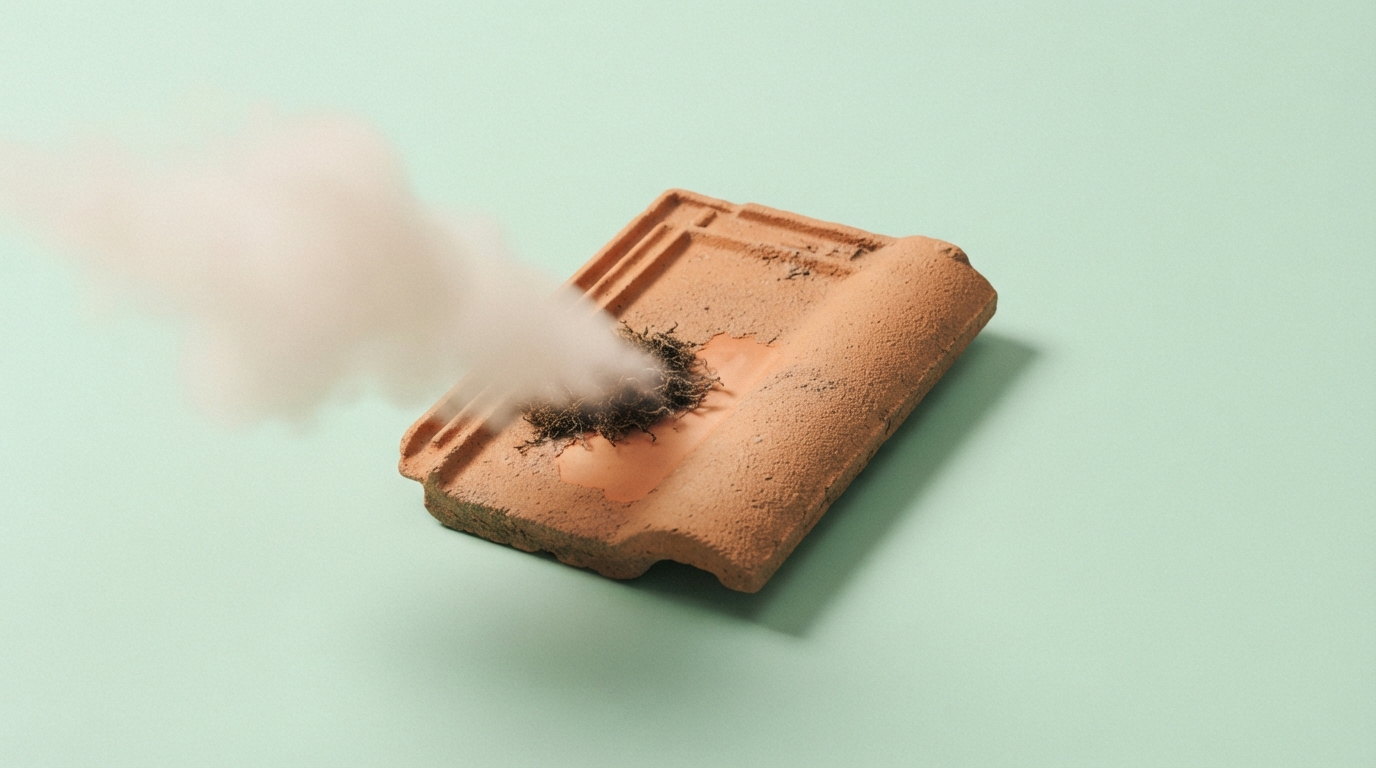
- Superheated vapour removes moss with low mechanical force.
- Low pressure suits fragile tile and slate surfaces.
- The process avoids abrasive cleaning across the roof.
- Steam reaches surface growth before the follow-up biocide wash.
Outside Clean selects the approach around the property’s tile type rather than forcing one method onto every roof. Downpipe isolation and gutter extraction keep dislodged moss out of the drainage system, while high-reach carbon poles and mobile elevated work platforms provide access where needed.
The goal is a clean roof surface with intact tiles, clear gutters, and no pressure-driven water entering the roof space.
The Vital Role of Biocide Softwash Treatments
Scraping removes visible moss, but biocide treatment deals with the growth left inside the tile surface. Microscopic spores and rhizoid roots can remain in porous roofing material after mechanical removal.
A professional biocide wash penetrates the surface and sterilises those remaining spores. Biodegradable, government-approved treatments continue to work through later rainfall, helping prevent fresh moss, algae, and lichen growth.
The sequence matters:
- Remove established moss by manual scraping or low-pressure steam cleaning.
- Extract moss from gutters and protect downpipes during the work.
- Apply biocide wash across all tile faces.
- Rinse nearby foliage, flowerbeds, and masonry free of residue.
Preventative biocide protection lasts 3 to 5 years on roof tiles. Outside Clean backs its treatment with a written 3-Year Moss-Free Guarantee.
A clean-looking roof without biocide can keep the conditions for regrowth in its pores. The treatment finishes the job by dealing with what scraping cannot reach.
How Often Should Glasgow Properties Be Cleaned and Inspected?
Start with a visual inspection every 2 to 3 years for a standard urban or suburban detached or semi-detached home. That interval gives you a chance to catch moss and gutter debris before tile laps begin to hold thick growth.
Some roofs need shorter intervals:
- If the home sits beneath dense tree cover, check it every 1 to 2 years.
- If the property is in a heavily shaded position, check it every 1 to 2 years.
- If a roof slope faces north, inspect it visually each year because shade delays drying.
- If moss is visible at tile edges or in gutters, arrange a professional assessment promptly.
Look from the ground for thick green mats, lifted tile edges, blocked gutters, overflow marks on fascia boards, and moss collecting around downpipes. Avoid walking on the roof to inspect it.
Regular checks are cheaper and safer than waiting for water to appear indoors. The earlier moss is removed, the less likely it is to interfere with tile laps and drainage.
What to Expect During a Professional Roof Clean with Outside Clean
A professional roof clean begins with an assessment of the roof, access, and moss build-up. Outside Clean prices residential work from £700, with extensive or complex projects reaching £6000.
The work follows a controlled sequence rather than treating the roof as a surface to blast clean.
- Survey and pricing: The roof is assessed for its tile type, condition, access requirements, moss coverage, and cleaning method.
- Property protection: Gardens and delicate foliage are pre-wetted, flowerbeds are protected, and downpipes are sealed so moss cannot enter the drains.
- Safe access: High-reach poles, towers, or mobile elevated work platforms are selected for access. Outside Clean carries £5 million in public liability insurance for work at height.
- Moss removal and treatment: The roof is cleaned with the method suited to its materials, then receives biocide wash across the tile faces.
- Final clean-down: Gutters are cleared, windows and facades are rinsed, and all organic waste is bagged for disposal.
A standard domestic roof clean takes 1 to 2 days. Before the job is signed off, tile edges and lap joints should be checked for chipping or gouging, gutters and downpipes should flow freely, and nearby masonry and plants should be rinsed clean.
Outside Clean has more than 120 five-star Google reviews. That record matters because roof cleaning involves both the visible result and the care taken around tiles, drainage, gardens, and access.
Roof Cleaning Methods Compared: Safety, Lifespan, and Tile Suitability
Manual scraping with biocide or low-pressure steam cleaning with biocide gives the safest long-term approach for Glasgow roofs. High-pressure jet washing brings the greatest tile-damage risk and can void tile warranties.
| Method | Tile damage | Spore removal | Lifespan | Tile suitability |
|---|---|---|---|---|
| High-pressure jet washing | High at 250-300bar | – | – | Can strip concrete tile coatings |
| Manual scraping | Low with contoured blades | No, biocide needed | – | Marley, Redland, concrete |
| Low-pressure steam | Low at around 80bar | Surface sanitisation | – | Fragile tiles, historic slate |
| Biocide treatment | No mechanical abrasion | Eliminates spores and rhizoids | 3 to 5 years | Porous tile surfaces |
Manual scraping deals well with thick moss where a blade can follow the tile profile. Steam is the stronger choice for delicate materials that need low mechanical force.
For lasting protection, pair either removal method with biocide treatment. That removes existing growth and treats the spores that would otherwise begin the cycle again.
Frequently Asked Questions About Roof Moss & Cleaning in Glasgow
How Much Does Professional Roof Cleaning Cost in Glasgow?
Professional residential roof cleaning starts at £700. Extensive or complex projects can reach £6000, depending on property size, roof complexity, access, and the work required. A simple roof with straightforward access will not involve the same preparation as a large, steep, multi-level roof or one with difficult areas around chimneys, valleys, conservatories, or extensions.
The scope also matters. A thorough clean may include removing established moss, clearing gutters and downpipes, applying biocide, collecting waste, and protecting nearby surfaces while treatment is applied. Before work starts, it is sensible to establish how the roof will be accessed and whether gutter clearance, moss disposal, and a full biocide application are included in the proposed work.
Will Cleaning Damage My Roof Tiles?
Cleaning should not damage sound tiles when the method matches the roof material and its condition. Manual scraping with contoured, profile-matched blades lifts moss mats from concrete tiles, slate, and other roof profiles without the abrasive force of power washing. Low-pressure steam cleaning uses superheated vapour, reaching 150 degrees, to sanitise surfaces and loosen growth without mechanical abrasion.
High-pressure jet washing is the approach to avoid. Outputs of 250-300bar can strip factory coatings, dislodge mortar, chip vulnerable edges, and force water beneath tile laps into the loft space. A low-pressure approach, including softwash work below 80bar where appropriate, is designed to protect the tile surface. After cleaning, tile edges and lap joints should be checked for chipping, gouging, or displaced material.
How Long Does a Domestic Roof Clean Take?
A standard domestic roof clean takes 1 to 2 days. That time covers more than visible moss removal: the team needs to prepare the work area, remove moss carefully, clear gutters and downpipes, apply biocide across the tile faces, and collect the debris.
The pace can vary with roof size, the amount of growth, access arrangements, and the number of detailed areas that need manual attention. Ground-level foliage, flowerbeds, and masonry should also be pre-wetted and rinsed after treatment, while downpipes can be isolated during cleaning so moss does not create a blockage further down the drainage system.
Why Is Biocide Necessary After Scraping?
Biocide is necessary because scraping removes the visible moss but leaves invisible spores and rhizoid roots in the pores of tiles and slate. As Glasgow’s wet conditions provide the moisture moss needs, those remnants can establish again if they are not treated.
A professional fungicidal and algicidal treatment penetrates the porous surface to sterilise those microscopic remnants. Applied after the roof has been cleared, it provides preventative protection for 3 to 5 years. Complete, even coverage matters: untreated tile faces can leave places for spores to persist and regrow.
Does Outside Clean Provide a Guarantee?
Outside Clean provides a written 3-Year Moss-Free Guarantee with its treatment. It also carries £5 million in public liability insurance for work at height. Together, the written guarantee and insurance give property owners clear reassurance about the treatment and the risks involved in accessing and working on a roof.
Protect Your Glasgow Home with Safe, Professional Roof Care
Moss removal protects tiles from prolonged damp, keeps gutters flowing, and reduces the chance of freeze-thaw cracks and hidden water entry. Safe work means avoiding destructive pressure washing and following removal with biocide treatment.
Arrange an inspection with Outside Clean’s roof cleaning team and deal with moss before it has time to affect the roof, gutters, and roof space.