
A clean roof can disappear into the view. A moss-heavy one pulls attention away from the blonde and red sandstone, bay windows, and slate details that make West End streets so recognisable.
In Hyndland, Dowanhill, and Kelvinside, mature trees and Glasgow’s wet weather keep roof surfaces damp for long stretches. Moss, lichen, and algae settle into that shade, then spread across tile laps, valleys, and gutters.
The cost is visual at first. Dark biofilm and green growth make a cared-for villa, tenement, or period townhouse look neglected from the pavement. Then the weight and retained moisture matter too. Moss holds water against roof materials like a saturated sponge, putting pressure on fragile tiles and creating conditions for freeze-thaw cracking.
Roof cleaning needs to respect the roof underneath. High-pressure washing can damage slate, tile coatings, mortar pointing, and the joints designed to shed water. Safe work starts with a close look at the roof material, its condition, its pitch, and the access needed.
A careful clean removes the growth without turning a roof restoration into a repair job. Roof cleaning in Glasgow uses manual scraping or low-pressure steam cleaning, followed by biocide treatment to deal with the spores left behind.
Key Takeaways: Roof Restoration Essentials
A sound roof clean follows a few firm rules.
- Keep high-pressure jet washing away from roof tiles and slate. It can strip protective coatings, loosen mortar pointing, and push water beneath tile laps.
- Match the cleaning method to the roof. Delicate slate and fragile historic tiles suit low-pressure steam, while heavy moss on Marley or Redland-style interlocking tiles can suit shaped manual scrapers.
- Remove visible moss, then apply biodegradable biocide across the roof. The wash reaches spores and rhizoids left within porous surfaces.
- Expect lasting care from a full clean and biocide treatment. Complete roof restoration work carries a 3-Year Moss-Free Guarantee.
- Treat kerb appeal as part of maintenance. A clear roofline lets the property’s original materials and architectural details show, while reducing the damp conditions that can lead to repair work.
The order matters. Physical removal clears the roof, and biocide deals with the biological growth that a scraper or steam pass cannot fully reach on its own.
How Roof Cleanliness Directs Kerb Appeal in Glasgow’s Historic West End
A roofline sets the tone. On a West End property, it sits above the sandstone, windows, chimneys, and garden that people see first from the street.
Heavy black biofilm and green moss change that impression quickly. A roof can make a smart blonde sandstone villa or a red sandstone tenement look poorly maintained even when the façade itself is in good condition.
Prospective buyers and valuation surveyors notice rooflines early. Moss around valleys and gutter edges can draw attention to damp risks, sagging gutters, and tile decay, while a clean, even roofline supports the care visible across the rest of the property.
That matters in conservation areas, where original Scottish slate, clay pantiles, and period detailing carry much of the street’s character. Cleaning exposes the surface and profile of the existing roof materials, rather than covering them with a darker layer of organic growth.
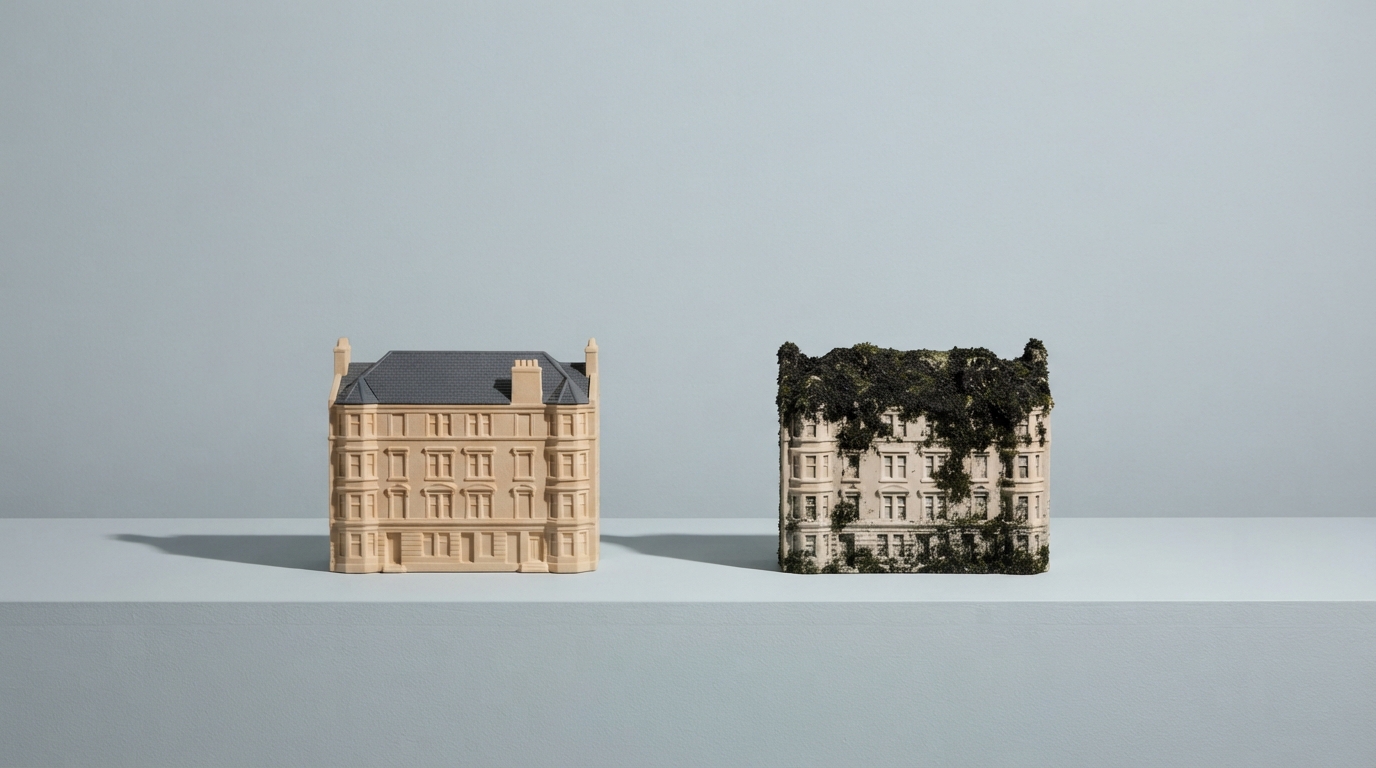
A Visible Change From the Pavement
Picture a homeowner preparing a Dowanhill townhouse for viewings. The sandstone frontage and original window details are in good order, but moss has formed a dark band across the roof and filled the gutter line. Removing that growth makes the roof edge read clearly again and stops the gutter from being the first thing a visitor notices.
A roof clean also gives a closer view of the roof’s condition. Tile laps, valleys, and ridge mortar can be checked after treatment for dislodgement or water ingress, rather than hidden under moss.
For a property where roof, drive, and masonry all shape the first impression, our roof cleaning Glasgow service can be part of broader exterior care. The aim is straightforward: retain the architectural character already there and keep organic growth from taking over the view.
The Danger of High-Pressure Washing on West End Slate and Tiles
Pressure washing is the wrong method for a West End roof. The force can strip the protective mineral coating on concrete tiles and fracture delicate Scottish slate.
A roof is built with overlapping laps that move rainwater down and away. Directing high-pressure water up those laps can force moisture underneath them, where it can reach timber rafters, insulation, and plaster ceilings.
The damage is not always obvious at the time. A roof may look clean immediately after jet washing, while loosened mortar pointing, disturbed tile edges, or water pushed beneath the covering create problems later.
What Pressure Can Damage
- Protective factory coatings on concrete roof tiles
- Fragile edges and faces of Scottish slate
- Mortar pointing around ridges and other roof details
- Tile lap joints designed to shed water
- Roof felt and the materials below the tile covering
The same concern applies to moss removal. Blasting growth away may take surface material with it, leaving the roof more exposed to rain and future weathering.
Why Gentle Methods Work Better
Manual scraping lifts heavy moss using blades shaped to suit the tile profile. Low-pressure steam cleaning removes organic layers with superheated steam rather than abrasive force. Both approaches allow the roof material to guide the work.
Technicians can also avoid walking directly across delicate tiles by using suitable elevated access, such as a mobile elevated work platform, cherry picker, or scaffold tower. That protects both the roof and the people cleaning it.
The sensible standard is a clean roof that still has its original surface, pointing, and water-shedding arrangement intact.
Steam Cleaning vs Manual Scraping: Selecting the Right Method by Tile Type
The right method depends on the roof. Scottish slate and fragile historic tiles benefit from low-pressure steam, while dense moss on concrete interlocking tiles often calls for careful manual scraping.
The decision starts with the tile profile, roof age, structural fragility, and depth of moss. A roof with one material and light staining may suit steam across its elevations. A roof with thick clumps caught in interlocking tile shapes needs a scraper that follows those shapes without gouging the surface.
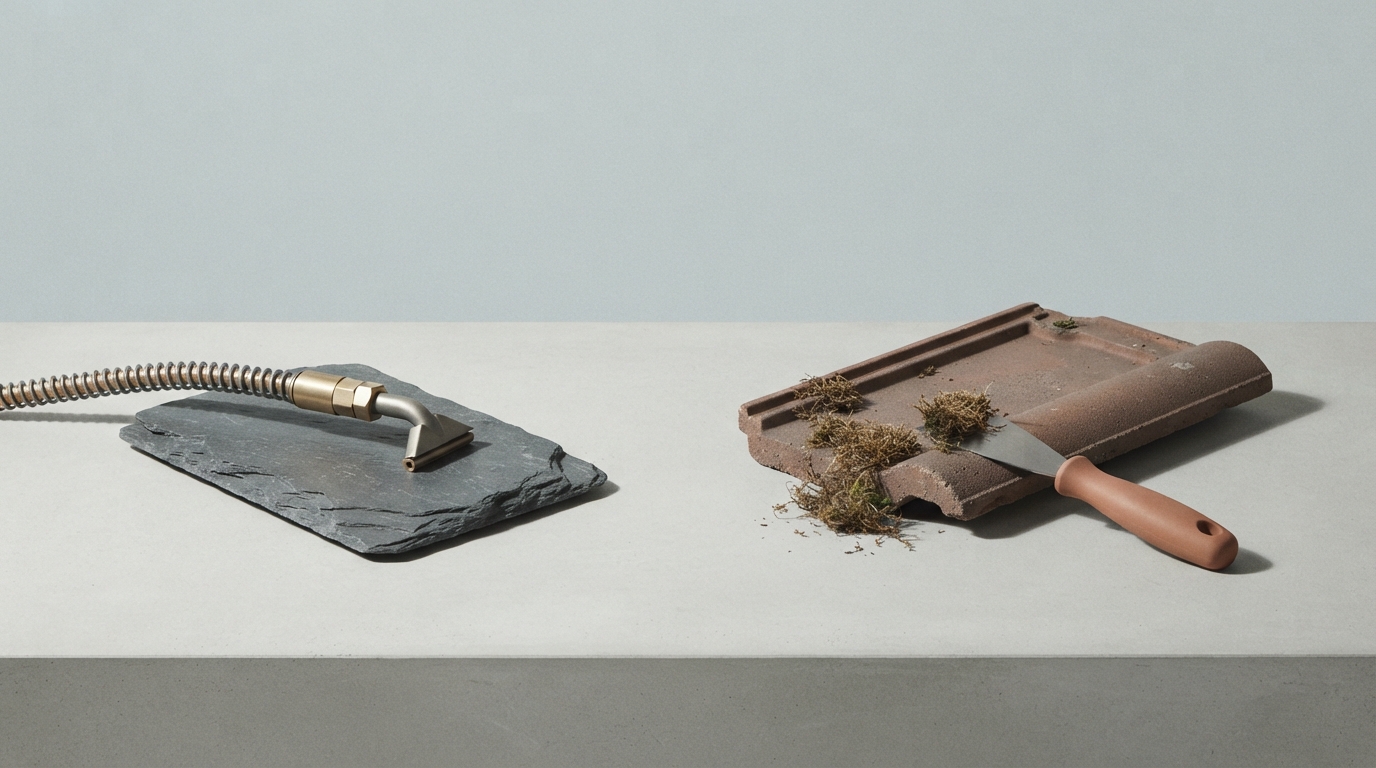
Manual Scraping for Heavy Moss
Manual scraping uses custom-contoured blades made to match profiles such as Marley, Redland, and Scottish slate. The blade lifts moss clumps at the root while avoiding abrasive contact with the tile face.
- Thick moss can be removed in controlled sections.
- Tile laps and channels can be cleared without high-pressure water.
- Loosened moss can be contained before it reaches gutters and drains.
- The method suits interlocking concrete tiles with established growth.
A scraper does not need to force a result. It follows the roof material and allows the technician to work around vulnerable edges, mortar, and details.
Low-Pressure Steam for Delicate Surfaces
Low-pressure steam cleaning uses superheated steam to sanitise and release organic layers without abrasive force. It is suited to delicate slate and historic roof materials where preserving the surface is the priority.
- Steam treats moss, algae, and lichen with low pressure.
- The roof avoids the impact of conventional jet washing.
- Fine surface details and fragile tiles receive gentler treatment.
- The cleaned surface is ready for a full biocide application.
A Kelvinside homeowner with fragile slate and persistent green staining would benefit from steam because the slate needs a gentle pass. A house with heavily moss-laden Marley-style interlocking tiles would suit profile-matched scraping, since the growth needs lifting from the tile channels.
Both methods protect the roof’s existing structure. The follow-up biocide treatment then deals with the microscopic growth left within the tile surface.
Why Biocide Treatment Delivers a 3-Year Moss-Free Guarantee
Scraping alone leaves living growth behind. Moss has microscopic rhizoids and spores that remain within porous tile surfaces after the visible clumps are removed. The surface may look clean immediately, but pores, small overlaps, valleys, and shaded sections can still hold the material that allows growth to begin again.
That is the biological limitation of manual removal. Scrapers lift away the established foliage and bulk of the moss, which is important because it exposes the roof surface and prevents loosened debris from sitting in tile laps. But they cannot reliably reach every microscopic structure embedded in the tile substrate. The same applies when low-pressure steam cleaning is used: it can remove surface contamination without the abrasion associated with high-pressure washing, yet a follow-up treatment is needed to deal with what is left within the pores.
A biodegradable biocide wash reaches those remaining structures. Applied across all roof elevations, it sanitises the tile substrate and targets the spores that would otherwise restart growth after the clean. Professional treatments are biodegradable and government-approved, while the application process is designed to cover the roof rather than simply treat the most visibly affected patches.
Outside Clean Roof Services applies biocide after physical moss removal because the two jobs work together. The roof is cleared first, then the wash can cover the exposed surface evenly. Removing the bulk growth first also makes it easier to inspect the roof and check that tile laps, valleys, and ridge mortar have not been disturbed.
What the Treatment Does
- Reaches microscopic rhizoids left after scraping or steam cleaning
- Treats spores within porous roof tile surfaces
- Continues its self-cleansing action through successive rainy cycles
- Helps keep moss and organic staining clear for 3 to 5 years
Uniform coverage matters. A missed roof elevation can leave a place for biological growth to return, particularly on shaded areas beneath mature trees. Valleys and other moisture-holding details deserve the same attention as broad, open tile runs, because a small untreated area can become the starting point for renewed spread.
The treatment is not a substitute for careful physical cleaning; it is the part that makes the clean last. Scraping removes the visible problem, while the biocide addresses the microscopic residue that visual cleaning cannot confirm or remove on its own. As rain cycles through, the wash continues its self-cleansing action, helping the roof remain bright rather than quickly reverting to a patchy, organic-stained appearance.
The finished work includes checks on tile laps, valleys, and ridge mortar, plus confirmation that the biocide has covered the roof. Complete roof restorations are backed by a 3-Year Moss-Free Guarantee.
That guarantee has a practical purpose. It links the visible clean to the treatment that keeps the roof clear after the moss bags have been removed.
What to Expect During a Professional West End Roof Clean
A professional roof clean is a controlled site job. It protects the roof, the garden, the drainage system, and the sandstone or glass below before moss removal begins.
- Protect the property and garden. Lawns are saturated and sensitive plants are masked before work starts. Downpipes are disconnected where needed or fitted with stoppers and filtration traps, so loosened moss does not enter underground drainage.
- Set up safe elevated access. Technicians use a MEWP, cherry picker, or secure scaffold system rather than walking directly across delicate tiles. The access choice follows the roof’s height, pitch, and condition.
- Clean to the tile profile. Heavy moss is lifted with custom-shaped manual scrapers, or low-pressure steam is used for delicate slate and historic tiles. The method is chosen after inspecting the material and the growth.
- Clear gutters and apply biocide. High-reach roof vacuums remove moss from gutter channels, then biodegradable fungicidal biocide is applied across the cleaned roof surface. This treats the spores and rhizoids left after physical removal.
- Wash down and inspect. Windows, sandstone walls, and pathways are rinsed at ground level. Moss waste is bagged and removed, while downpipe traps are checked to confirm they captured debris.
The final inspection covers tile laps, valleys, and ridge mortar for any dislodgement or water ingress. It also checks that surrounding masonry and glass are clean.
Good drainage is part of the job, especially in wet and leafy parts of the West End. Our guide to gutter cleaning and drainage maintenance in Glasgow explains why moss-filled gutters need attention alongside the roof surface.

Roof Cleaning Pricing in Glasgow: Investment and Cost Factors
Residential roof cleaning in Glasgow ranges from £700 to £6,000. The figure reflects the roof itself and the access needed to clean it safely.
A compact roof with straightforward access sits at a different level from a large period residence with steep pitches, fragile slate, deep moss, and a need for a cherry picker or scaffold tower. A fixed quote should account for that work before cleaning begins.
What Shapes the Quote
- Total roof area
- Roof pitch and working height
- Tile or slate condition
- Amount of moss, lichen, and algae present
- Access equipment, including cherry pickers and scaffold towers
- The cleaning method required for the tile profile
The potential cost of leaving heavy moss in place goes beyond appearance. Moisture held against roof materials can contribute to freeze-thaw cracking, while blocked gutters can direct water where it should not go. Repairs to roof structure, timber, and interior water damage can run into thousands of pounds.
Outside Clean provides free, fixed upfront quotes and carries £5 million in specialist public liability insurance for work at height and exterior roof restoration. That gives you a defined price before a technician starts work, rather than a surprise added after access equipment is on site.
For a domestic semi-detached or detached home, the usual project duration is 1 to 2 days. Larger or more complex period roofs need a quote based on their own access and condition.
Frequently Asked Questions About Roof Cleaning in Glasgow
Will Cleaning Break or Displace My Roof Tiles?
Professional roof cleaning is designed to avoid dislodgement by using safe elevated access, manual scrapers, or low-pressure steam rather than high-pressure jetting. The method is chosen around the roof itself: custom-contoured scrapers can follow the profile of Marley, Redland, clay tiles, or Scottish slate, while low-pressure steam is used where a delicate surface needs organic growth lifted without abrasive force. High-pressure washing is avoided because it can strip protective factory coatings, loosen fragile mortar pointing, and force moisture beneath roof felt.
There is still a sensible distinction between cleaning and repair. A roof with already-fragile pointing or damaged tiles needs careful assessment, not a forceful wash. After treatment, tile laps, valleys, and ridge mortar are inspected for movement or water ingress, so the completed roof is checked rather than simply cleaned and left.
How Long Does a Domestic Roof Clean Take in Glasgow?
A domestic roof restoration on a semi-detached or detached home usually takes 1 to 2 days. The roof’s size, pitch, tile condition, moss coverage, and access requirements affect the timing. A steep roof, awkward access, deep valleys, or thick moss around tile laps can all make the work more involved than a straightforward roofline.
The process is not just the visible removal stage. It can include setting up safe access, manually scraping or steam-cleaning the roof, clearing gutter channels, applying biocide across each roof elevation, and carrying out a final ground-level rinse and inspection. That final check covers nearby sandstone walls, glass windows, paths, and the roof’s drainage routes.
Will Falling Moss Make a Mess of My Garden or Block Drains?
The work includes lawn saturation, plant masking where needed, and downpipe stoppers or drainage filtration traps. These measures are used to catch loosened moss before it reaches the underground drainage system. Gutter channels are vacuumed, then windows, sandstone walls, and paths are rinsed before all moss waste is bagged and removed.
This matters on roofs with heavy growth, where moss can come away in damp clumps rather than as a light dust. Downpipe bungs and filtration traps keep that material out of drains during cleaning, while a post-work check confirms the stoppers collected the loosened debris. It’s a more controlled approach than allowing roof waste to wash through gutters with the next spell of rain.
Why Is Biocide Necessary After Scraping?
Scraping removes visible moss but does not remove microscopic rhizoids and spores within porous tiles. Biocide treatment reaches those remaining growth points and has a self-cleansing effect through rainy cycles. It is the follow-up stage that deals with what cannot be seen after the roof first looks clean.
A professional-grade, biodegradable biocide wash is applied evenly across the roof elevations after physical removal. That uniform coverage helps inhibit regrowth rather than leaving untreated sections for moss, lichen, or algae to return from. With sanitization, a roof can remain clear of moss and organic staining for 3 to 5 years; professional scraping or steam cleaning combined with biocide application may also include a 3-Year Moss-Free Guarantee.
Can You Safely Clean Scottish Slate Roofs?
Yes, low-pressure steam cleaning is suited to delicate Scottish slate because it removes organic layers without abrasive force. This is particularly relevant for traditional slate roofs, where the tile profile and structural fragility determine whether steam or careful hand-scraping is the better route.
High-pressure washing should be avoided because it can fracture slate, loosen mortar, strip protective surfaces, and push water beneath tile laps. Careful access equipment, low-pressure methods, and post-cleaning checks make it possible to remove moss and staining while treating the slate as the fragile material it is.
Restore Your West End Home’s Kerb Appeal Today
Moss, lichen, and biofilm can hide the best parts of a West End home from the street and keep moisture against its roof materials. A careful clean restores the roofline, protects slate and tiles from damaging pressure, and finishes with biocide care that supports the 3-Year Moss-Free Guarantee.
Get a free fixed quote for roof cleaning Glasgow and start with a roof assessment that matches the cleaning method and access to your property.