Glasgow roofs stay damp for long stretches. Frequent rainfall, overcast skies, and low sun angles give black algae and lichen time to settle into concrete tiles, clay pantiles, and Scottish slate.
Those dark marks are living growth, not ordinary dirt. Gloeocapsa magma and crustose black lichen bond inside mineral pores, so a brush may lift surface debris while leaving the anchored growth in place.
Left alone, the spots hold moisture against the roof surface. Winter freeze-thaw cycles can then break down already porous tile faces and expose weak areas around mortar and laps.
The way out starts with identifying the roof material, then using a low-force cleaning method followed by a biocide treatment that reaches the remaining spores. A roof cleaning Glasgow service should treat the roof, gutters, drainage points, and nearby planting as one job, rather than simply blasting the visible marks away.
A clean-looking roof is only part of the result. The growth needs removing without stripping the tile surface or sending water beneath the laps into the roof space.
Key Takeaways: Safe Black Spot Algae Removal
Start with the roof material, then use the cleaning method that suits it.
- Avoid jet washing: High pressure can strip tile coatings, loosen mortar, and force water beneath tile laps.
- Use matched removal: Contour-matched scraping suits dense moss on concrete tiles, while low-pressure steam suits Scottish slate and fragile stone.
- Treat the pores: A biodegradable biocidal fungicidal wash kills spores and rhizoids left behind after physical cleaning.
- Expect written cover: Professional biocide treatment from Outside Clean includes a 3-Year Moss-Free Guarantee.
The visible black spots are only the surface part of the problem. Lasting roof cleaning deals with the growth inside the tile pores as well.
What Causes Black Spot Algae and Lichen on Roof Tiles?
Black spot algae and lichen thrive where roof surfaces stay wet and shaded. On Glasgow homes, persistent dampness gives spores time to establish themselves in porous tile and slate surfaces.
Gloeocapsa magma creates dark streaks through a melanin-like protective sheath. That dark outer layer helps the algae tolerate exposure, while the growth settles into the fine texture of concrete and clay tiles.
Black crustose lichen works differently. It is a partnership between fungi and algae, and it can chemically etch into mineral pores as it anchors itself across the roof face. The result is often a hard, circular black spot that will not come away with light brushing.
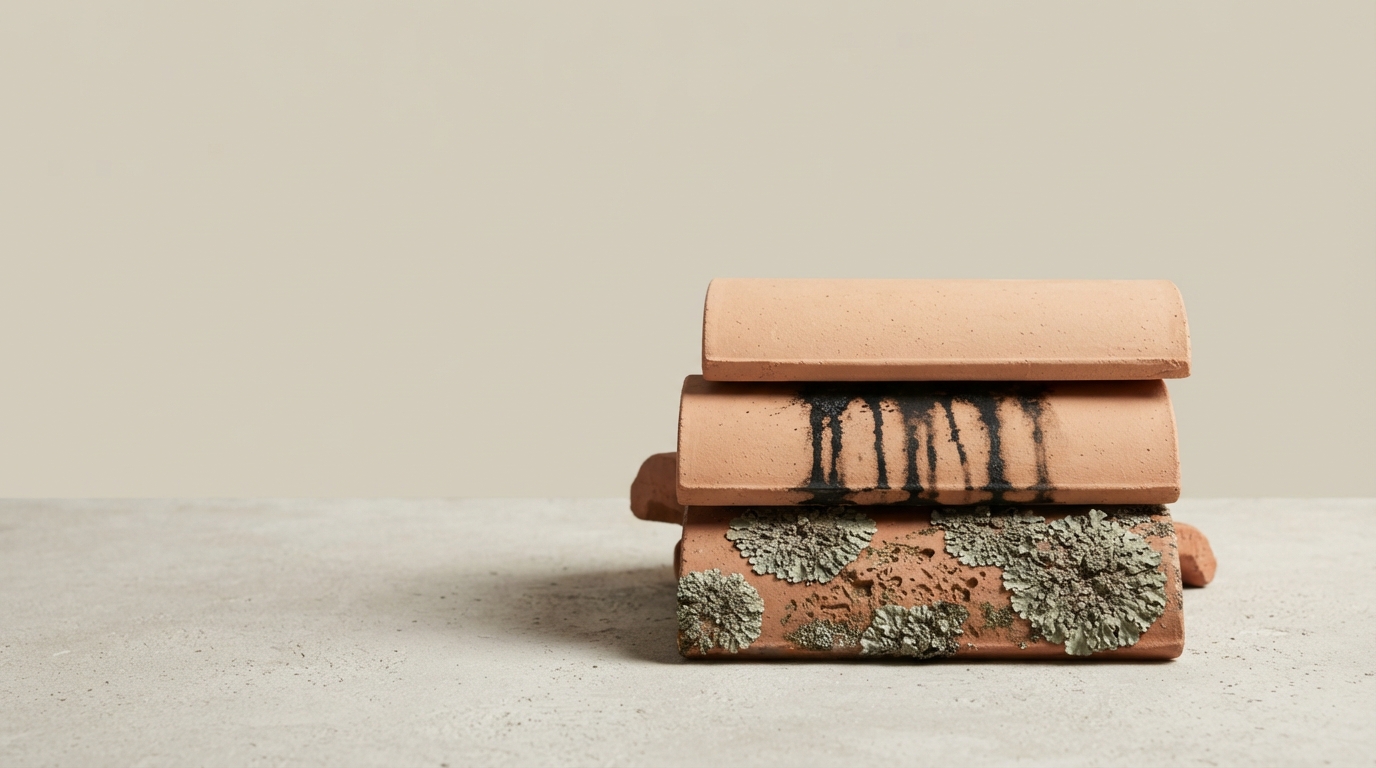
Sheltered streets and mature tree canopies add to the problem by keeping roofs shaded and slow to dry. Tile valleys, gables, and areas below overhanging branches commonly remain wet longer after rainfall.
This is why roof growth in Glasgow needs a material-led approach. Our guide to moss removal methods for scottish homes explains how local weather adds to the pressure on roof surfaces.
What Happens When Spots Are Left in Place
Moisture held against the roof can worsen freeze-thaw wear during winter. Water enters pores, freezes, expands, and can cause surface spalling on concrete, clay, or weakened slate.
A homeowner with a shaded rear roof may first see a few dark circles near the valley. As damp growth spreads across the tile faces, water sits longer after rain and the weakened surface becomes more likely to shed small pieces during cold weather.
Why High-Pressure Jet Washing Destroys Roof Tiles
High-pressure jet washing can permanently damage a roof tile. The force strips factory-applied coatings from concrete tiles and leaves their surface more porous.
That change makes the tile more open to water and fresh organic growth. A roof may look clean on the day, then become harder to keep clean because the exposed surface holds moisture more readily.
Pressure also attacks the weak points around a roof. It can blast mortar pointing from ridge tiles, disturb fragile edges, and drive water beneath tile lap joints into internal roof spaces.
UK tile manufacturers state that pressure washing voids product warranties. That risk sits alongside the immediate risk of water reaching felt, battens, and roof timbers.
Use Low-Force Methods Instead
Responsible cleaning keeps abrasive force away from the tile surface:
- Contour-matched blades lift dense moss from concrete tile profiles.
- Low-pressure steam loosens ingrained growth on delicate slate and stone.
- Biocide washing reaches spores inside pores after the visible growth has been removed.
The roof needs cleaning that preserves its existing surface. A pressure washer solves the visual problem quickly while creating avoidable work for the roof later.
Essential Preparation and Property Protection Before Cleaning
Preparation prevents avoidable damage. Before cleaning begins, inspect the roof material, protect drainage, wet nearby planting, and plan access without walking across wet tiles.
- Inspect the roof surface. Identify concrete interlocking tiles, clay pantiles, Scottish slate, or composite profiles. Check for cracked slates, damaged tiles, loose ridge mortar, and exposed weak points before any treatment.
- Protect the drainage. Bung or disconnect downpipe entry points so moss granules and organic slurry do not enter underground drainage. Clear debris with a gutter vacuum once the roof work is complete.
- Wet lawns and planting. Soak lawns, flowerbeds, and shrubs with fresh water before biocide application. This reduces the chance of plants absorbing treatment residue.
- Choose safe access. Use a secure scaffold tower, van-mounted cherry picker or MEWP, or high-reach carbon fibre telescopic poles. Fragile wet tiles should not carry foot traffic.
- Cover the perimeter. Plan ground-level rinse sheeting and a final rinse for windows, UPVC fascias, walls, and planted areas.
These checks also decide the cleaning sequence. A cracked slate or loose mortar line needs attention before steam, scraping, or chemical treatment reaches that area.
Step-by-Step: The Professional Method to Remove Black Spot Algae
The professional method begins with tile identification and ends with clean gutters and a prepared roof surface for sanitising treatment. Each stage uses low force so the roof keeps its coating, mortar, and weatherproof laps intact.
-
Inspect the roof and profile the tiles.
Determine whether the roof uses concrete interlocking tiles, clay pantiles, or traditional Scottish slate. This choice sets the removal method: contour-matched scraping for heavy organic growth on profiled concrete tiles, or low-pressure steam for fragile slate and ingrained black lichen.
The work follows the same material-led approach used by our Outside Clean Roof Cleaning Services. Access is planned with telescopic poles, scaffolding, or a MEWP rather than walking over fragile wet tiles.
-
Extract heavy moss by hand.
Fit scraping blades to the existing tile profile, including Marley and Redland shapes. The blade lifts dense moss from the tile face and valleys without scraping away the protective slurry coat.
Work down the roof in controlled sections so loosened debris can be collected. Avoid dragging loose growth across tiles, because grit caught beneath it can mark the surface.
-
Apply low-pressure steam to slate and black lichen.
Use superheated steam at 150°C under low pressure where delicate slate or firmly attached black spots need treatment. Heat breaks down biological bonds without the abrasive force of a jet washer.
A slate roof needs this restraint. The aim is to release visible growth while keeping the stone and its edges intact.
-
Clear valleys, gutters, and downpipes.
Remove the debris from roof valleys before it reaches the gutter run. Then vacuum gutters and check downpipes are clear, with bungs removed only after the organic material has been collected.
-
Rinse the surrounding surfaces.
Rinse windows, UPVC fascias, walls, and nearby shrubbery before the final biocide stage. A clean perimeter makes it easier to spot any residue and leaves the property ready for the treatment that deals with spores inside the tile pores.
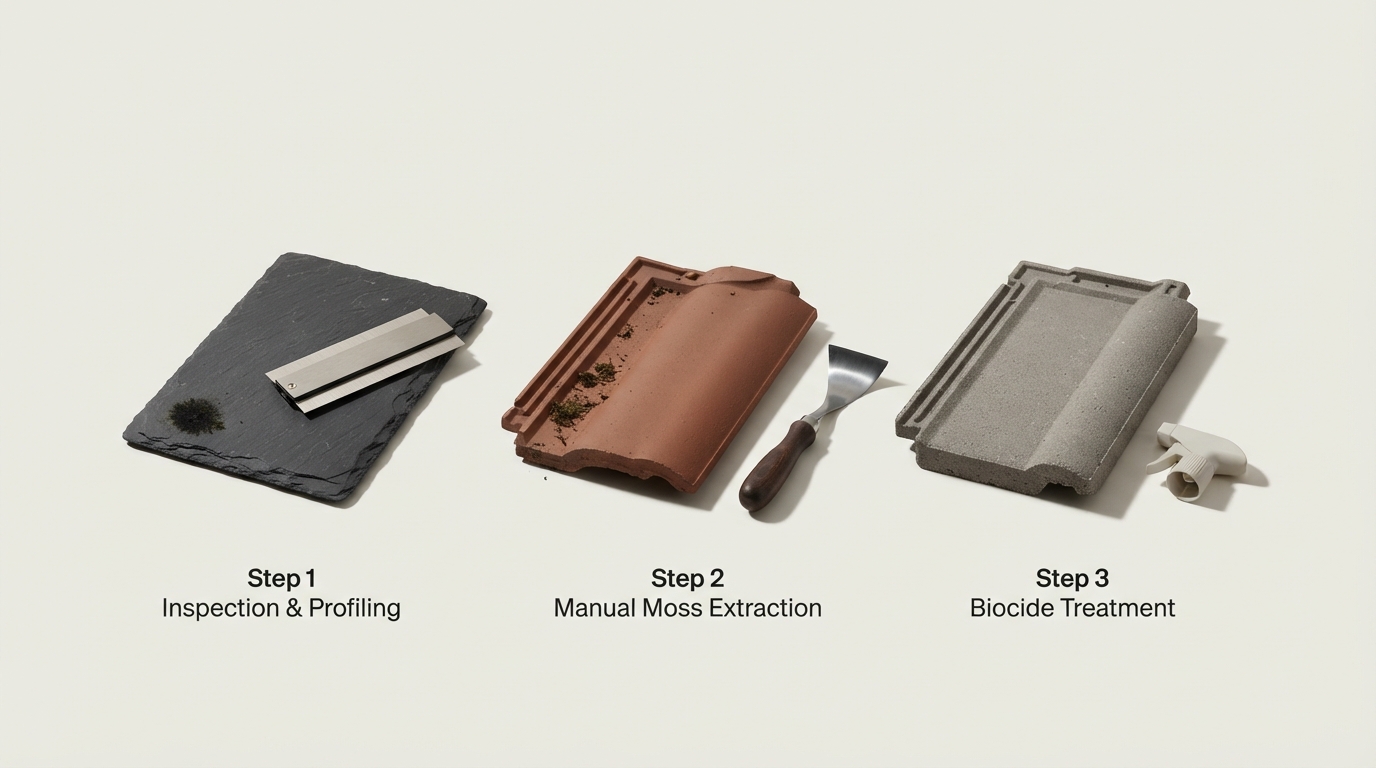
The visible clean is the midpoint of the job. Chemical sanitisation follows after the roof and drainage are clear.
Why Biocide Softwash Is Essential for Long-Lasting Results
Mechanical cleaning leaves spores behind. Even after moss and black spots have been lifted away, micro-rhizoids and algae spores can remain inside microscopic crevices in the tile surface.
A professional biocidal fungicidal wash is applied at low pressure after the roof has been cleared. The biodegradable treatment soaks into pores, destroys cellular spores, and remains on the surface as a self-cleansing barrier.
Rainfall then reactivates the treatment over time. On porous tiles, a professional softwash biocide application typically keeps organic biofilms away for 3 to 5 years.
Why the Final Treatment Matters
Physical removal deals with what you can see. Biocide treatment addresses the part of the growth that is lodged below the surface, where scraping and steam cannot fully reach.
This prevents the rapid return of black algae and lichen after a roof has been cleaned. It also means the treatment should be applied only after downpipes, gutters, ground sheeting, and nearby planting have been prepared.
Our biocide roof treatments and long term maintenance include a written 3-Year Moss-Free Guarantee after professional treatment. That cover reflects the difference between a roof that has been cleared visually and one that has been sanitised at pore level.
A fresh-looking roof without biocide can still carry the start of the next growth cycle. The final wash stops that cycle where it begins.
Roof Cleaning Pricing in Glasgow and What Affects Your Quote
Prices start at £700 for a standard residential roof clean in Glasgow. Larger, multi-level homes or complex roof structures can reach £6,000 where access, roof shape, and the level of growth add work.
A domestic roof clean and treatment typically takes 1 to 2 days. The site survey sets the fixed quote after the roof material, condition, and access route have been checked.
What Changes the Price
- Property footprint: More roof area means more preparation, removal, gutter clearing, and treatment.
- Roof pitch: Steeper roofs need different access and working positions.
- Tile composition: Scottish slate, concrete tiles, and clay pantiles need different handling.
- Organic growth: Dense moss and established black lichen take longer to remove.
- Access equipment: Scaffolding, telescopic poles, and cherry pickers each affect the job setup.
| Method | Starting price | Tile risk |
|---|---|---|
| DIY high-pressure washing | – | Strips coatings, dislodges mortar, and can force water under laps |
| Professional softwash restoration | £700 | Tile-matched scraping, low-pressure steam, and biocide treatment |
The lower upfront cost of a pressure washer does not account for damaged coatings, loosened mortar, or water pushed into the roof structure. A survey prices the cleaning method that matches the roof already in place.
Frequently Asked Questions About Glasgow Roof Cleaning
Will Cleaning Black Spots Damage My Roof Tiles?
Cleaning does not damage tiles when the method matches the roof material. Contour-matched scraping, low-pressure steam, and low-pressure biocide application avoid the force that strips coatings and disturbs mortar.
How Long Does a Roof Stay Clean After a Biocide Treatment?
A porous tile typically remains free of organic biofilms for 3 to 5 years after professional softwash biocide treatment. Local shade, rainfall, and nearby trees affect how quickly new growth settles.
Can You Clean Scottish Slate Roofs Safely With Steam?
Yes. Low-pressure steam is used for fragile slate and ingrained black lichen because it applies heat without abrasive jet force. Safe access also avoids walking over wet, fragile slates.
Are Biocide Chemicals Safe for My Garden and Pets?
Treatment starts with fresh-water soaking of lawns, flowerbeds, and shrubs, plus downpipe protection and ground-level rinse sheeting. The roof is then rinsed around its perimeter so windows, fascias, walls, and planting have no treatment residue.
How Much Does Roof Cleaning in Glasgow Cost?
Residential roof cleaning starts from £700. Larger or complex roof structures can cost up to £6,000 when roof area, pitch, tile type, growth, and access equipment require more work.
How Long Does a Typical Domestic Roof Clean Take?
A complete domestic roof clean and treatment usually takes 1 to 2 days. The schedule includes surface cleaning, gutter clearing, perimeter rinsing, and biocide application.
Protect Your Glasgow Home with Professional Roof Care
Glasgow’s damp weather gives black algae and lichen the conditions they need to settle into tile pores. Removing them safely calls for tile-matched scraping or steam, clear gutters and drainage, then biocide treatment that reaches the remaining spores.
Book a free, no-obligation roof survey and fixed quote today. We will inspect the roof material, access requirements, organic growth, and the right cleaning method before work begins.