A damp Glasgow roof can hold trouble in place for months. Moss gathers on shaded slopes, traps rainwater like a sponge and keeps tiles wet long after the weather has cleared.
That retained moisture adds weight to the roof covering and timber below. In winter, water inside saturated concrete or slate tiles freezes and expands, leading to cracking, spalling and loose edges.
The visible green growth is only part of the problem. Moss also works into tile overlaps and around mortar, where it slows drainage and keeps vulnerable areas damp. Atmospheric soot, algae and lichen add another layer of grime that can hide the condition of the tiles beneath.
A safe roof cleaning Glasgow service removes that growth without blasting water under the tiles. Manual profile scraping and low-pressure steam cleaning deal with the surface, then a fungicidal treatment deals with spores left inside porous tile surfaces.
Leaving a heavily mossed roof through another wet season gives moisture more time to sit where it should drain away. Cleaning restores a clear roof surface, clear gutters and a better view of any repair work the roof may need.
Quick Summary: Glasgow Roof Cleaning Costs at a Glance
A Glasgow roof clean is priced around the roof itself, its access and the amount of growth that must be removed.
- Residential roofs start at £700.
- Large, complex and tenement roof cleans can reach £6,000.
- Low-pressure steam cleaning or precision manual scraping keeps pressure away from the tiles.
- Written cover, public liability insurance and gutter clearance should be part of the work you compare.
| Item | Detail |
|---|---|
| Starting price | £700 |
| Upper price | £6,000 |
| Turnaround | 1 to 2 days |
| Guarantee | 3 years |
| Liability cover | £5 million |
The price should describe the full job, including moss removal, gutter work, downpipe protection, biocide treatment and cleaning the surrounding site.
Glasgow Roof Cleaning Cost Breakdown: What to Expect in 2026
Professional roof cleaning in Glasgow starts at £700, while large detached homes, steep multi-gabled roofs and period tenements can sit between £1,200 and £6,000. The difference comes from the roof’s size, tile condition, pitch and the access needed to clean it safely.
The national guide to roof cleaning cost benchmarks puts typical UK work at £5 to £15 per m². That is a useful area guide, but a Glasgow quote also has to account for moss depth, valleys, dormers, fragile materials and safe working arrangements.
What a Full Quote Should Cover
A price is meaningful only when it sets out the whole cleaning process. A complete scope should include:
- Removal of moss, lichen, algae and surface soot.
- Gutter vacuuming and clearance of downpipes.
- Downpipe isolation to stop moss entering underground drainage.
- Protection for landscaping, conservatory glass and surrounding surfaces.
- A biocide wash to treat spores in the tile surface.
- Collection and licensed disposal of organic waste.
- Ground-level cleaning of walls, windows, paths and driveways affected by the work.
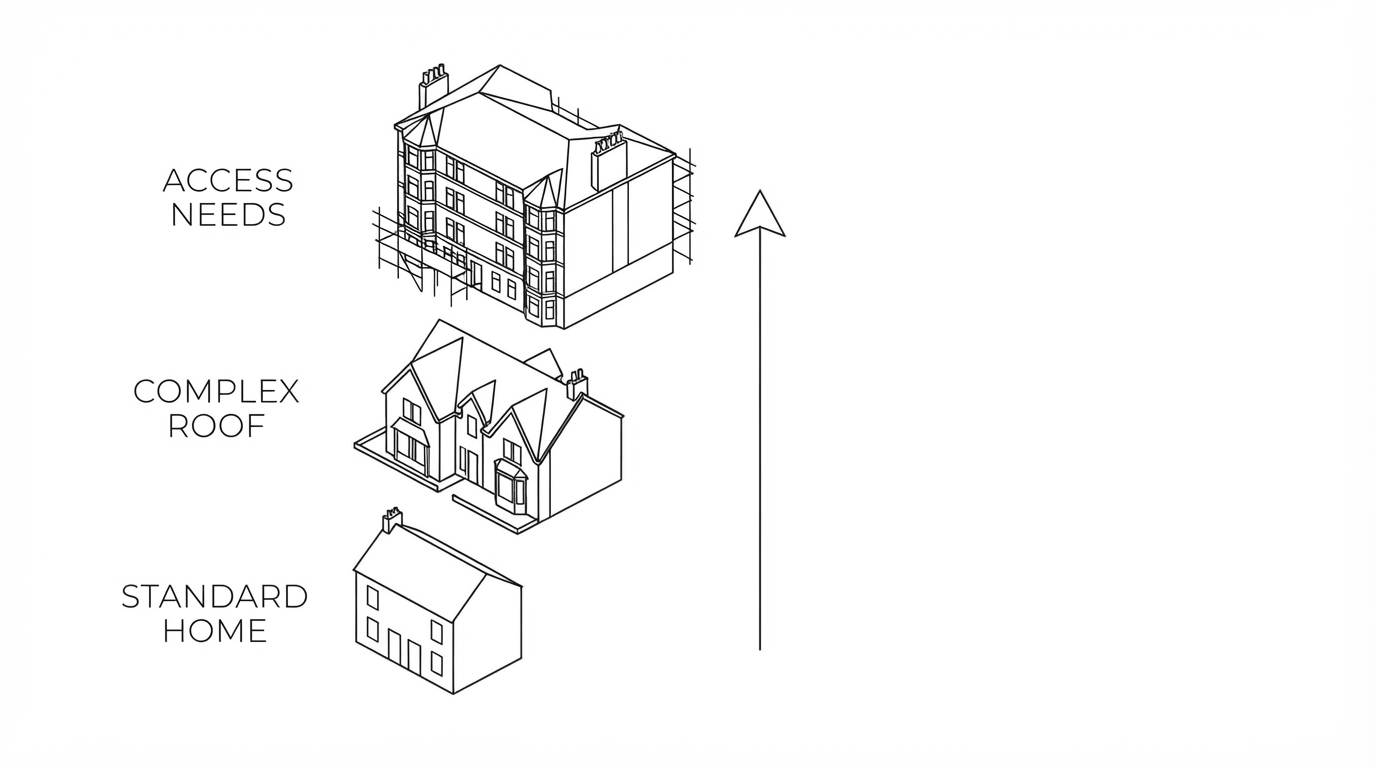
A smaller terraced or semi-detached roof may start at the entry price because access and roof area are simpler. A high, steep roof with multiple slopes takes longer and may need scaffold towers or a mobile elevated work platform.
A Glasgow Example
A detached suburban villa with heavy moss on shaded roof slopes needs access arranged before cleaning starts. The crew can gently scrape the moss, vacuum the gutters and apply biocide over a typical 1 to 2 day visit.
That work is more involved than removing visible growth from the ridge line. Gutters, tile overlaps and runoff routes all need attention, or dislodged moss can create a new blockage below.
Our roof cleaning Glasgow work is backed by a 5.0 rating across more than 120 verified five-star Google reviews. Ask for the roof size, access plan, cleaning method and treatment scope to appear clearly on the quote before work begins.
Steam Cleaning vs Manual Scraping: Choosing the Right Method for Your Tile Type
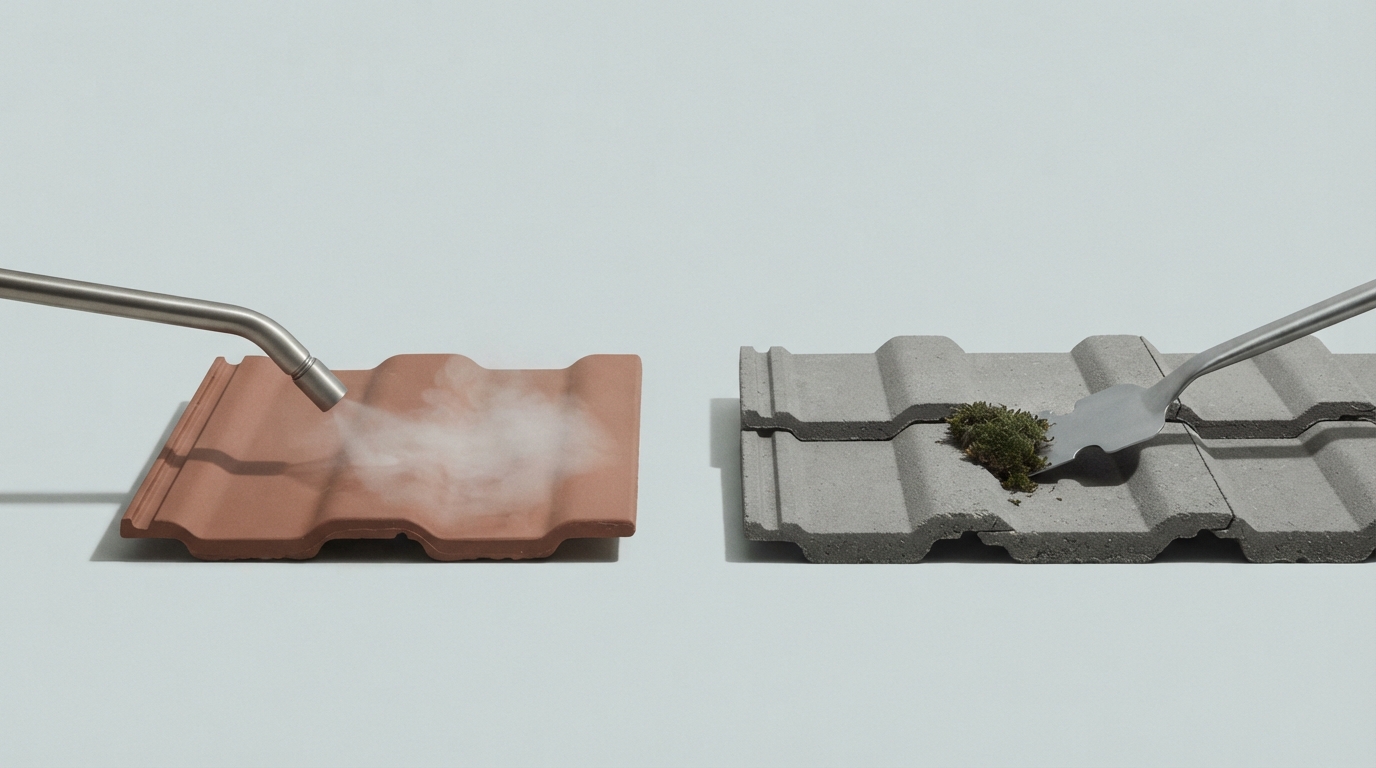
Steam cleaning is the right choice for delicate Scottish slate, clay pantiles and heritage roofs. Manual scraping is the stronger fit for heavy moss on modern interlocking concrete tiles, where a contoured blade can lift dense clumps from the tile profile.
Both methods keep damaging water pressure away from the roof. The cleaning method should follow the tile material and condition, rather than a contractor using one approach for every property.
Low-Pressure Steam Cleaning
Low-pressure, high-temperature steam cleans while keeping mechanical friction low. It sanitises the tile surface and kills growth on contact, which suits fragile slate edges and aged clay tiles.
Steam is also useful on period roofs where preserving the existing covering matters. The work is carried out from safe access equipment, helping avoid direct foot traffic across vulnerable tiles and sarking boards.
Manual Hand Scraping
Manual scraping uses blades shaped to match tile profiles, including Marley, Redland and concrete interlocking tiles. A correctly matched scraper reaches into the channels where thick moss settles, then lifts it away without forcing water through tile laps.
This method gives the cleaner close control over each tile. It is well suited to roofs carrying established moss clumps that need physical removal before treatment.
The Shared Final Step
Physical cleaning clears what you can see. Each method should finish with a professional biocide wash that reaches into the porous tile surface and neutralises remaining root structures and spores.
Choose steam for fragile slate, clay and heritage materials. Choose profile scraping for dense growth on concrete interlocking tiles, then insist on biocide treatment after either method.
Why High-Pressure Jet Washing Destroys Roof Tiles
High-pressure jet washing can damage roof tiles, mortar and the roof space beneath. Water at aggressive pressure strips protective granular coatings and factory seals from concrete tiles, leaving the surface more exposed to weather.
The force also erodes ridge and verge mortar. Once mortar joints weaken, ridge caps can loosen and water has a clearer path into the roof structure.
Water pressure does not stop at the surface. It can drive water beneath tile laps and underlayment, soaking loft insulation and causing ceiling leaks.
Damage That Can Follow
- Protective tile coatings can be stripped away.
- Mortar pointing at ridges and verges can erode.
- Tile edges can fracture under direct force.
- Water can enter beneath tile laps.
- Loft insulation and ceilings can become wet.
- Tile manufacturer guarantees can be voided.
A roof may look clean immediately after jet washing, but the method can leave a more vulnerable surface behind. The repair bill for water ingress or failed mortar can exceed the cost of careful cleaning.
Use low-pressure steam cleaning or manual profile scraping instead. These methods remove growth while preserving the weatherproofing that the roof already has.
What Factors Drive the Cost of Roof Cleaning in Glasgow?
Five site conditions set the price: roof shape, access, moss depth, tile fragility and the protection needed around the property. They explain why two Glasgow homes with a similar footprint can need very different amounts of work.
A guide to regional exterior cleaning rates gives a broad starting point for trade pricing. A roof inspection turns that broad figure into a price that reflects the actual roof rather than a generic rate.
Roof Size and Architecture
Hips, valleys, dormers and multiple pitch angles add more tile edges and awkward working areas. Each one takes longer to inspect, clean and treat than a simple uninterrupted slope.
Access at Height
Multi-storey homes, steep roofs and tenements need safe access planned before cleaning begins. Mobile scaffold towers, cherry pickers and harness systems add time and equipment to the job, but they keep workers off fragile tiles where possible.
Moss and Algae Depth
Thick growth that has built up over several years takes longer to extract. Dense clumps also need careful containment so they do not wash into gutters or underground drainage.
Tile Material and Condition
Historic Scottish slate needs slower, low-pressure steam work to protect thin edges. Modern concrete interlocking tiles with heavy moss often suit contoured manual scraping.
Ground Protection
Downpipes need isolation before moss starts moving, and nearby glass, flowerbeds and drainage channels need covering or protection. This preparation is part of safe roof work, not an optional extra.
Glasgow’s wet conditions keep moss active for longer periods. Our guide to why Glasgow’s weather makes roof moss worse explains why roofs in the city often need a careful treatment plan.
Ask a contractor to identify these five points before accepting a price. A clear answer shows what the work includes and why the roof needs that level of access and care.
The Science of Biocide: Why Moss Removal Alone Is Never Enough
Moss removal needs a biocide treatment because scraping or steam cleaning alone cannot reach every microscopic spore inside a porous tile. The follow-up wash kills remaining fungal growth and gives the roof time to stay clear between cleans.
A scraper removes the moss clumps sitting on the tile. Rhizoids and spores can remain lodged in small pores and overlaps, ready to grow again once Glasgow rain keeps the roof damp.

What the Treatment Does
Professional-grade biocide is applied across the cleaned tile surface after moss removal. It soaks into the pores, sanitises the surface and targets the root structures left behind.
Natural rainfall then continues the cleaning action over time. The treatment provides 3 to 5 years of protection against moss, algae and lichen when applied as part of a professional roof clean.
Why Timing Matters
An untreated roof can show green regrowth within 6 to 12 months in Glasgow’s damp conditions. That means a surface-only clean can leave you paying again much sooner than expected.
A homeowner with a shaded roof slope may see the roof look clear straight after scraping, then find green patches returning after another wet spell. Applying biocide after the physical clean deals with what was left inside the tile surface, rather than waiting for the growth to become visible again.
Outside Clean applies biocide after steam cleaning or manual scraping and backs the work with a written moss-free guarantee. The treatment is the part that turns a cleaned roof into a roof with ongoing protection.
Frequently Asked Questions About Roof Cleaning in Glasgow
How Much Does Roof Cleaning Cost in Glasgow?
Professional residential roof cleaning in Glasgow starts from £700 and can reach £6,000 for large, complex or tenement properties. The final quote depends on roof dimensions, pitch, tile type and condition, the amount of established moss, and the access equipment needed to work safely. A steep roof or a multi-storey property may need scaffold towers, a mobile elevated work platform or a cherry picker, while delicate slate calls for a more cautious method. Ask for a quote that sets out the cleaning approach, biocide treatment, full gutter work and final cleanup. That makes it easier to compare like for like rather than choosing on a headline price alone.
Why Is Pressure Washing Avoided?
High-pressure washing is avoided because forceful water can strip protective tile coatings, erode mortar joints and drive water beneath tile laps into the loft space. It can also be a poor fit for fragile Scottish slate, aged clay tiles and historic roof materials.
Instead, the method is chosen around the roof. Heavy moss on modern interlocking concrete tiles can be lifted with custom-profile scrapers that follow the tile shape. Delicate slate or clay can be treated with low-pressure, high-temperature steam, which removes growth and kills spores without abrasive pressure. Both methods are followed by a professional biocide application, rather than simply removing the visible moss and leaving microscopic growth in the tile pores.
How Long Does a Biocide Treatment Last?
A professional biocide treatment generally keeps tiles clear of moss, algae and lichen for 3 to 5 years. This follow-up stage matters in Glasgow’s damp conditions, where scraping alone can leave root structures and spores behind and allow regrowth within months. Once the roof has been cleared, the treatment is applied across the tile surface to inhibit that remaining growth.
Outside Clean also provides a written 3-Year Moss-Free Guarantee on roof cleaning treatments. The guarantee and the expected treatment lifespan are useful distinctions: the guarantee gives homeowners written cover, while the biocide is intended to provide longer-term protection when the roof is properly cleaned and treated.
How Long Will the Work Take?
A domestic roof cleaning project usually takes 1 to 2 days. Before cleaning starts, the roof is assessed for tile material, pitch, mortar condition, valleys and safe access points. Landscaping and drainage areas are protected, and downpipes are disconnected or plugged so loosened moss does not enter underground drains. The team then cleans the roof, clears the rainwater system and applies the biocide. More time may be needed for difficult access, a steep pitch, heavy established moss or a large roof.
Are Gutters and Downpipes Included?
Yes. Full gutter vacuuming, downpipe isolation and debris clearance are included so rainwater can run freely after the work. Isolating the downpipes during cleaning helps stop moss clumps being washed into drains, where they can cause blockages.
The job also includes site cleanup: affected exterior walls, windows, paths and driveways are rinsed at ground level, and organic waste is bagged for licensed disposal. Safe access is part of the process too; Outside Clean carries £5 million in public liability insurance, and certified access equipment can be used where a no-foot-on-roof approach is appropriate.
Protecting Your Glasgow Home with Outside Clean
A careful roof clean protects tiles, clears drainage and treats the spores that cause moss to return. Outside Clean brings low-pressure steam cleaning, contoured scraping, £5 million public liability cover and more than 120 verified five-star Google reviews to Glasgow roof work.
Request a quote today and ask for the cleaning method, access plan, gutter clearance and written moss-free guarantee to be set out clearly before work starts.